Vitamin K is an essential fat soluble vitamin best known for its role in normal blood clotting. It also participates in processes involving bone proteins and other tissues. Vitamin K occurs naturally in several forms, with vitamin K1 (phylloquinone) found mainly in green vegetables and vitamin K2 (menaquinones) found in some fermented and animal foods and also produced by bacteria in the gut.
True vitamin K deficiency is uncommon in healthy adults, because vitamin K is widely available in foods and the body can obtain some menaquinones from intestinal bacteria. Clinically significant deficiency is more likely in newborns and in people with conditions that interfere with fat absorption or vitamin K metabolism.
When deficiency becomes severe, the most characteristic problem is abnormal or excessive bleeding, because vitamin K is required to produce several proteins involved in blood coagulation.
This guide explains vitamin K deficiency symptoms, causes, vitamin K-rich foods, daily requirements, risk factors, diagnosis, treatment, and practical ways to include vitamin K in your diet.
What Is Vitamin K?
Vitamin K is a family of fat-soluble compounds that share a common chemical structure.
The two major naturally occurring groups are:
• Vitamin K1 (phylloquinone)
• Vitamin K2 (menaquinones)
Vitamin K1 is the primary dietary form and is especially abundant in green leafy vegetables and certain vegetable oils. Vitamin K2 includes several menaquinones, such as MK-4 and MK-7, which occur in some animal and fermented foods.
Because vitamin K is fat-soluble, consuming it along with some dietary fat can improve absorption from vegetables. However, the amount absorbed varies substantially depending on the food and form of vitamin K.
Why Is Vitamin K Important?
1. Supports Normal Blood Clotting
Vitamin K is essential for the liver to produce several vitamin K-dependent proteins involved in blood coagulation, including clotting factors II, VII, IX, and X.
It is also required for activation of proteins C and S, which participate in regulating the clotting process.
When vitamin K is severely deficient, blood takes longer to clot, increasing the risk of abnormal bleeding.
2. Contributes to Bone Health
Vitamin K is involved in the activation of proteins such as osteocalcin, which is found in bone.
Severe vitamin K deficiency can affect bone-related processes, although the relationship between vitamin K intake, supplementation, and long-term bone outcomes is more complex than simply assuming that more vitamin K produces stronger bones.
3. Supports Other Vitamin K-Dependent Proteins
Vitamin K is required for the activation of several proteins involved in tissues throughout the body.
Research continues to investigate the roles of vitamin K-dependent proteins beyond blood coagulation and bone metabolism.
What Is Vitamin K Deficiency?
Vitamin K deficiency occurs when the body does not have enough available vitamin K to adequately support vitamin K dependent processes.
In healthy adults eating a varied diet, clinically significant deficiency is rare. The NIH notes that consuming a diet low enough in vitamin K to significantly alter standard blood-clotting measures is difficult for most healthy people.
However, deficiency can develop when:
• Vitamin K absorption is impaired
• Dietary intake is extremely inadequate
• Certain medications interfere with vitamin K metabolism
• A person has certain gastrointestinal or liver conditions
• A newborn does not receive appropriate vitamin K prophylaxis
Vitamin K Deficiency Symptoms
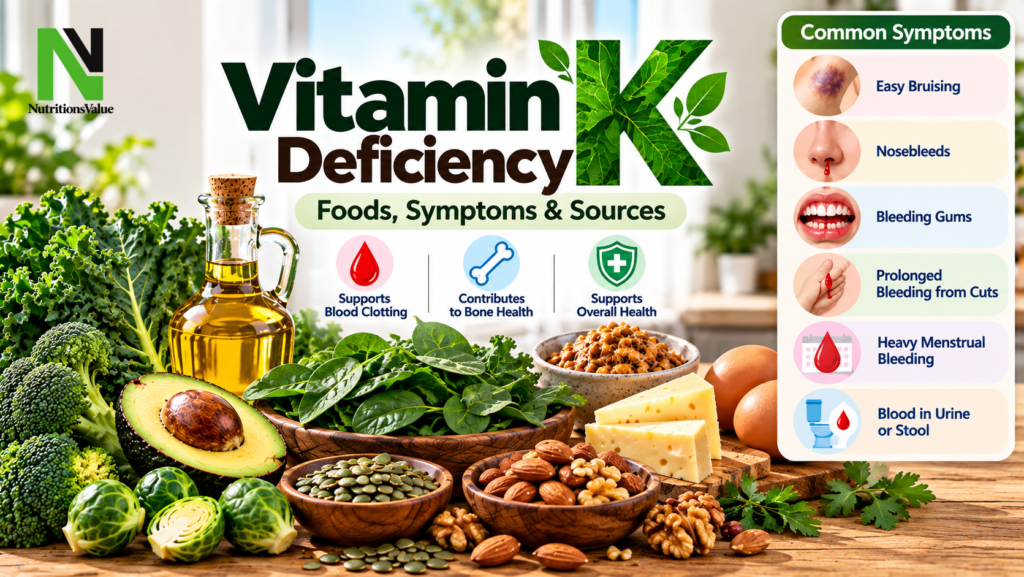
The most important symptoms of significant vitamin K deficiency are related to abnormal bleeding.
1. Easy Bruising
A person with significant deficiency may bruise more easily than usual.
Unexplained or unusually frequent bruising should not automatically be attributed to vitamin K deficiency because medications, platelet disorders, liver disease, nutritional problems, and other conditions can also cause bruising.
2. Nosebleeds
Frequent or unexplained nosebleeds can occur when blood clotting is impaired.
Persistent nosebleeds should be medically evaluated rather than treated solely by increasing vitamin K intake.
3. Bleeding From Gums
Bleeding from the gums can occur with impaired clotting, although gum disease and other oral conditions are much more common causes.
4. Heavy Menstrual Bleeding
Significant impairment of blood clotting can contribute to unusually heavy menstrual bleeding.
However, heavy periods have many possible causes, including hormonal conditions, uterine disorders, anemia, and bleeding disorders.
5. Prolonged Bleeding From Cuts
Small cuts or puncture sites may continue to ooze blood longer than expected when clotting is impaired.
Merck Manual identifies bleeding from surgical incisions, gums, nose, gastrointestinal mucosa, and other sites as possible manifestations of vitamin K deficiency.
6. Blood in Urine or Stool
Significant bleeding can sometimes appear as:
• Blood in urine
• Blood in stool
• Black, tarry stool
• Vomiting blood
These symptoms require prompt medical evaluation, regardless of the suspected cause.
What Causes Vitamin K Deficiency?
1. Fat Malabsorption
Vitamin K is fat-soluble, so conditions that interfere with fat digestion or absorption can reduce vitamin K absorption.
Examples include:
• Cystic fibrosis
• Celiac disease
• Inflammatory bowel disease
• Short bowel syndrome
• Bile-duct obstruction
• Certain liver disorders
2. Bariatric Surgery
Some people who undergo bariatric surgery can develop inadequate vitamin K status because changes to the gastrointestinal tract may affect nutrient absorption.
Long-term nutritional monitoring is therefore important after certain bariatric procedures.
3. Very Low Vitamin K Intake
Extremely low dietary intake can contribute to deficiency, although this is uncommon in healthy adults because vitamin K occurs in many vegetables and other foods.
A diet that contains regular servings of green vegetables generally provides substantial vitamin K.
4. Certain Medications
Some medications can interfere with vitamin K metabolism or increase bleeding risk.
The most important example is warfarin, an anticoagulant that works by interfering with vitamin K recycling.
Certain antibiotics and other medications can also contribute to vitamin K deficiency or bleeding risk in susceptible people.
5. Liver Disorders
The liver is responsible for producing many clotting factors.
Therefore, abnormal bleeding in someone with liver disease does not necessarily mean vitamin K deficiency. Liver disease itself can interfere with clotting, and medical evaluation is needed to determine the cause.
Best Vitamin K-Rich Foods
The richest dietary sources of vitamin K1 are generally Green Leafy Vegetables.
Important sources include:
• Collard greens
• Turnip greens
• Spinach
• Kale
• Broccoli
• Lettuce
• Soybeans
• Edamame
• Vegetable oils
• Okra
• Some fruits
• Nuts and seeds
Vitamin K2 occurs in certain fermented foods and animal products. Natto, a fermented soybean food, is particularly rich in menaquinone-7 (MK-7).
Vitamin K Foods and Their Vitamin K Content
The following selected values are from the NIH Office of Dietary Supplements. Values can vary depending on variety, preparation, and food composition.
Food | Serving | Vitamin K |
Natto | 3 oz | 850 mcg |
Collard greens, boiled | ½ cup | 530 mcg |
Turnip greens, boiled | ½ cup | 426 mcg |
Spinach, raw | 1 cup | 145 mcg |
Kale, raw | 1 cup | 113 mcg |
Broccoli, boiled | ½ cup | 110 mcg |
Soybeans, roasted | ½ cup | 43 mcg |
Carrot juice | ¾ cup | 28 mcg |
Soybean oil | 1 tbsp | 25 mcg |
Edamame | ½ cup | 21 mcg |
Pumpkin, canned | ½ cup | 20 mcg |
Pomegranate juice | ¾ cup | 19 mcg |
Okra, raw | ½ cup | 16 mcg |
Pine nuts | 1 oz | 15 mcg |
Blueberries | ½ cup | 14 mcg |
Iceberg lettuce | 1 cup | 14 mcg |
Chicken | 3 oz | 13 mcg |
Grapes | ½ cup | 11 mcg |
Canola oil | 1 tbsp | 10 mcg |
Cashews | 1 oz | 10 mcg |
Carrot | 1 medium | 8 mcg |
Olive oil | 1 tbsp | 8 mcg |
These figures primarily represent phylloquinone (vitamin K1) except where the table specifically identifies MK-4 or MK-7.
1. Natto
Natto is a traditional Japanese food made from fermented soybeans.
It is an exceptionally rich source of vitamin K2, particularly MK-7. Three ounces of natto provide approximately 850 mcg of vitamin K, according to the NIH selected-food table.
Natto is especially relevant when discussing vitamin K2 because its fermentation process produces menaquinones.
2. Collard Greens
Cooked collard greens are among the richest common vegetable sources of vitamin K.
A half-cup serving provides approximately 530 mcg of vitamin K.
3. Turnip Greens
Turnip greens are another excellent source.
Half a cup of boiled turnip greens provides approximately 426 mcg of vitamin K.
4. Spinach
Spinach is one of the most practical vitamin K-rich foods.
One cup of raw spinach provides approximately 145 mcg of vitamin K.
Spinach can be added to:
• Salads
• Soups
• Curries
• Smoothies
• Omelets
• Grain bowls
5. Kale
Kale is another concentrated source of vitamin K.
One cup of raw kale provides approximately 113 mcg of vitamin K.
6. Broccoli
Broccoli provides both vitamin K and other nutrients.
Half a cup of boiled broccoli contains approximately 110 mcg of vitamin K.
7. Soybeans and Edamame
Soybeans and edamame contribute vitamin K and also provide plant protein.
According to NIH data:
• ½ cup roasted soybeans: 43 mcg
• ½ cup prepared edamame: 21 mcg
8. Vegetable Oils
Some vegetable oils provide useful amounts of vitamin K.
Examples include:
• Soybean oil
• Canola oil
• Olive oil
The vitamin K content varies considerably between oils.
Vitamin K for Vegans
Vitamin K is also generally accessible on a vegan diet.
Useful plant-based sources include:
• Leafy greens
• Broccoli
• Soybeans
• Edamame
• Natto
• Vegetable oils
• Okra
• Some fruits
Natto is particularly notable because it provides vitamin K2 in the form of MK-7.
How Much Vitamin K Do You Need?
Unlike many vitamins, the U.S. National Academies established an Adequate Intake (AI) rather than a Recommended Dietary Allowance (RDA) for vitamin K because there was insufficient evidence to establish an Estimated Average Requirement.
Adequate Intake for Vitamin K
Age / Life Stage | Vitamin K |
Birth–6 months | 2 mcg/day |
7–12 months | 2.5 mcg/day |
1–3 years | 30 mcg/day |
4–8 years | 55 mcg/day |
9–13 years | 60 mcg/day |
14–18 years | 75 mcg/day |
Adult men 19+ | 120 mcg/day |
Adult women 19+ | 90 mcg/day |
Pregnancy | 90 mcg/day |
Breastfeeding | 90 mcg/day |
The U.S. FDA Daily Value for vitamin K is 120 mcg per day for adults and children aged 4 years and older.
Vitamin K and Dietary Fat
Because vitamin K is fat-soluble, the body generally absorbs it better when consumed with some dietary fat.
For example, leafy vegetables can be eaten with foods containing healthy fats such as:
• Olive oil
• Nuts
• Seeds
• Avocado
• Yogurt or other appropriate foods
Research summarized by NIH indicates that consuming vegetables with some fat improves absorption of phylloquinone, although absorption from vegetables can still be lower than from vitamin K in oil or supplements.
This does not mean that large quantities of fat are necessary.
Vitamin K Deficiency and Blood Thinners
This is one of the most important topics when discussing vitamin K.
Warfarin and Vitamin K
Warfarin is an anticoagulant that works by interfering with vitamin K recycling.
People taking warfarin are often advised to maintain a consistent intake of vitamin K rather than suddenly making major changes in their diet.
This does not mean people taking warfarin should avoid green vegetables.
Instead, they should discuss their diet and vitamin K intake with their healthcare professional and follow their prescribed monitoring plan.
Can Vitamin K Deficiency Affect Bone Health?
Vitamin K is involved in the activation of osteocalcin and other proteins associated with bone tissue.
Severe deficiency may affect bone-related processes. The NIH notes that vitamin K deficiency could reduce bone mineralization and potentially contribute to osteoporosis, although evidence about vitamin K supplementation for preventing or treating osteoporosis is more complicated.
Therefore, vitamin K should be viewed as one component of overall bone nutrition, alongside:
• Calcium
• Vitamin D
• Protein
• Magnesium
• Regular physical activity
• Adequate overall nutrition
How Is Vitamin K Deficiency Diagnosed?
A healthcare professional may consider:
• Bleeding history
• Medical conditions
• Medication use
• Diet
• Physical examination
• Blood-clotting tests
A commonly used test is the prothrombin time (PT), which may be prolonged when vitamin K-dependent clotting factors are insufficient.
The international normalized ratio (INR) can also be elevated.
Merck Manual notes that vitamin K deficiency is suspected in at-risk patients with abnormal bleeding and can be supported by coagulation testing and response to vitamin K treatment.
A blood vitamin K measurement may be used in some circumstances, but routine testing is not necessary for everyone.
Vitamin K Deficiency Treatment
Treatment depends on the underlying cause and severity of the deficiency.
A healthcare professional may recommend:
1. Increasing Dietary Vitamin K
For people with inadequate dietary intake, foods such as leafy greens, broccoli, soybeans, and other vitamin K-containing foods can help improve intake.
2. Vitamin K Supplementation
Vitamin K supplements may be used when clinically appropriate.
3. Treating the Underlying Condition
If deficiency results from malabsorption, liver or biliary disease, or another medical problem, treating the underlying cause is important.
4. Medical Treatment for Significant Bleeding
People with significant bleeding or markedly abnormal coagulation may require medical treatment with vitamin K and, depending on the situation, other interventions.
Vitamin K treatment should be medically supervised when deficiency is suspected or bleeding is present.
Can You Take Too Much Vitamin K?
For natural vitamin K1 and vitamin K2, the U.S. National Academies did not establish a tolerable upper intake level (UL) because available evidence has not demonstrated a clear adverse-effect threshold for these forms.
However, this does not mean that everyone should take high-dose vitamin K supplements.
Vitamin K can interact importantly with warfarin and related anticoagulants. Anyone taking these medications should discuss vitamin K supplements and major dietary changes with their healthcare professional.
Also, synthetic vitamin K compounds such as menadione are different from dietary vitamin K1 and K2 and can cause toxicity; menadione is not used as a routine treatment for vitamin K deficiency.
Vitamin K Deficiency vs. Low Vitamin K Intake
These terms should not be confused.
Low vitamin K intake
A person may consume less vitamin K than recommended.
This does not necessarily mean that the person has a clinically significant deficiency.
Vitamin K deficiency
Clinically significant deficiency is associated with impaired vitamin K-dependent clotting and can lead to abnormal bleeding.
In healthy adults eating a varied diet, severe deficiency is uncommon.
FAQs
What are the main symptoms of vitamin K deficiency?
The classic symptom is abnormal bleeding, which may include easy bruising, nosebleeds, gum bleeding, prolonged bleeding from wounds, or blood in the urine or stool.
Is vitamin K deficiency common?
No. Clinically significant vitamin K deficiency is rare in healthy adults. It is more likely in newborns and people with conditions affecting fat absorption or vitamin K metabolism.
Which food is highest in vitamin K?
Among foods listed by the NIH, natto is exceptionally rich in vitamin K2, while collard greens and turnip greens are exceptionally rich sources of vitamin K1.
Is spinach high in vitamin K?
Yes. One cup of raw spinach provides approximately 145 mcg of vitamin K according to NIH data.
Is broccoli a good source of vitamin K?
Yes. Half a cup of boiled broccoli provides approximately 110 mcg of vitamin K.
Can vitamin K deficiency cause easy bruising?
Yes. Easy bruising is one of the possible manifestations of significant vitamin K deficiency because vitamin K is required for normal blood clotting.
Can vitamin K deficiency cause bleeding?
Yes. Severe deficiency can impair blood clotting and cause abnormal bleeding.
Do vegans get enough vitamin K?
Most can obtain vitamin K through leafy green vegetables, broccoli, soybeans, edamame, and other plant foods.
Does vitamin K help bones?
Vitamin K is involved in activating proteins associated with bone tissue. However, vitamin K should be considered as one part of overall bone nutrition rather than a standalone treatment for osteoporosis.
Should people taking warfarin avoid vitamin K foods?
Not necessarily. People taking warfarin are generally advised to keep their vitamin K intake consistent rather than avoiding vitamin K-rich vegetables completely. Major dietary changes and vitamin K supplements should be discussed with the prescribing healthcare professional.
Why do newborns receive vitamin K?
Newborns have low vitamin K stores and limited vitamin K transfer before birth. Their early intestinal production is also limited. Vitamin K prophylaxis at birth helps prevent vitamin K deficiency bleeding, including potentially serious intracranial bleeding.
Key Takeaways
- Vitamin K is a fat-soluble vitamin essential for normal blood clotting.
- Vitamin K1 is abundant in green leafy vegetables, while vitamin K2 includes menaquinones found in certain fermented and animal foods.
- Severe vitamin K deficiency can cause abnormal bleeding and easy bruising.
- Clinically significant deficiency is rare in healthy adults.
- People with fat-malabsorption disorders have a higher risk of deficiency.
- Spinach, kale, collard greens, turnip greens, broccoli, soybeans, and natto are important dietary sources.
- Dietary fat can improve absorption of vitamin K from vegetables.
- Adults have an Adequate Intake of 120 mcg/day for men and 90 mcg/day for women in the U.S. reference system.
- Newborn vitamin K prophylaxis is important for preventing vitamin K deficiency bleeding.
- People taking warfarin or related anticoagulants should not make major changes to vitamin K intake without medical guidance.
- A balanced diet is generally preferable to unnecessary high-dose supplementation.
Explore More Health Related Article
Medical Disclaimer
This article is intended for general educational and nutritional information only and is not a substitute for professional medical or dietary advice. Vitamin K deficiency is uncommon in healthy adults, and abnormal bruising or bleeding can have many causes. If you experience unexplained, persistent, or significant bleeding, seek medical evaluation promptly. People taking anticoagulant medicines such as warfarin should consult their healthcare professional before changing their vitamin K intake or using vitamin K supplements.
Trusted Sources
- NIH Office of Dietary Supplements — Vitamin K: Fact Sheet for Health Professionals
NIH ODS — Vitamin K (Health Professionals) - NIH Office of Dietary Supplements — Vitamin K: Consumer Fact Sheet
NIH ODS — Vitamin K (Consumer) - Merck Manual Professional — Vitamin K Deficiency
Merck Manual Professional — Vitamin K Deficiency - Merck Manual Consumer — Vitamin K Deficiency
Merck Manual Consumer — Vitamin K Deficiency - USDA FoodData Central — Food Nutrient Composition Database
USDA FoodData Central