
Herbal Remedies
Medicated and aromatic herbs are nature’s gift to humanity, offering healing, fragrance, and wellness without chemicals. These herbs can enhance physical and mental well being sustainably.
From centuries, medicated and aromatic herbs has played a vital role in human health, wellness, and daily life. From ancient Ayurveda and Traditional Chinese Medicine to modern aromatherapy and herbal supplements, these natural wonders can offer healing, fragrance, and therapeutic benefits.
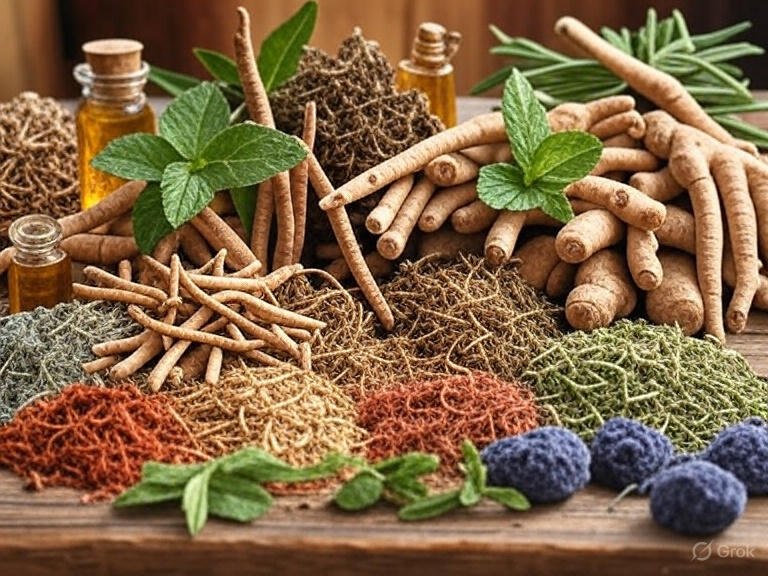
History, importance of medicinal and aromatic plants for human life.
Medicinal and aromatic plants represent one of humanity’s oldest and most valuable resources, serving as the foundation for healthcare systems across civilizations for millennia. From ancient Mesopotamian clay tablets to modern pharmaceutical laboratories, these botanical treasures have shaped medical knowledge, cultural practices, and economic development throughout human history. Today, as contemporary science validates traditional wisdom, Medicinal and aromatic plants continue to can offer promising solutions for global health challenges while supporting sustainable development and biodiversity conservation.
Historical Foundations of Herbal Medicine
The systematic use of medicinal plants dates back to the earliest recorded human civilizations. Archaeological evidence reveals that as early as 2600 BCE, Mesopotamian healers documented their botanical knowledge on cuneiform tablets, describing treatments using substances like licorice, myrrh, and poppy juice remedies still recognized for their therapeutic value today. These early practitioners, known as empirical healers and ritual exorcists, integrated botanical therapy with spiritual practice, reflecting the holistic worldview that characterized ancient medicine.
Ancient Egypt produced some of history’s most significant pharmaceutical records, including the Ebers Papyrus (circa 1500 BCE), which documents approximately 700 plant-based drugs and therapeutic formulas ranging from gargles and poultices to infusions and ointments. Similarly, Traditional Chinese Medicine (TCM) emerged with written records dating to approximately 1100 BCE, codified in foundational texts such as the Shennong Herbal, which systematically categorized hundreds of medicinal plants based on their properties and therapeutic applications.
The Indian subcontinent developed Ayurveda, a sophisticated medical system rooted in texts like the Charak Sahita and Sushrut Sahita (circa 1000 BCE), which established comprehensive frameworks for understanding disease and treatment through plant-based therapies. These classical systems, along with traditional Tibetan and Amchi medicine, preserved invaluable ethnobotanical knowledge that continues to inform modern drug discovery.
The Islamic Golden Age (8th–14th centuries) marked a pivotal period in the development of herbal medicine, as pharmacy emerged as an independent, regulated profession. Scholars such as Al-Razi, Ibn Sina (Avicenna), and Ibn al-Baytar advanced botanical science through critical compilation and cross-cultural synthesis, creating comprehensive pharmacopoeias that integrated Greek, Persian, and Indian medical traditions. Their work established rigorous standards for herbal preparation and documentation that influenced European medicine for centuries.
Phytochemical Foundations and Therapeutic Mechanisms
The therapeutic efficacy of medicinal plants derives from their complex secondary metabolites—bioactive compounds that plants produce for defense, signaling, and adaptation to environmental stress. Modern phytochemical research has identified several major classes of these compounds, each with distinct pharmacological properties.
Essential oils, the aromatic volatile compounds responsible for the distinctive scents of many medicinal plants, consist primarily of terpenoids, including monoterpenes and sesquiterpenes. Monoterpenes such as limonene and pinene exhibit uplifting and decongestant effects, while sesquiterpenes like caryophyllene demonstrate anti-inflammatory and analgesic properties. Phenylpropanoids, including eugenol from clove oil, contribute antimicrobial and antioxidant activities, while aromatic esters and aldehydes provide calming and antimicrobial effects.
Flavonoids, phenolic compounds, alkaloids, and terpenoids represent other major classes of bioactive phytochemicals with diverse pharmacological activities, including antimicrobial, anti-inflammatory, antiviral, antioxidant, anticancer, and immunomodulatory effects. Contemporary analytical techniques such as gas chromatography, mass spectrometry, high-performance liquid chromatography, and genomic analysis enable researchers to characterize these compounds with unprecedented precision, standardizing traditional preparations and elucidating their molecular mechanisms of action.
A crucial concept emerging from modern research is the principle of synergy—the observation that whole plant extracts, containing complex profiles of multiple compounds, often demonstrate greater therapeutic efficacy and lower toxicity than isolated active components. This finding validates traditional approaches that utilized whole plants and combinations of herbs, acknowledging that the therapeutic potential of MAPs extends beyond individual active principles to encompass holistic interactions among diverse phytochemicals.
Contemporary Importance and Applications
The significance of medicinal and aromatic plants in modern healthcare remains profound, with approximately 75% of contemporary pharmaceutical drugs derived from or inspired by plant-based compounds. Notable examples include the antimalarial drug artemisinin, derived from Artemisia annua (sweet wormwood), which revolutionized malaria treatment and earned its discoverer the Nobel Prize. Similarly, salicylic acid from white willow bark provided the foundation for aspirin development, while morphine from the opium poppy remains essential for pain management.
Beyond pharmaceuticals, MAPs contribute significantly to global healthcare through traditional medicine systems that serve billions of people worldwide. Traditional Chinese Medicine, Ayurveda, Unani medicine, and various indigenous healing traditions continue to provide accessible, culturally appropriate healthcare, particularly in regions where conventional medical services remain limited. The integration of traditional knowledge with modern biomedical approaches through ethnopharmacology and pharmacognosy offers promising avenues for discovering novel therapeutics and addressing emerging health challenges.
Aromatherapy, the therapeutic application of essential oils, has gained recognition as a complementary modality supporting physical, emotional, and mental health. Essential oils derived from aromatic plants are increasingly incorporated into pharmaceutical, cosmetic, agricultural, and food industries, reflecting the versatile applications of these natural products. Modern formulations and drug delivery systems, including polymeric nanoparticles and advanced extraction techniques, enhance the bioavailability and efficacy of plant-derived bioactive compounds.
Sustainability and Conservation Challenges
The growing global demand for medicinal and aromatic plants presents significant sustainability challenges. Unsustainable wild harvesting practices, driven by commercial interests and inadequate regulation, have led to overexploitation, reduced natural regeneration, and degradation of forest understories. Climate change compounds these pressures, as rising temperatures, erratic rainfall, drought, and soil degradation alter the growth, chemical composition, and distribution of wild medicinal plants.
Sustainable cultivation of MAPs offers a viable alternative to wild collection, ensuring consistent supply while alleviating pressure on natural ecosystems. Structured cultivation programs provide opportunities for optimizing growing conditions, enhancing biomass and essential oil yield, and standardizing active compound concentrations crucial for pharmaceutical applications. Initiatives such as those implemented by ICARDA in Tunisia demonstrate the potential of integrated approaches that combine ecological restoration with socioeconomic empowerment, distributing climate-adapted seedlings and providing technical training to farming communities.
The importance of preserving traditional knowledge cannot be overstated, as indigenous and local communities possess invaluable understanding of plant identification, cultivation, harvesting, and preparation accumulated through generations of observation and practice. Digital platforms and knowledge repositories, such as the Traditional Knowledge Digital Library (TKDL) and AYUSH Research Portal, support the preservation and validation of this heritage while protecting against biopiracy.
Conclusion
Medicinal and aromatic plants represent an enduring legacy of human civilization, embodying the accumulated wisdom of countless generations who recognized the healing potential of the natural world. From ancient Mesopotamia to modern pharmaceutical laboratories, MAPs have served as the cornerstone of medical knowledge, therapeutic practice, and cultural identity. Contemporary science increasingly validates traditional wisdom while revealing the sophisticated phytochemical mechanisms underlying plant-based therapies.
The future of medicinal and aromatic plants lies in an integrative model that harmonizes traditional knowledge with modern scientific methods, ensuring quality, safety, and efficacy through rigorous standardization and evidence-based validation. Sustainable cultivation practices, biodiversity conservation, and equitable benefit-sharing arrangements are essential to preserving this invaluable resource for future generations. As humanity confronts emerging health challenges and the limitations of conventional medical approaches, the therapeutic potential of medicinal and aromatic plants offers hope for novel solutions while honoring the profound connection between human health and the natural environment.