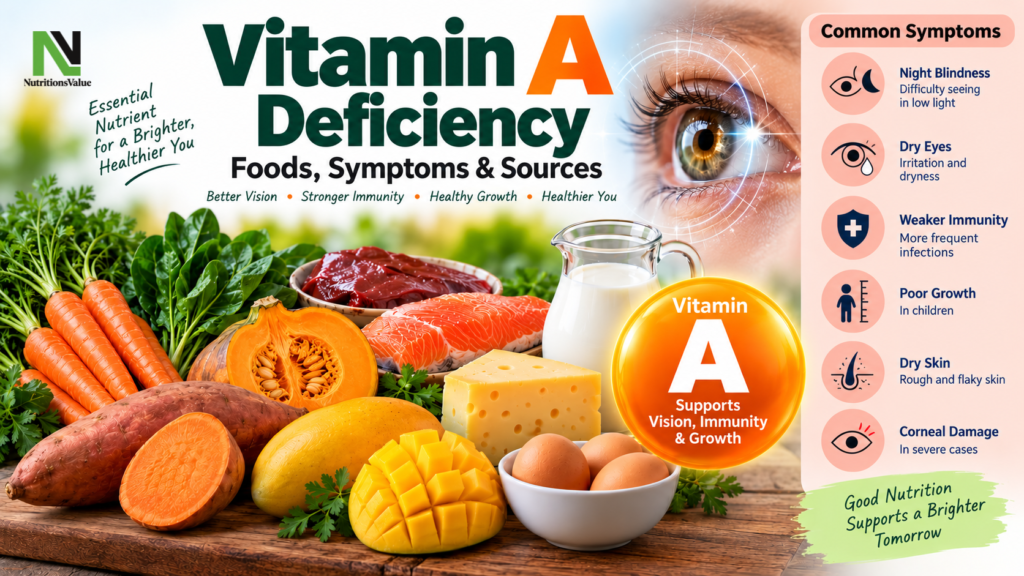
Vitamin A is an essential fat-soluble vitamin that plays an important role in normal vision, immune function, growth and development, reproduction, and the health of organs and tissues. The body obtains vitamin A from two main dietary sources: preformed vitamin A, found primarily in animal-derived foods, and provitamin A carotenoids, found mainly in plant foods.
Vitamin A deficiency occurs when the body’s vitamin A supply is insufficient to meet physiological needs. Although severe deficiency is uncommon in many high-income countries, it remains an important public-health problem in several parts of the world, particularly in South Asia and sub-Saharan Africa. Young children and pregnant women in populations with inadequate dietary intake are among the groups at greatest risk.
One of the earliest and most characteristic signs is difficulty seeing in low light, known as night blindness. Severe deficiency can damage the cornea and, if untreated, may lead to permanent vision loss.
What Is Vitamin A?
Vitamin A is not a single compound but a group of related substances. In the diet, vitamin A comes primarily in two forms:
Preformed vitamin A includes retinol and retinyl esters. It is naturally present in foods such as:
- Liver and other organ meats
- Fish
- Eggs
- Milk and dairy products
The body can use preformed vitamin A directly.
Provitamin A carotenoids are plant pigments that the body can convert into vitamin A.
Beta-carotene is the best-known example.
Common food sources include:
- Carrots
- Sweet potatoes
- Spinach
- Other dark-green leafy vegetables
- Pumpkin and winter squash
- Mangoes
- Cantaloupe
- Apricots
The amount of vitamin A the body obtains from carotenoids depends partly on how efficiently they are converted and absorbed.
Why Is Vitamin A Important?
Vitamin A performs several important functions throughout the body.
Vision
Vitamin A is essential for the production of rhodopsin, a light-sensitive protein in the retina that helps the eyes respond to light. Adequate vitamin A is particularly important for seeing in low-light conditions.
Immune Function
Vitamin A supports normal immune-system function. Severe deficiency can increase vulnerability to infections, particularly in children.
Growth and Development
Vitamin A contributes to normal cell growth and differentiation and is important during childhood development.
Healthy Skin and Tissues
Vitamin A supports the normal maintenance and differentiation of epithelial tissues, including tissues in the eyes and other organs.
Reproduction
Vitamin A is also involved in normal reproductive processes in both males and females.
What Is Vitamin A Deficiency & Symptoms?
Vitamin A deficiency develops when vitamin A intake and availability are insufficient to meet the body’s needs.
Dietary inadequacy is an important cause, but deficiency can also be associated with conditions that interfere with nutrient absorption or increase nutritional requirements. The consequences can range from impaired vision to increased susceptibility to infections and, in severe cases, serious eye damage.
Vitamin A deficiency is particularly concerning in populations where diets lack variety and contain insufficient amounts of animal-source foods and provitamin A-rich fruits and vegetables.
Vitamin A Deficiency Symptoms
Symptoms depend on the severity and duration of deficiency.
- Night Blindness
Night blindness is one of the earliest clinical signs of vitamin A deficiency.
A person may have difficulty seeing:
- In dimly lit rooms
- At dusk
- At night
- When moving from a bright environment into darkness
Vitamin A deficiency reduces the availability of vitamin A needed for normal rhodopsin function in the retina.
However, night blindness can have causes other than vitamin A deficiency, so it should not be used by itself to diagnose deficiency.
- Dry Eyes
More advanced deficiency can cause xerophthalmia, a spectrum of eye changes associated with vitamin A deficiency.
It can involve dryness of the conjunctiva and cornea and progressively more serious damage.
- Bitot Spots
Bitot spots are whitish, foamy-looking areas on the conjunctiva and are a clinical sign associated with vitamin A deficiency.
- Corneal Damage
With severe, prolonged deficiency, the cornea can become dry and damaged.
Advanced disease can progress to keratomalacia, a severe condition involving softening and destruction of the cornea that can result in blindness.
- Increased Susceptibility to Infections
Vitamin A deficiency can impair normal immune function. In children, deficiency is associated with increased risk and severity of certain infections, including respiratory and diarrheal illnesses.
- Poor Growth in Children
Chronic vitamin A deficiency can contribute to impaired growth and development in children.
- Anemia
Vitamin A deficiency has also been associated with an increased risk of anemia.
Source of Vitamin A Foods
A healthy diet can provide vitamin A through both animal and plant foods.
Food | Main Vitamin A Form |
Beef liver | Preformed vitamin A |
Fish | Preformed vitamin A |
Eggs | Preformed vitamin A |
Milk | Preformed vitamin A |
Cheese | Preformed vitamin A |
Carrots | Provitamin A carotenoids |
Sweet potatoes | Provitamin A carotenoids |
Spinach | Provitamin A carotenoids |
Pumpkin | Provitamin A carotenoids |
Mangoes | Provitamin A carotenoids |
Cantaloupe | Provitamin A carotenoids |
Apricots | Provitamin A carotenoids |
Broccoli | Provitamin A carotenoids |
The exact vitamin A content varies according to food variety, serving size, preparation, and other factors.
10 Vitamin A-Rich Foods to Include in Your Diet
- Beef Liver
Liver is one of the richest dietary sources of preformed vitamin A.
Because liver contains extremely concentrated amounts of vitamin A, it should not be consumed excessively, particularly during pregnancy.
- Sweet Potatoes
Sweet potatoes are an excellent plant source of provitamin A carotenoids, particularly beta-carotene.
They can be included in meals as:
- Baked sweet potatoes
- Mashed sweet potatoes
- Roasted sweet potatoes
- Soups and stews
- Carrots
Carrots contain beta-carotene, which the body can convert into vitamin A.
Raw, cooked or incorporated into mixed dishes, carrots can contribute to overall vitamin A intake.
- Spinach
Dark-green leafy vegetables such as spinach provide provitamin A carotenoids along with other nutrients.
- Pumpkin
Pumpkin and other orange or yellow vegetables can provide substantial amounts of provitamin A carotenoids.
- Mangoes
Mangoes provide beta-carotene and can contribute to vitamin A intake as part of a varied diet.
- Eggs
Eggs provide preformed vitamin A along with protein and several other nutrients.
- Milk and Dairy Products
Milk and dairy products can provide preformed vitamin A. Some dairy products and other foods may also be fortified with vitamin A.
- Fish
Some fish provide preformed vitamin A. Fish also supplies other nutrients, although the amount of vitamin A differs considerably between species.
- Broccoli
Broccoli provides carotenoids, including provitamin A carotenoids, although its vitamin A contribution differs from especially rich sources such as sweet potatoes and certain leafy greens.
Vitamin A Foods: Animal vs Plant Sources
Understanding the difference between these two categories is useful when planning a diet.
Source | Type of Vitamin A | Examples |
Animal foods | Preformed vitamin A | Liver, fish, eggs, dairy |
Plant foods | Provitamin A carotenoids | Carrots, spinach, sweet potatoes, pumpkin, mango |
Fortified foods | Added vitamin A | Some milk, cereals and other fortified products |
Your body converts some provitamin A carotenoids into vitamin A. The amount produced depends on factors including the food and individual differences in absorption and conversion.
How Much Vitamin A Do You Need?
Vitamin A requirements depend on age, sex and life stage.
For adults, the recommended dietary allowance is approximately:
- Adult men: 900 mcg RAE/day
- Adult women: 700 mcg RAE/day
- Pregnancy: 770 mcg RAE/day
- Breastfeeding: 1,300 mcg RAE/day
Children and adolescents have different requirements.
Vitamin A is generally expressed as micrograms of retinol activity equivalents (mcg RAE) because different forms of vitamin A have different biological activity.
Vitamin A Deficiency in Children
Children are among the groups most vulnerable to serious vitamin A deficiency in populations where dietary intake is inadequate.
Severe deficiency can impair vision and increase vulnerability to infections. WHO identifies vitamin A deficiency as an important public health problem in many countries, particularly in Africa and South Asia.
A varied diet containing vitamin A rich vegetables, fruits and appropriate animal-source foods can help improve dietary vitamin A intake.
Vitamin A Deficiency During Pregnancy
Pregnancy increases nutritional requirements, making adequate vitamin A intake important.
Night blindness can occur in pregnant women in populations where vitamin A deficiency is prevalent.
However, more vitamin A is not always better. Excessive intake of preformed vitamin A, particularly from high-dose supplements, can be harmful during pregnancy.
Pregnant women should therefore discuss vitamin A supplementation with an appropriate healthcare professional rather than taking high-dose vitamin A supplements independently.
Can Vegetarians and Vegans Get Enough Vitamin A?
Yes.
Plant Based diets can provide vitamin A through provitamin A carotenoids.
Useful foods include:
- Sweet potatoes
- Carrots
- Spinach
- Kale
- Pumpkin
- Mangoes
- Cantaloupe
- Apricots
- Other dark-green, orange and yellow fruits and vegetables
A varied plant-based diet can therefore provide significant amounts of provitamin A carotenoids.
Who Is at Higher Risk of Vitamin A Deficiency?
Risk can increase when dietary intake is inadequate or when certain health conditions interfere with nutrient absorption.
Groups identified by NIH as being more likely to have difficulty getting enough vitamin A include:
- Premature infants
- Young children in areas where deficiency is common
- Pregnant and breastfeeding women in affected populations
- People with cystic fibrosis
- People with Crohn’s disease
- People with ulcerative colitis
- People with celiac disease
The risk varies significantly according to dietary pattern, health status, geographic region and access to nutrient-rich foods.
How Is Vitamin A Deficiency Diagnosed?
Vitamin A deficiency should not be diagnosed solely from symptoms.
Healthcare professionals may consider:
- Dietary history
- Clinical symptoms
- Eye examination
- Medical history
- Blood testing when appropriate
Serum or plasma retinol can be used as an indicator of vitamin A status, particularly in population assessment. However, WHO notes that serum retinol is strongly regulated by the body and may not accurately reflect liver vitamin A stores in every individual situation.
Therefore, laboratory results should be interpreted in the context of the person’s overall clinical situation.
Can Vitamin A Deficiency Be Treated?
Treatment depends on the severity of deficiency and its underlying cause.
Management may involve:
- Improving dietary vitamin A intake
- Addressing underlying nutritional problems
- Treating conditions that interfere with nutrient absorption
- Vitamin A supplementation when medically indicated
Severe deficiency and eye complications require prompt medical attention because advanced eye disease can result in permanent vision loss.
Vitamin A supplements should not be taken in high doses without appropriate medical guidance because excessive preformed vitamin A can cause toxicity.
Can You Get Too Much Vitamin A?
Yes.
Vitamin A is fat-soluble, so the body stores it, particularly in the liver.
Excessive intake of preformed vitamin A from supplements or other concentrated sources can cause toxicity.
This is different from consuming ordinary amounts of beta-carotene-rich vegetables. Large amounts of beta-carotene can sometimes cause the skin to develop a yellow-orange color called carotenodermia, but this is different from vitamin A toxicity.
For this reason, obtaining vitamin A from a varied diet is generally preferable to taking High Dose Supplements unless supplementation has been recommended by a healthcare professional.
How to Prevent Vitamin A Deficiency
A practical approach is to include a variety of vitamin A sources throughout the week.
Include colorful vegetables
Try adding:
- Carrots
- Sweet potatoes
- Pumpkin
- Spinach
- Other dark-green leafy vegetables
Eat a variety of fruits
Mangoes, cantaloupe and apricots can contribute provitamin A carotenoids.
Include appropriate animal foods
For people who consume them, eggs, dairy, fish and other animal foods can contribute preformed vitamin A.
Check fortified foods
Some foods are fortified with vitamin A. Check the nutrition label rather than assuming that a product is fortified.
Maintain a varied diet
Vitamin A is only one component of good nutrition. A varied diet containing vegetables, fruits, whole grains, legumes, nuts, seeds and appropriate animal-source foods can help provide a broad range of essential nutrients.
FAQs
What is the first sign of vitamin A deficiency?
Night blindness, or difficulty seeing in low light, is one of the earliest and most characteristic clinical signs of vitamin A deficiency.
Which food is highest in vitamin A?
Liver is among the richest natural sources of preformed vitamin A. However, it is highly concentrated, so it should not be consumed excessively.
Are carrots a good source of vitamin A?
Yes. Carrots contain beta-carotene, a provitamin A carotenoid that the body can convert into vitamin A.
Can vegetarians get enough vitamin A?
Yes. Vegetarians can obtain provitamin A carotenoids from foods such as sweet potatoes, carrots, spinach, pumpkin and other colorful fruits and vegetables.
Is vitamin A good for eyesight?
Adequate vitamin A is essential for normal vision, particularly the eye’s ability to adapt to low-light conditions. However, taking extra vitamin A does not necessarily improve vision in people who already have adequate intake.
Can vitamin A deficiency cause blindness?
Severe, prolonged deficiency can cause xerophthalmia and progressive corneal damage that may result in permanent blindness if untreated.
Are vitamin A supplements safe?
Vitamin A supplements can be appropriate in certain situations, but high doses of preformed vitamin A can cause toxicity. Supplement use should therefore be based on individual needs and professional guidance.
Final Takeaway
Vitamin A is essential for normal vision, immune function, growth, development and healthy tissues. The diet provides vitamin A in two major forms: preformed vitamin A from foods such as liver, fish, eggs and dairy, and provitamin A carotenoids from plant foods such as carrots, sweet potatoes, spinach, pumpkin and mangoes.
The most recognizable clinical sign of deficiency is night blindness, while severe deficiency can progress to xerophthalmia and potentially permanent blindness. Vitamin A deficiency also has important consequences for immune function and child health.
For most people, the goal should be a varied, nutrient dense diet that provides adequate vitamin A without excessive supplementation. Anyone experiencing night blindness, significant eye changes, or other symptoms suggestive of deficiency should seek professional medical evaluation rather than attempting to diagnose or treat the condition independently.
Explore More Health Related Article
🩺 Health & Nutrition Conditions
🥗 Nutrition Science
🍎 Comparative Analysis of the Most Nutritious Fruits
🌿 Top 10 Herbs & Wellness
🥬 Spinach Nutrition
Medical Disclaimer
The information provided in this article is intended for general educational and informational purposes only. It is not intended to diagnose, treat, cure, or prevent any disease or medical condition and is not a substitute for professional medical or dietary advice.
Vitamin A deficiency can have different causes, and symptoms such as vision changes may have conditions unrelated to vitamin A deficiency. If you experience night blindness, persistent eye symptoms, or other concerning symptoms, consult a qualified healthcare professional for appropriate evaluation and treatment.
Sources & References
- NIH Office of Dietary Supplements — Vitamin A and Carotenoids
- World Health Organization — Vitamin A Deficiency
- WHO — Xerophthalmia and Night Blindness
- WHO — Vitamin A Fortification of Staple Foods
- USDA FoodData Central — detailed nutrient composition of individual foods, as referenced by NIH.