
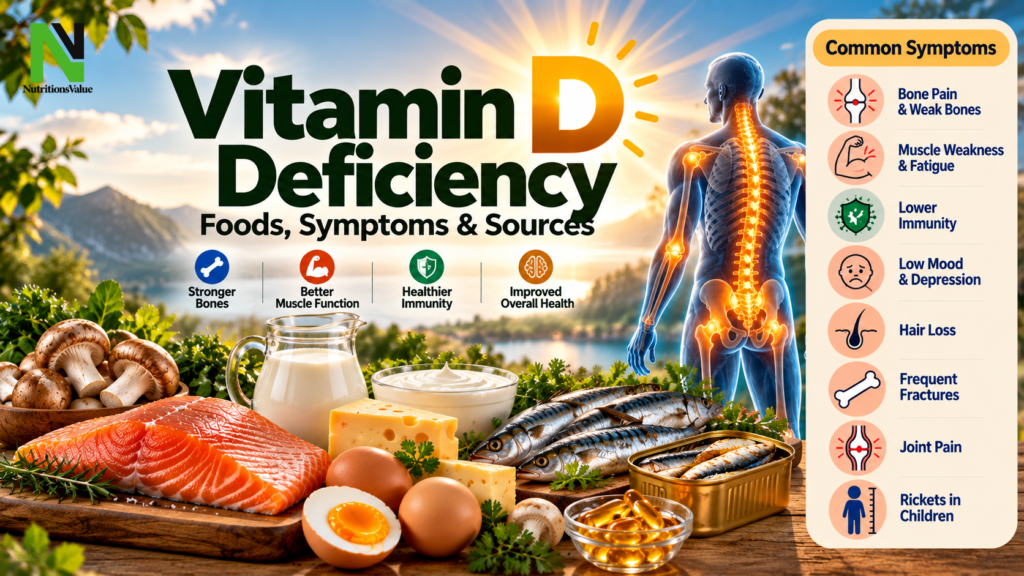
Vitamin D is an essential fat-soluble vitamin that plays a central role in calcium absorption, bone health, muscle function, and several other physiological processes. Unlike most vitamins, your body can produce vitamin D when skin is exposed to ultraviolet B (UVB) radiation from sunlight. However, vitamin D can also come from certain foods, fortified products, and dietary supplements.
Vitamin D deficiency occurs when the body does not have enough vitamin D to maintain normal physiological functions. Severe or prolonged deficiency can contribute to rickets in children and osteomalacia in adolescents and adults, while inadequate vitamin D status can also affect bone and muscle health.
This guide explains the symptoms, causes, risk factors, vitamin D-rich foods, sunlight, recommended intake, testing, treatment, and prevention of vitamin D deficiency.
Important: Vitamin D deficiency can have many causes, and symptoms can be nonspecific or absent. A blood test and medical assessment are more reliable than symptoms alone for determining vitamin D status.
What Is Vitamin D?
Vitamin D is a fat-soluble vitamin that helps the body absorb calcium and maintain appropriate calcium and phosphate levels. These minerals are essential for normal bone formation, mineralization, and remodeling.
Vitamin D also contributes to normal muscle and nerve function and plays a role in immune function.
There are two major forms of vitamin D:
• Vitamin D2 (ergocalciferol) – found in some mushrooms and used in some fortified foods and supplements.
• Vitamin D3 (cholecalciferol) – produced in the skin following sunlight exposure and found in animal-derived foods and some supplements.
Both forms can increase vitamin D levels in the blood, although vitamin D3 generally raises blood levels more effectively and for longer than vitamin D2.
Why Is Vitamin D Important?
Vitamin D has several important functions in the body.
1. Supports Bone Health
Vitamin D helps the intestines absorb calcium. Calcium and vitamin D work together to maintain normal bone mineralization.
Long-term vitamin D deficiency can result in soft and weak bones. In children, severe deficiency can cause rickets, while in adults it can cause osteomalacia, which may cause bone pain and muscle weakness.
2. Supports Muscle Function
Vitamin D is involved in normal muscle function. Severe deficiency can be associated with muscle weakness.
3. Supports the Nervous System
Vitamin D is involved in normal neuromuscular function, including communication between nerves and muscles.
4. Contributes to Immune Function
Vitamin D receptors are present in many tissues, and vitamin D participates in immune-related processes. However, this does not mean that taking high-dose vitamin D supplements prevents or treats every infection.
5. Helps Maintain Calcium and Phosphate Balance
Vitamin D helps regulate calcium and phosphate concentrations, which are important for normal bone and muscle function.
What Is Vitamin D Deficiency?
Vitamin D deficiency means that vitamin D status is low enough to potentially affect health, particularly bone health.
The most commonly measured blood marker is 25-hydroxyvitamin D [25(OH)D].
According to the U.S. National Institutes of Health Office of Dietary Supplements (NIH ODS), the U.S. National Academies’ reference points classify:
Blood 25(OH)D level | General interpretation |
Below 30 nmol/L (12 ng/mL) | Too low and associated with risk of deficiency |
30–50 nmol/L (12–20 ng/mL) | Potentially inadequate for some people |
50 nmol/L (20 ng/mL) or above | Adequate for most people |
Above 125 nmol/L (50 ng/mL) | Potentially associated with adverse effects |
These values should not be interpreted in isolation. The optimal blood concentration for every possible health outcome has not been definitively established, and clinical interpretation should consider the individual and the reason for testing.
Vitamin D Deficiency Symptoms
One of the challenges with vitamin D deficiency is that many people have no obvious symptoms, particularly when deficiency is mild.
When deficiency becomes significant or prolonged, symptoms may include:
1. Bone Pain
Low vitamin D can impair normal bone mineralization. Adults with osteomalacia may experience bone pain or tenderness.
2. Muscle Weakness
Vitamin D deficiency can contribute to muscle weakness, which may affect physical function and mobility.
3. Frequent Bone Problems
Long-term inadequate vitamin D, particularly when combined with inadequate calcium, can compromise skeletal health.
4. Delayed Growth or Bone Deformities in Children
Severe deficiency in children can cause rickets, in which growing bones become soft and can become deformed. Severe cases can also cause other complications.
5. Fatigue
Fatigue is sometimes reported by people with low vitamin D, but it is not specific to vitamin D deficiency. Poor sleep, anemia, thyroid disorders, inadequate nutrition, stress, infections, and many other conditions can also cause fatigue.
Therefore, fatigue alone should not be used to diagnose vitamin D deficiency.
6. Muscle Aches or Weakness
Muscle symptoms can occur with significant deficiency, but they can also have many other causes.
Important: Symptoms alone cannot reliably tell you whether you have vitamin D deficiency. If deficiency is suspected, a healthcare professional may consider a blood test.
What Causes Vitamin D Deficiency?
Vitamin D deficiency can develop for several reasons.
1. Limited Sun Exposure
The skin produces vitamin D when exposed to UVB radiation.
People who spend very little time outdoors may therefore have a greater risk of inadequate vitamin D status. Risk can also increase when most of the skin is covered or when environmental and lifestyle factors substantially reduce UV exposure.
However, deliberately increasing sun exposure to the point of sunburn is not a safe strategy for obtaining vitamin D.
2. Darker Skin
Melanin reduces the skin’s production of vitamin D in response to UVB exposure. People with darker skin may therefore require more UV exposure to produce the same amount of vitamin D as people with lighter skin.
This does not mean that people with darker skin should seek excessive sun exposure.
3. Limited Dietary Intake
Very few foods naturally contain substantial amounts of vitamin D.
People who avoid fish, eggs, dairy products, or fortified foods may have fewer dietary sources available.
4. Problems Absorbing Fat
Because vitamin D is fat-soluble, conditions that interfere with fat absorption can reduce vitamin D absorption.
Examples include certain gastrointestinal disorders such as celiac disease, Crohn’s disease, and ulcerative colitis.
5. Obesity
People with obesity may have a greater risk of inadequate vitamin D status. Vitamin D can become distributed into body fat, reducing its availability in circulation.
6. Certain Medical Conditions
Some kidney and liver disorders can affect vitamin D metabolism.
The kidneys are involved in converting vitamin D into its biologically active form, so impaired kidney function can affect vitamin D metabolism.
7. Older Age
The skin’s ability to produce vitamin D can decrease with age, and older adults may also spend less time outdoors.
Best Vitamin D Foods
Unlike vitamin C or many B vitamins, only a relatively small number of foods naturally contain meaningful amounts of vitamin D.
Some of the best sources include fatty fish, fish liver oils, egg yolks, certain mushrooms, and fortified foods.
Vitamin D-Rich Foods
Food | Vitamin D contribution |
Cod liver oil | Very high |
Salmon | High |
Trout | High |
Mackerel | High |
Sardines | Useful source |
Tuna | Useful source |
Egg yolk | Small amount |
Beef liver | Small amount |
Cheese | Small amount |
UV-exposed mushrooms | Variable |
Fortified milk | Depends on product |
Fortified soy/almond/oat beverages | Depends on product |
Fortified breakfast cereals | Depends on product |
Some fortified yogurt | Depends on product |
Some fortified orange juice | Depends on product |
The actual vitamin D content can vary considerably between foods, brands, preparation methods, animal diets, and fortification practices. For packaged foods, check the nutrition label rather than assuming that every product contains vitamin D.
1. Fatty Fish
Fatty fish are among the best natural dietary sources of vitamin D.
Examples include:
• Salmon
• Trout
• Mackerel
• Sardines
• Herring
• Tuna
Including fatty fish as part of a balanced diet can provide vitamin D as well as protein and other nutrients.
2. Egg Yolks
Egg yolks contain vitamin D, although the amount is relatively modest compared with fatty fish.
Eggs can still contribute to overall vitamin D intake when consumed as part of a balanced diet.
3. Mushrooms
Mushrooms are one of the more interesting plant-based sources of vitamin D.
Some mushrooms naturally contain vitamin D2, while mushrooms exposed to ultraviolet light can contain substantially more vitamin D2.
The amount varies significantly depending on the type of mushroom and how it was processed.
4. Fortified Milk and Plant-Based Beverages
Some milk and plant-based beverages are fortified with vitamin D.
Examples can include:
• Cow’s milk
• Soy milk
• Almond milk
• Oat milk
However, fortification differs by country and brand. Always check the nutrition label.
5. Fortified Breakfast Cereals
Some breakfast cereals contain added vitamin D.
Check the product’s nutrition information because not all cereals are fortified.
6. Fortified Yogurt and Other Foods
Some yogurt products, orange juices, spreads, and other foods may contain added vitamin D.
Fortification practices vary by country, so the nutrition label is the best way to determine how much vitamin D a particular product contains.
Vitamin D for Vegetarians and Vegans
Getting enough vitamin D from a vegetarian diet can be manageable, but naturally occurring dietary sources are limited.
Vegetarians may obtain vitamin D from:
• Fortified dairy products
• Fortified plant-based milk
• Fortified cereals
• Fortified yogurt
• UV-exposed mushrooms
• Vitamin D supplements when appropriate
For vegans, fortified plant-based beverages and other fortified foods can be particularly useful.
Because vitamin D content varies between products, checking the nutrition label is important.
Vitamin D and Sunlight
Sunlight is an important natural source of vitamin D.
When UVB radiation reaches the skin, it initiates vitamin D production. However, the amount produced varies substantially depending on factors such as:
- Skin pigmentation
- Season
- Geographic location
- Time of day
- Clothing
- Amount of skin exposed
- Age
- Environmental conditions
- Sunscreen use
The body also has mechanisms that limit vitamin D production from sunlight, and excessive UV exposure increases skin-cancer risk.
Therefore, sunburn should never be used as a strategy for improving vitamin D levels.
For people at risk of deficiency, food, fortified foods, and medically appropriate supplementation may be safer and more predictable sources.
How Much Vitamin D Do You Need?
The NIH Office of Dietary Supplements lists the following recommended daily amounts:
Life stage | Recommended vitamin D |
Birth–12 months | 10 mcg (400 IU) |
Children 1–13 years | 15 mcg (600 IU) |
Teens 14–18 years | 15 mcg (600 IU) |
Adults 19–70 years | 15 mcg (600 IU) |
Adults 71+ years | 20 mcg (800 IU) |
Pregnancy & breastfeeding | 15 mcg (600 IU) |
These are general recommended intake levels and are not individualized treatment doses for people who have been diagnosed with vitamin D deficiency.
Vitamin D conversion
1 microgram (mcg) vitamin D = 40 IU
Therefore:
- 10 mcg = 400 IU
- 15 mcg = 600 IU
- 20 mcg = 800 IU
- 25 mcg = 1,000 IU
- 50 mcg = 2,000 IU
- 100 mcg = 4,000 IU
How Is Vitamin D Deficiency Diagnosed?
Symptoms are not enough to diagnose vitamin D deficiency.
The most common laboratory test is a blood test for:
25-hydroxyvitamin D [25(OH)D]
This is the primary circulating form used to assess vitamin D status.
Results may be reported in:
• ng/mL
• nmol/L
The conversion is:
1 ng/mL = 2.5 nmol/L
A healthcare professional should interpret the result in the context of the person’s age, health, symptoms, risk factors, medications, and reason for testing.
Vitamin D Deficiency Treatment
Treatment depends on how low the vitamin D level is, why it is low, the person’s age, health status, and other risk factors.
A healthcare professional may recommend:
1. Increasing dietary vitamin D
2. Using fortified foods
3. Vitamin D supplementation
4. Addressing problems that interfere with vitamin D absorption or metabolism
5. Monitoring vitamin D levels when clinically appropriate
People diagnosed with deficiency may sometimes receive doses substantially higher than the routine daily recommended intake for a limited period. Such treatment should be guided by a healthcare professional rather than self-prescribed.
Can You Take Too Much Vitamin D?
Yes.
Vitamin D is fat-soluble, and excessive supplementation can lead to abnormally high calcium levels in the blood.
Vitamin D toxicity can cause:
• Nausea
• Vomiting
• Muscle weakness
• Loss of appetite
• Excessive thirst
• Frequent urination
• Dehydration
• Kidney stones
Severe toxicity can result in kidney failure, abnormal heart rhythms, and other serious complications.
For adults and children aged 9 years and older, the U.S. tolerable upper intake level is 100 mcg (4,000 IU) per day from all sources, unless a healthcare professional recommends otherwise for treatment. Upper limits differ by age.
More vitamin D is not automatically better.
Vitamin D and Calcium: Why Both Matter
Vitamin D and calcium work together.
Vitamin D helps the digestive system absorb calcium, while calcium provides the mineral structure needed for bones.
Good dietary sources of calcium include:
• Milk
• Yogurt
• Cheese
• Calcium-fortified plant beverages
• Tofu made with calcium
• Some leafy green vegetables
• Certain fish eaten with edible bones
A balanced diet should provide both nutrients rather than focusing on vitamin D alone.
Can Vitamin D Deficiency Be Prevented?
In many cases, maintaining adequate vitamin D status involves a combination of:
Eat vitamin D-containing foods
Include appropriate sources such as fatty fish, eggs, fortified foods, and UV-exposed mushrooms.
Choose fortified foods when appropriate
Fortified milk, plant-based beverages, cereals, and other foods can help increase dietary vitamin D intake.
Maintain sensible outdoor activity
Regular outdoor activity can provide opportunities for vitamin D production, but excessive UV exposure and sunburn should be avoided.
Pay attention to risk factors
People with limited sun exposure, darker skin, certain gastrointestinal conditions, obesity, or other risk factors may need individualized advice.
Use supplements when appropriate
Supplements can be useful when dietary intake is insufficient or deficiency has been diagnosed. The appropriate dose depends on the individual.
Vitamin D Deficiency in Children
Vitamin D is particularly important during childhood because bones are growing rapidly.
Severe deficiency can cause rickets, characterized by inadequate mineralization of growing bones.
Possible manifestations include:
• Soft or weak bones
• Bone deformities
• Bone pain
• Growth problems
• Muscle weakness
Infants who are exclusively breastfed are a particular consideration because human milk alone generally does not provide enough vitamin D to meet infant requirements. Health authorities commonly recommend vitamin D supplementation for infants, with specific recommendations depending on the country and feeding situation.
Parents should discuss infant supplementation with a pediatrician or other qualified healthcare professional.
Add Your Heading Text Here
Older adults can be at greater risk because the skin becomes less efficient at producing vitamin D with age, and older people may spend less time outdoors.
Maintaining adequate vitamin D and calcium intake is particularly important for skeletal health.
However, supplementation should be individualized rather than automatically using high doses.
Vitamin D Deficiency: Foods vs Supplements
Approach | Advantages | Limitations |
Food | Provides vitamin D alongside other nutrients | Few foods naturally contain high amounts |
Fortified foods | Convenient and predictable when labeled | Fortification varies by product and country |
Sunlight | Natural vitamin D production | Amount varies; excessive UV exposure damages skin |
Supplements | Can provide a controlled amount | Excessive intake can cause toxicity |
For most people, the goal should be adequate vitamin D status, not maximizing vitamin D levels.
FAQs
What are the first signs of vitamin D deficiency?
Vitamin D deficiency may have no noticeable symptoms. When significant deficiency develops, bone pain and muscle weakness can occur. Fatigue and general aches are sometimes reported but are not specific enough to diagnose deficiency.
Which food is highest in vitamin D?
Among naturally occurring foods, fatty fish and fish liver oils are among the richest sources. Some fortified foods can also provide substantial amounts of vitamin D.
Is egg a good source of vitamin D?
Egg yolks contain vitamin D, but generally provide much less than fatty fish.
Do mushrooms contain vitamin D?
Yes. Some mushrooms contain vitamin D2, and UV-exposed mushrooms can contain considerably more vitamin D2.
Can sunlight cure vitamin D deficiency?
Sunlight can stimulate vitamin D production, but relying on sunlight alone may not be appropriate for everyone. Factors such as skin pigmentation, age, geography, season, clothing, and lifestyle affect vitamin D production.
People with diagnosed deficiency may require dietary or supplemental vitamin D under professional guidance.
How do I know if I have vitamin D deficiency?
A blood test measuring 25-hydroxyvitamin D [25(OH)D] is commonly used to assess vitamin D status.
Can vitamin D deficiency cause bone pain?
Yes. Significant vitamin D deficiency can cause osteomalacia in adults, which can involve bone pain and muscle weakness.
Can I take vitamin D every day?
Vitamin D can be taken daily when appropriate, but the dose matters. Routine requirements are much lower than some therapeutic doses used to treat deficiency. Avoid high-dose supplementation unless it has been recommended by a healthcare professional.
Is vitamin D deficiency common in people who stay indoors?
Limited sun exposure is an established risk factor for inadequate vitamin D status. People who spend little time outdoors may need to pay particular attention to dietary sources and, when appropriate, supplementation.
Key Takeaways
- Vitamin D is a fat-soluble vitamin important for calcium absorption, bones, muscles, nerves, and immune function.
- The body can produce vitamin D after UVB exposure from sunlight.
- Only a limited number of foods naturally contain significant vitamin D.
- Fatty fish are among the best natural dietary sources.
- Fortified milk, plant-based beverages, cereals, and other foods can provide additional vitamin D.
- Vitamin D deficiency can cause rickets in children and osteomalacia in adults when severe or prolonged.
- Symptoms can be nonspecific or absent, so symptoms alone cannot diagnose deficiency.
- The 25(OH)D blood test is commonly used to assess vitamin D status.
- Vitamin D supplements can be useful when appropriate, but excessive intake can cause toxicity.
- A balanced diet, appropriate outdoor activity, and individualized supplementation when needed can help maintain adequate vitamin D status.
Explore More Health Related Article
🩺 Calcium-Rich Foods
🩺 Healthy Diet
Medical Disclaimer
This article is intended for general educational and nutritional information only. It is not a diagnosis or a substitute for professional medical or dietary advice. Vitamin D requirements and treatment can vary based on age, health conditions, medications, laboratory results, pregnancy, and other individual factors. If you suspect vitamin D deficiency or have persistent bone pain, muscle weakness, or other concerning symptoms, consult a qualified healthcare professional.