Vitamin E is an essential fat soluble vitamin and antioxidant that helps protect cells from oxidative damage. It also supports normal immune function, cell signaling, blood-vessel function, and other important processes in the body. Although vitamin E is found in many foods, true vitamin E deficiency is uncommon in otherwise healthy adults. When it occurs, it is usually related to conditions that interfere with the digestion or absorption of dietary fat rather than simply eating too few vitamin E-rich foods.
Understanding vitamin E deficiency is important because significant deficiency can affect the nervous system, muscles, vision, immune function, and red blood cells. Fortunately, a varied diet containing nuts, seeds, vegetable oils, and green vegetables can provide substantial amounts of vitamin E for most people.
This guide explains vitamin E deficiency symptoms, causes, risk factors, vitamin E-rich foods, daily requirements, testing, treatment, and safe supplementation.
What Is Vitamin E?
Vitamin E is the name given to a group of eight naturally occurring fat soluble compounds: four tocopherols and four tocotrienols. Alpha-tocopherol is the form recognized as meeting human vitamin E requirements.
Because vitamin E is fat-soluble, the body stores it in tissues, including body fat. Dietary fat also helps the digestive system absorb vitamin E from food. This is one reason that disorders affecting fat digestion or absorption can increase the risk of deficiency.
Main functions of vitamin E
Vitamin E has several important roles:
• Acts as an antioxidant
• Helps protect cell membranes from oxidative damage
• Supports normal immune function
• Helps maintain normal blood-vessel function
• Participates in cell-to-cell communication
• Supports normal nerve and muscle function
Vitamin E’s antioxidant activity helps protect polyunsaturated fatty acids and other cellular components from oxidation.
What Is Vitamin E Deficiency?
Vitamin E deficiency occurs when the body does not have enough available vitamin E to support normal physiological functions.
However, there is an important distinction between low dietary intake and clinical deficiency.
A person may consume less vitamin E than the recommended amount without developing obvious deficiency symptoms. The NIH notes that overt vitamin E deficiency is very rare in healthy people and is usually associated with diseases that impair fat digestion or absorption.
In adults, clinically significant deficiency is particularly associated with conditions such as:
• Crohn’s disease
• Cystic fibrosis
• Certain liver or bile-flow disorders
• Chronic pancreatitis
• Short bowel syndrome
• Abetalipoproteinemia
• Ataxia with vitamin E deficiency (AVED)
These conditions can interfere with the body’s ability to absorb or transport fat-soluble nutrients.
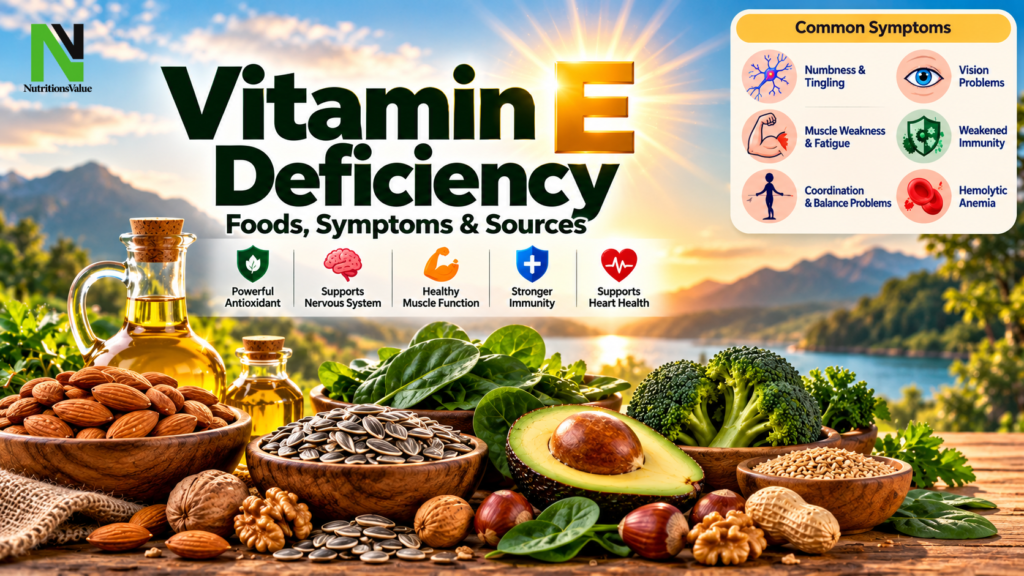
Vitamin E Deficiency Symptoms
Mild dietary inadequacy often produces no obvious symptoms. When significant deficiency develops, particularly because of long-term malabsorption, neurological and muscular problems can occur.
1. Muscle Weakness
Significant vitamin E deficiency can affect skeletal muscle and may cause weakness.
Muscle weakness can also result from many other nutritional, neurological, metabolic, and medical conditions, so it is not specific to vitamin E deficiency.
2. Numbness or Reduced Sensation
Vitamin E deficiency can damage peripheral nerves.
This may cause:
• Numbness
• Tingling
• Reduced sensation in the hands or feet
• Problems sensing the position of the limbs
These neurological effects are more characteristic of significant, prolonged deficiency.
3. Problems With Coordination and Balance
Severe deficiency can affect the nervous system and may result in:
• Poor coordination
• Difficulty walking
• Loss of balance
• Problems controlling body movements
Some severe cases can involve ataxia, a neurological condition characterized by impaired coordination.
4. Vision Problems
Vitamin E deficiency can affect the nervous system and eyes. Vision problems and retinal abnormalities have been reported in clinically significant deficiency.
However, most vision problems have causes unrelated to vitamin E, so persistent changes in vision require proper medical evaluation.
5. Weakened Immune Function
Vitamin E contributes to normal immune function. Significant deficiency can impair immune responses.
6. Hemolytic Anemia
Vitamin E deficiency can make red blood cells more vulnerable to damage, potentially causing hemolytic anemia, in which red blood cells break down faster than they are replaced.
This is particularly important in certain premature infants.
What Causes Vitamin E Deficiency?
1. Fat Malabsorption
The most important cause of vitamin E deficiency in otherwise well-nourished adults is impaired fat absorption.
Because vitamin E is fat-soluble, problems digesting or absorbing fat can reduce the amount of vitamin E entering the bloodstream.
Conditions that can contribute include:
• Crohn’s disease
• Cystic fibrosis
• Chronic pancreatitis
• Certain liver and bile-duct disorders
• Short bowel syndrome
• Some intestinal disorders
2. Very Low-Fat Diets
A severely restricted diet that provides very little dietary fat may reduce vitamin E intake and can also interfere with the absorption of fat-soluble vitamins.
This does not mean that all low-fat diets cause vitamin E deficiency. A well-planned diet can provide adequate vitamin E even when overall fat intake is moderate.
3. Abetalipoproteinemia
Abetalipoproteinemia is a rare inherited disorder that interferes with the absorption and transport of dietary fat.
People with this condition can develop severe vitamin E deficiency and neurological complications without appropriate treatment.
4. Ataxia With Vitamin E Deficiency
Ataxia with vitamin E deficiency (AVED) is a rare inherited condition that affects vitamin E transport and can lead to progressive neurological problems.
It is different from ordinary dietary inadequacy and requires specialist medical management.
Best Vitamin E-Rich Foods
Vitamin E is widely distributed across plant foods, particularly vegetable oils, nuts, seeds, and some green vegetables.
Excellent dietary sources include:
• Wheat germ oil
• Sunflower seeds
• Almonds
• Sunflower oil
• Safflower oil
• Hazelnuts
• Peanuts
• Peanut butter
• Spinach
• Broccoli
• Avocado
• Vegetable oils
• Fortified cereals
The exact amount varies by food, variety, processing, and serving size.
Vitamin E Food Sources and Approximate Amounts
The following values come from the NIH Office of Dietary Supplements’ selected-food table and illustrate how much alpha-tocopherol certain foods provide.
Food | Serving | Vitamin E |
Wheat germ oil | 1 tablespoon | 20.3 mg |
Sunflower seeds, dry roasted | 1 oz | 7.4 mg |
Almonds, dry roasted | 1 oz | 6.8 mg |
Sunflower oil | 1 tablespoon | 5.6 mg |
Safflower oil | 1 tablespoon | 4.6 mg |
Hazelnuts, dry roasted | 1 oz | 4.3 mg |
Peanut butter | 2 tablespoons | 2.9 mg |
Peanuts, dry roasted | 1 oz | 2.2 mg |
Corn oil | 1 tablespoon | 1.9 mg |
Spinach, boiled | ½ cup | 1.9 mg |
Broccoli, boiled | ½ cup | 1.2 mg |
These values are useful reference points, but food composition can vary. For packaged foods, check the product’s nutrition label.
1. Almonds
Almonds are one of the most practical vitamin E-rich foods.
A 1-ounce serving of dry-roasted almonds provides about 6.8 mg of vitamin E, according to the NIH selected-food table.
Almonds also provide:
• Protein
• Unsaturated fats
• Magnesium
• Fiber
A small handful can therefore contribute meaningfully to daily vitamin E intake.
2. Sunflower Seeds
Sunflower seeds are another concentrated source.
One ounce of dry-roasted sunflower seeds provides about 7.4 mg of vitamin E.
They can be added to:
• Salads
• Oatmeal
• Yogurt
• Homemade trail mix
• Smoothie bowls
3. Vegetable Oils
Vegetable oils can contribute significant amounts of vitamin E because vitamin E is naturally associated with plant oils.
Useful sources include:
• Sunflower oil
• Safflower oil
• Wheat germ oil
• Corn oil
• Soybean oil
• Canola oil
Wheat germ oil is particularly concentrated, although it is generally consumed in much smaller quantities than common cooking oils.
4. Hazelnuts
Hazelnuts are another useful source.
One ounce of dry-roasted hazelnuts provides approximately 4.3 mg of vitamin E.
5. Peanuts and Peanut Butter
Peanuts and peanut butter can also contribute vitamin E.
According to the NIH, one ounce of dry-roasted peanuts provides about 2.2 mg, while two tablespoons of peanut butter provide about 2.9 mg.
Choose products with minimal added sugar and salt when appropriate.
6. Spinach
Spinach provides smaller amounts than nuts and seeds but can still contribute to overall intake.
Half a cup of boiled spinach provides about 1.9 mg of vitamin E in the NIH selected-food table.
Spinach also provides folate, vitamin K, carotenoids, and other nutrients.
7. Broccoli
Broccoli contains vitamin E in smaller quantities.
Half a cup of boiled broccoli provides approximately 1.2 mg according to the NIH selected-food table.
While broccoli is not one of the richest vitamin E foods, it can contribute to a varied diet.
How Much Vitamin E Do You Need?
The recommended daily amount for adults is 15 mg of alpha-tocopherol per day. Breastfeeding women need 19 mg per day.
Life stage | Recommended amount |
Birth–6 months | 4 mg |
7–12 months | 5 mg |
1–3 years | 6 mg |
4–8 years | 7 mg |
9–13 years | 11 mg |
14–18 years | 15 mg |
Adults | 15 mg |
Pregnancy | 15 mg |
Breastfeeding | 19 mg |
These values refer to vitamin E as alpha-tocopherol.
Vitamin E Deficiency in Children
Children with healthy digestion and absorption generally obtain sufficient vitamin E through a balanced diet.
However, deficiency can occur when children have conditions that interfere with fat absorption.
Possible neurological manifestations include:
• Muscle weakness
• Poor coordination
• Difficulty walking
• Reduced reflexes
• Problems sensing body position
• Vision abnormalities
Children with chronic gastrointestinal, liver, or pancreatic conditions may therefore require medical monitoring of fat-soluble vitamins.
How Is Vitamin E Deficiency Diagnosed?
Symptoms alone are not enough to diagnose vitamin E deficiency.
A healthcare professional may consider:
• Medical history
• Dietary intake
• Symptoms
• Physical examination
• Underlying digestive or absorption disorders
• Blood testing
A blood test can measure serum alpha-tocopherol.
Because vitamin E circulates with blood lipids, clinicians may also interpret vitamin E relative to lipid levels in certain situations. Merck Manual notes that a low serum alpha-tocopherol concentration or low alpha-tocopherol-to-lipid ratio can support the diagnosis.
Vitamin E Deficiency Treatment
Treatment depends on why the deficiency developed.
If dietary intake is inadequate
Increasing vitamin E-rich foods may help restore adequate intake.
Useful foods include:
• Nuts
• Seeds
• Vegetable oils
• Green vegetables
• Fortified foods
If malabsorption is responsible
Simply eating more vitamin E may not be sufficient because the underlying problem may prevent normal absorption.
Treatment may therefore involve:
• Treating the underlying condition
• Vitamin E supplementation
• Specialized formulations in certain malabsorption disorders
• Monitoring blood levels and clinical response
Severe deficiency with neurological complications may require higher-dose medical treatment.
Do not self-treat suspected deficiency with very high-dose vitamin E supplements.
Can You Take Too Much Vitamin E?
Yes.
Vitamin E from normal foods is generally considered safe, but high-dose vitamin E supplements can increase the risk of bleeding.
For adults, the U.S. upper limit for vitamin E from supplements is 1,000 mg/day of any form of supplemental alpha-tocopherol, equivalent to 1,500 IU/day of natural vitamin E or 1,100 IU/day of synthetic vitamin E.
Potential problems with excessive supplemental vitamin E include:
• Increased bleeding risk
• Hemorrhagic stroke risk
• Nausea
• Diarrhea
• Fatigue
• Muscle weakness
The risk can be particularly important for people taking warfarin or other anticoagulant/antiplatelet medicines.
Vitamin E and Blood-Thinning Medicines
Vitamin E supplements may interact with medicines that affect blood clotting.
People taking medicines such as:
• Warfarin
• Certain anticoagulants
• Antiplatelet medicines
should talk with a doctor or pharmacist before taking high-dose vitamin E supplements.
This is another reason why high-dose supplementation should not be treated as a routine health habit.
Does Vitamin E Prevent Disease?
Vitamin E has important biological functions, but that does not mean that taking high-dose vitamin E supplements automatically prevents chronic diseases.
According to the NIH, research has not shown that vitamin E supplements prevent heart disease, and evidence for cancer prevention is not supportive. High dose supplementation can also have risks.
Therefore, NutritionsValue’s practical approach should be:
Focus on adequate dietary vitamin E rather than taking high-dose supplements without a specific medical reason.
Vitamin E and Healthy Fats
Because vitamin E is fat-soluble, foods containing healthy unsaturated fats can be useful contributors to vitamin E intake.
Examples include:
• Almonds
• Peanuts
• Sunflower seeds
• Vegetable oils
• Avocado
• Nuts and seeds
A balanced dietary pattern can therefore provide both vitamin E and beneficial unsaturated fats.
Vitamin E Deficiency vs Low Vitamin E Intake
These terms are sometimes used interchangeably, but they are not exactly the same.
Low intake
A person’s diet may contain less vitamin E than recommended.
This does not necessarily mean the person has clinical deficiency.
Clinical deficiency
The body’s vitamin E status becomes sufficiently low to cause physiological problems.
This is uncommon in healthy adults and is usually associated with fat-malabsorption disorders or certain rare genetic conditions.
This distinction is important because not every person with a low dietary intake needs high-dose supplements.
FAQs
What are the symptoms of vitamin E deficiency?
Significant deficiency can cause muscle weakness, reduced sensation, poor coordination, difficulty walking, vision problems, and impaired immune function. Hemolytic anemia can also occur.
Is vitamin E deficiency common?
No. True vitamin E deficiency is rare in otherwise healthy people. It is more commonly associated with conditions that interfere with fat digestion or absorption.
Which food is highest in vitamin E?
Wheat germ oil is among the most concentrated dietary sources listed by the NIH, while sunflower seeds and almonds are practical whole-food sources.
Are almonds rich in vitamin E?
Yes. One ounce of dry-roasted almonds provides approximately 6.8 mg of vitamin E.
Are sunflower seeds a good source of vitamin E?
Yes. One ounce of dry-roasted sunflower seeds provides about 7.4 mg of vitamin E.
Is vitamin E found in vegetables?
Yes. Green vegetables such as spinach and broccoli contain vitamin E, although nuts, seeds, and vegetable oils generally provide much larger amounts per serving.
Can vitamin E deficiency cause muscle weakness?
Yes. Significant vitamin E deficiency can affect nerves and muscles and may cause muscle weakness.
Can vitamin E deficiency affect the nervous system?
Yes. Prolonged deficiency can cause peripheral nerve damage, impaired coordination, reduced sensation, and other neurological problems.
Can vitamin E deficiency affect vision?
Yes. Vision problems and retinal abnormalities can occur in significant deficiency, although most vision problems have other causes.
Can vegans get enough vitamin E?
Yes. Nuts, seeds, vegetable oils, spinach, broccoli, and other plant foods can provide vitamin E.
Should everyone take a vitamin E supplement?
No. Most healthy people can obtain vitamin E from food, and high-dose supplements can increase bleeding risk. Supplementation should be based on individual needs and professional advice when appropriate.
What is the recommended daily intake of vitamin E for adults?
The recommended amount for adults is 15 mg per day of alpha-tocopherol. Breastfeeding women need 19 mg per day.
Key Takeaways
• Vitamin E is a fat soluble antioxidant that helps protect cells from oxidative damage.
• It supports immune function, cell signaling, blood-vessel function, nerves, and muscles.
• True vitamin E deficiency is rare in healthy adults.
• Significant deficiency is usually associated with fat-malabsorption disorders or rare genetic conditions.
• Symptoms can include muscle weakness, numbness, poor coordination, vision problems, and impaired immune function.
• Nuts, seeds, and vegetable oils are among the richest dietary sources.
• Sunflower seeds, almonds, hazelnuts, peanuts, spinach, and broccoli can contribute vitamin E.
• Adults generally need 15 mg of vitamin E per day.
• High dose vitamin E supplements can increase bleeding risk and can interact with certain medications.
• For most people, obtaining vitamin E through a varied diet is preferable to taking high-dose supplements.
Vitamin E plays a quiet but important role as one of the body’s key fat-soluble antioxidants, protecting cells from everyday oxidative stress. True deficiency is relatively rare in healthy people and is almost always tied to an underlying issue with fat absorption rather than diet alone but when it does occur, the neurological effects can be serious and warrant prompt medical attention. For most people, simply including a variety of nuts, seeds, vegetable oils, and leafy greens in a balanced diet is enough to maintain healthy vitamin E levels without any need for supplementation.
Explore More Health Related Article
🩺 Health & Nutrition Conditions
🥗 Nutrition Science
🍎 Comparative Analysis of the Most Nutritious Fruits
🌿 Top 10 Herbs & Wellness
🥦 Broccoli Nutrition
🥬 Spinach Nutrition
Medical Disclaimer
This article is provided for general educational and nutritional information only and is not a substitute for professional medical or dietary advice. Vitamin E deficiency is uncommon in healthy adults, and symptoms such as weakness, numbness, coordination problems, or vision changes can have many possible causes. If you suspect a deficiency, have a condition that affects fat absorption, or are considering high dose vitamin E supplementation, consult a qualified healthcare professional.
Trusted Sources
- NIH Office of Dietary Supplements – Vitamin E Fact Sheet for Consumers
- NIH Office of Dietary Supplements – Vitamin E Fact Sheet for Health Professionals
- Merck Manual Professional – Vitamin E Deficiency
- Merck Manual Consumer – Vitamin E Deficiency
- USDA FoodData Central – vitamin E food composition database, referenced by NIH for food nutrient values.