
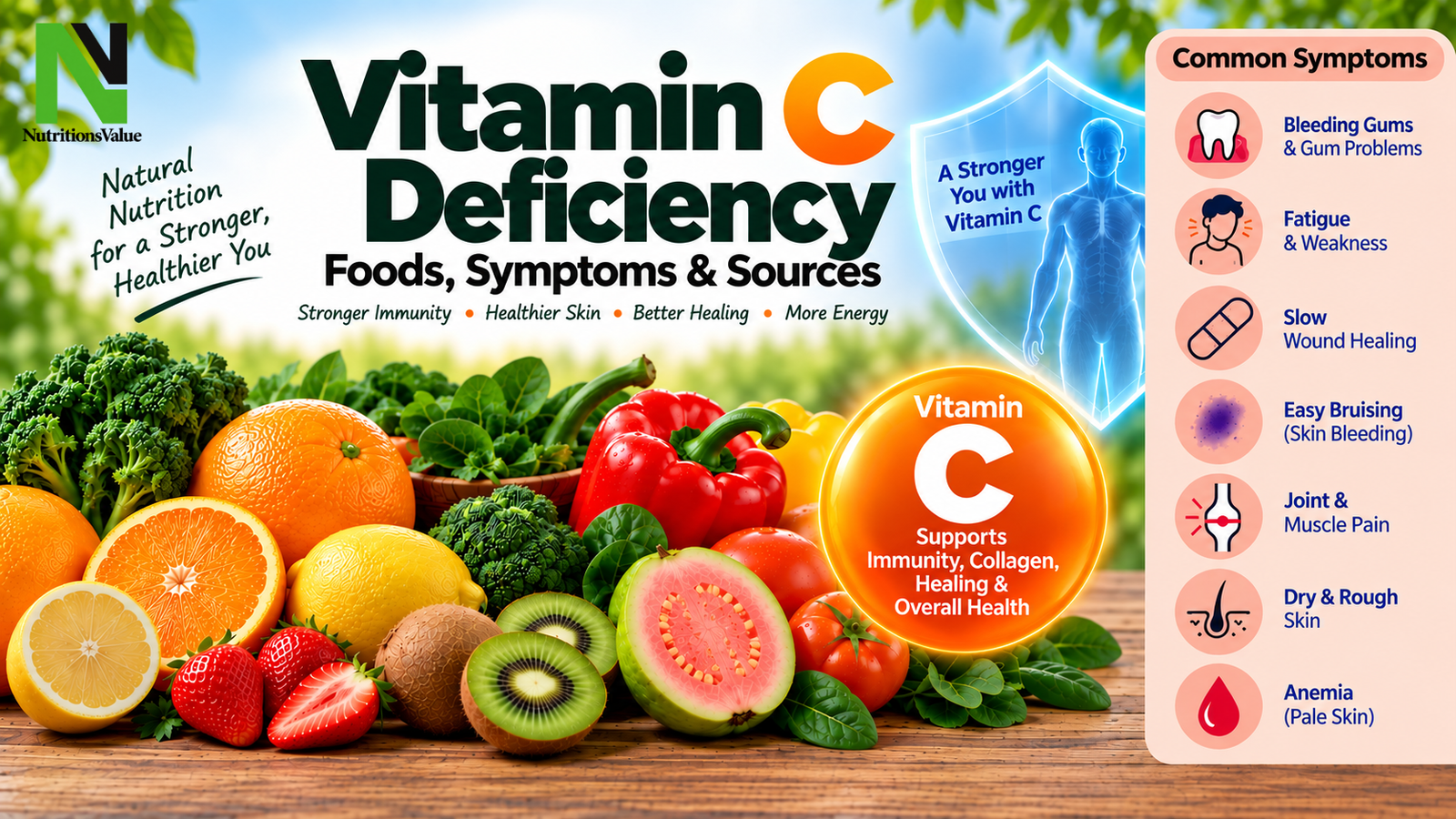
Vitamin C is an essential water soluble vitamin that the human body cannot produce on its own, so it must be obtained through the diet. It is also known as ascorbic acid and plays important roles in collagen production, wound healing, immune function, antioxidant activity, and the absorption of non heme iron from plant foods.
When vitamin C intake remains very low for a prolonged period, the body can eventually develop vitamin C deficiency, with severe deficiency causing a disease called scurvy. Scurvy is uncommon where people have regular access to a varied diet, but it can still occur in people with very limited food variety, certain medical conditions, or other risk factors.
Understanding the symptoms, causes, foods, and sources of vitamin C can help people make informed dietary choices and recognize when professional medical evaluation may be appropriate.
What Is Vitamin C?
Vitamin C, or L-ascorbic acid, is a water-soluble vitamin naturally found in many fruits and vegetables. Humans cannot synthesize vitamin C, making dietary intake essential.
Unlike fat-soluble vitamins, vitamin C is not stored in the body in large amounts, so regular dietary intake is important.
Vitamin C is involved in:
- Collagen formation
- Wound healing
- Normal connective-tissue function
- Immune-system function
- Antioxidant activity
- Neurotransmitter synthesis
- L-carnitine production
Absorption of non-heme iron
Why Is Vitamin C Important?
One of vitamin C’s most important functions is its role in collagen synthesis.
Collagen is a structural protein found throughout the body, including in:
- Skin
- Blood vessels
- Bones
- Cartilage
- Gums
- Connective tissues
Because collagen is important for tissue integrity and wound healing, severe vitamin C deficiency can lead to fragile tissues, easy bruising, bleeding gums, and poor wound healing.
Vitamin C and Immune Function
Vitamin C contributes to normal immune function and is concentrated in several types of immune cells. However, this does not mean that taking large doses of vitamin C automatically prevents infections or makes the immune system “stronger.”
Adequate intake is important, but supplementation beyond nutritional requirements is not a substitute for a balanced diet or appropriate medical care.
Vitamin C and Iron Absorption
Vitamin C can improve the absorption of non-heme iron, the form of iron found primarily in plant foods.
This is particularly relevant when foods such as lentils, beans, spinach, or other plant sources of iron are eaten together with vitamin C-rich foods.
For example, adding tomatoes, bell peppers, citrus fruit, or other vitamin C-rich foods to a meal can help increase non-heme iron absorption.
What Is Vitamin C Deficiency?
Vitamin C deficiency occurs when the body does not receive enough vitamin C for an extended period.
Severe vitamin C deficiency causes scurvy.
The severity and timing depend on existing vitamin C stores and the degree of dietary deficiency. NIH notes that signs of scurvy can appear after prolonged intake of less than approximately 10 mg of vitamin C per day, although the timeline varies between individuals.
Vitamin C deficiency is uncommon in many populations, but it can still occur when people have very limited diets or medical conditions that affect nutritional status.
Vitamin C Deficiency Symptoms
The symptoms of vitamin C deficiency can develop gradually.
Early or possible symptoms include:
- Fatigue
- Weakness
- Malaise
- Irritability
- Loss of appetite
- Gum inflammation
As deficiency becomes more severe, additional symptoms can develop.
More advanced symptoms may include:
- Swollen or bleeding gums
- Easy bruising
- Small red or purple spots on the skin
- Joint or muscle pain
- Poor wound healing
- Dry or rough skin
- Corkscrew-shaped body hair
- Loose teeth
- Anemia
- Swelling
- Depression or mood changes
These are characteristic features associated with scurvy, the severe form of vitamin C deficiency.
Important: Having fatigue, bruising, bleeding gums, or other individual symptoms does not automatically mean that a person has vitamin C deficiency. Many medical conditions can produce similar symptoms.
Vitamin C Deficiency and Scurvy
What Is Scurvy?
Scurvy is the clinical disease caused by severe vitamin C deficiency.
Without enough vitamin C, collagen production becomes impaired. This weakens connective tissues and blood vessels and can eventually cause widespread symptoms.
Possible manifestations include:
- Bleeding gums
- Skin bleeding
- Bruising
- Poor wound healing
- Joint pain
- Corkscrew hairs
- Anemia
- Loose or lost teeth
Untreated severe scurvy can become life-threatening.
Although scurvy is historically associated with sailors on long voyages, it can still occur today in people whose diets provide very little vitamin C.
What Causes Vitamin C Deficiency?
The most common underlying cause is insufficient dietary intake, especially when fruits and vegetables are rarely consumed.
Other factors can contribute to inadequate vitamin C status.
- Limited Food Variety
People who consume a very restricted range of foods may not obtain enough vitamin C.
This can occur because of:
- Food insecurity
- Severe dietary restriction
- Poor appetite
- Certain eating disorders
- Limited access to fresh produce
- Extremely restrictive food preferences
- Smoking
Smoking is associated with lower vitamin C levels. The NIH notes that people who smoke require 35 mg more vitamin C per day than people who do not smoke.
Secondhand smoke exposure can also lower vitamin C levels.
- Malabsorption
Some gastrointestinal conditions can interfere with nutrient absorption and may increase the risk of vitamin C inadequacy.
Examples can include conditions involving severe intestinal malabsorption.
- Certain Chronic Diseases
Some chronic illnesses can affect nutritional status or increase the body’s nutritional requirements.
People with severe chronic illness, cachexia, certain cancers, or kidney disease requiring hemodialysis may be at increased risk of inadequate vitamin C status.
- Alcohol or Drug Dependence
Chronic alcohol or drug dependence may increase the risk of vitamin C deficiency partly because of poor dietary intake and limited food variety.
Best Vitamin C-Rich Foods
The best dietary sources of vitamin C are generally fruits and vegetables.
Some of the richest commonly available sources include:
- Red bell peppers
- Oranges
- Kiwifruit
- Green bell peppers
- Broccoli
- Strawberries
- Brussels sprouts
- Grapefruit
- Tomatoes
- Cantaloupe
- Cabbage
- Cauliflower
- Potatoes
Vitamin C-Rich Foods and Their Vitamin C Content
The following values are from the NIH Office of Dietary Supplements and represent selected serving sizes.
Food | Serving | Vitamin C |
Red sweet pepper, raw | ½ cup | 95 mg |
Orange juice | ¾ cup | 93 mg |
Orange | 1 medium | 70 mg |
Grapefruit juice | ¾ cup | 70 mg |
Kiwifruit | 1 medium | 64 mg |
Green sweet pepper, raw | ½ cup | 60 mg |
Broccoli, cooked | ½ cup | 51 mg |
Strawberries | ½ cup | 49 mg |
Brussels sprouts, cooked | ½ cup | 48 mg |
Grapefruit | ½ medium | 39 mg |
Broccoli, raw | ½ cup | 39 mg |
Tomato juice | ¾ cup | 33 mg |
Cantaloupe | ½ cup | 29 mg |
Cabbage, cooked | ½ cup | 28 mg |
Cauliflower, raw | ½ cup | 26 mg |
Baked potato | 1 medium | 17 mg |
Tomato, raw | 1 medium | 17 mg |
Spinach, cooked | ½ cup | 9 mg |
Food composition can vary depending on variety, storage, preparation, and serving size.
Vitamin C Sources for Vegans
Vitamin C is particularly accessible in plant-based diets.
Excellent vegan sources include:
- Bell peppers
- Citrus fruits
- Kiwifruit
- Strawberries
- Broccoli
- Tomatoes
- Cabbage
- Cauliflower
- Brussels sprouts
- Potatoes
- Guava
- Cantaloupe
Unlike vitamin B12, vitamin C does not require animal-derived foods. Fruits and vegetables are among its best sources.
Indian Foods Rich in Vitamin C
For an international nutrition website such as NutritionsValue.com, it is useful to include familiar foods from different regions.
Indian diets can provide vitamin C through foods such as:
- Amla (Indian gooseberry)
- Guava
- Green and red chillies
- Bell peppers
- Tomatoes
- Lemon
- Oranges
- Papaya
- Cabbage
- Cauliflower
- Broccoli
- Fresh coriander
Amla is particularly notable for its vitamin C content, although the exact amount can vary considerably by variety, freshness, processing, and serving size.
For exact nutrient values, use a reliable food-composition database rather than assuming that every preparation contains the same amount.
Vitamin C and Cooking
Vitamin C is water soluble and sensitive to heat, so prolonged cooking and storage can reduce the amount present in foods.
This does not mean that cooked vegetables are poor foods.
Instead, consider:
- Eating some fruits and vegetables raw when appropriate
- Avoiding unnecessarily long cooking times
- Using steaming or microwaving when suitable
- Consuming freshly prepared produce
- Including a mixture of raw and cooked vegetables
The NIH notes that steaming or microwaving may reduce cooking losses compared with some other cooking methods.
How Much Vitamin C Do You Need?
Vitamin C requirements vary according to age, sex, pregnancy, breastfeeding, and smoking status.
According to the U.S. National Academies’ reference values:
Life Stage | Recommended Amount |
Adult men | 90 mg/day |
Adult women | 75 mg/day |
Pregnancy | 85 mg/day |
Breastfeeding | 120 mg/day |
Teen boys, 14–18 | 75 mg/day |
Teen girls, 14–18 | 65 mg/day |
Children 9–13 | 45 mg/day |
People who smoke require an additional 35 mg/day according to the NIH.
These are U.S. reference values; recommendations can differ between countries.
Vitamin C Deficiency in Children
Children can develop vitamin C deficiency when their diets are extremely limited.
Severe deficiency can affect connective tissues and, in children, may also be associated with bone disease.
Infants should receive breast milk or an appropriate infant formula rather than cow’s milk as a primary drink before 12 months. The NIH notes that evaporated or boiled cow’s milk can provide inadequate vitamin C and that heat can further destroy vitamin C.
Parents should consult a pediatric healthcare professional if a child has a highly restricted diet or symptoms suggestive of nutritional deficiency.
Who Is at Higher Risk of Vitamin C Deficiency?
Certain groups may have a greater risk of inadequate vitamin C intake.
These include:
People who smoke
Smoking increases vitamin C requirements.
People with very limited diets
A diet with little or no fruit and vegetables can substantially reduce vitamin C intake.
People with alcohol dependence
Poor dietary intake can contribute to deficiency.
People with malabsorption
Certain gastrointestinal conditions can affect nutrient absorption.
People with certain chronic diseases
Some chronic diseases can increase nutritional risk.
People with food insecurity
Limited access to fresh produce can make it harder to obtain sufficient vitamin C.
Some older adults
Older people with limited mobility, poor appetite, or restricted diets may be at increased nutritional risk.
How Is Vitamin C Deficiency Diagnosed?
Diagnosis should be based on a healthcare professional’s assessment rather than symptoms alone.
Evaluation may include:
- Medical history
- Dietary history
- Physical examination
- Assessment of symptoms
- Blood testing
- Plasma vitamin C measurement when appropriate
- Evaluation for underlying conditions
The NIH notes that plasma vitamin C is typically used to assess vitamin C status, although interpretation needs to take the clinical context into account.
A healthcare professional may also investigate other possible causes of symptoms such as fatigue, anemia, bruising, or poor wound healing.
How Is Vitamin C Deficiency Treated?
Treatment depends on the severity and underlying cause.
Possible approaches include:
- Increasing vitamin C-rich foods
- Improving overall dietary variety
- Using vitamin C supplements when medically appropriate
- Treating an underlying malabsorption problem
- Addressing food insecurity or restricted dietary intake
- Monitoring nutritional status
Scurvy should be treated promptly. The NHS notes that people with scurvy are often treated with vitamin C and dietary changes, with improvement commonly occurring after treatment begins.
Severe or suspected deficiency should be managed with professional guidance rather than self-treatment with very high doses.
Can You Get Too Much Vitamin C?
Vitamin C is water-soluble, but more is not necessarily better.
High supplemental intakes can cause gastrointestinal side effects such as:
- Diarrhea
- Nausea
- Abdominal cramps
The U.S. adult Tolerable Upper Intake Level is 2,000 mg/day from food and supplements combined.
People with certain medical conditions or those taking specific medications should discuss high-dose vitamin C supplementation with a healthcare professional.
For most people, obtaining vitamin C through a varied diet is a practical approach.
Vitamin C Supplements vs Food Sources
Vitamin C supplements can provide ascorbic acid, but supplementation is not automatically necessary for everyone.
Food sources offer more than vitamin C alone. Fruits and vegetables also provide:
- Fiber
- Other vitamins
- Minerals
- Carotenoids
- Polyphenols
- Other beneficial plant compounds
Therefore, supplements should generally complement not replace a varied diet.
Vitamin C and the Common Cold
Vitamin C is often marketed as a way to prevent or treat colds.
The evidence does not support the idea that high-dose vitamin C supplementation is a universal cure for the common cold.
The important nutritional message is simpler: adequate vitamin C is necessary for normal immune function, but taking excessive amounts does not necessarily provide additional health benefits.
Vitamin C Deficiency vs. Low Vitamin C Intake
These terms are not always interchangeable.
Low vitamin C intake
This means a person’s diet provides less vitamin C than recommended.
Vitamin C inadequacy
Vitamin C intake may be below recommended levels without causing severe clinical deficiency.
Vitamin C deficiency
The body’s vitamin C status is sufficiently low to impair normal functions.
Scurvy
Scurvy is the severe clinical disease caused by vitamin C deficiency.
This distinction is important because not everyone who consumes less than the recommended amount develops scurvy.
How to Prevent Vitamin C Deficiency
A varied diet is usually the best strategy.
Include fruits regularly
Examples include:
- Oranges
- Guava
- Kiwifruit
- Strawberries
- Papaya
- Cantaloupe
Include vegetables regularly
Especially:
- Bell peppers
- Broccoli
- Tomatoes
- Cabbage
- Cauliflower
- Brussels sprouts
Vary food preparation
Include some fresh or lightly cooked produce because prolonged heat can reduce vitamin C content.
Combine vitamin C with plant-based iron sources
For example:
Lentils + tomatoes
or
Beans + bell peppers (Shimla Mirch)
Vitamin C can improve non-heme iron absorption.
FAQs
What are the first signs of vitamin C deficiency?
Early symptoms can include fatigue, weakness, malaise, and gum inflammation. As deficiency progresses, bruising, bleeding gums, joint pain, and poor wound healing can develop.
What is the most common cause of vitamin C deficiency?
Inadequate dietary intake—particularly a diet with very little fruit and vegetables—is an important cause. Medical conditions affecting absorption and certain lifestyle factors can also contribute.
Can vitamin C deficiency cause bleeding gums?
Yes. Swollen or bleeding gums are characteristic features of severe vitamin C deficiency and scurvy.
Can vitamin C deficiency cause anemia?
It can contribute to anemia, partly because vitamin C improves non-heme iron absorption and severe deficiency can involve bleeding.
Which fruit has the most vitamin C?
Vitamin C content varies considerably by fruit, variety, serving size, and preparation. Kiwifruit, citrus fruits, strawberries, guava, and other fruits can provide substantial amounts.
Are oranges the only good source of vitamin C?
No. Bell peppers, broccoli, kiwifruit, strawberries, Brussels sprouts, tomatoes, and several other fruits and vegetables are also good sources.
Is vitamin C deficiency common?
Severe deficiency and scurvy are uncommon in many developed countries, but deficiency can still occur in people with very restricted diets, malabsorption, certain chronic conditions, or other risk factors.
Can vegetarians and vegans get enough vitamin C?
Yes. Fruits and vegetables the primary dietary sources of vitamin C are naturally plant-based.
Does cooking destroy vitamin C?
Cooking can reduce vitamin C because it is water-soluble and sensitive to heat. The amount lost depends on the cooking method, temperature, duration, and food.
Can you take too much vitamin C?
Yes. Large supplemental doses can cause gastrointestinal problems such as diarrhea, nausea, and abdominal cramps. The U.S. adult upper limit is 2,000 mg/day from food and supplements combined.
Final Conclusion
Vitamin C is an essential nutrient needed for collagen production, wound healing, immune function, antioxidant activity, and non heme iron absorption. Because humans cannot make vitamin C themselves, regular dietary intake is important.
The best dietary sources are fruits and vegetables, including bell peppers, oranges, kiwifruit, strawberries, broccoli, tomatoes, Brussels sprouts, and other produce. A varied diet can generally provide enough vitamin C for healthy people.
Severe and prolonged deficiency can cause scurvy, which may result in fatigue, bleeding gums, easy bruising, joint pain, poor wound healing, anemia, and other serious complications.
If someone has persistent symptoms, a highly restricted diet, or medical conditions that may affect nutrient absorption, professional evaluation is appropriate rather than relying on symptoms alone.
Explore More Health Related Article
🩺 Health & Nutrition Conditions
🥗 Nutrition Science
🍎 Comparative Analysis of the Most Nutritious Fruits
🌿 Top 10 Herbs & Wellness
⚖️ Comparison of Nutrition
Medical Disclaimer
The information provided in this article is intended for general educational and informational purposes only. It is not intended to diagnose, treat, cure, or prevent any disease or medical condition and is not a substitute for professional medical or dietary advice.
Vitamin C deficiency can have different causes, and symptoms may overlap with other medical conditions. Severe deficiency can cause scurvy and requires appropriate medical evaluation and treatment.
Sources & References
- NIH Office of Dietary Supplements — Vitamin C, Health Professional Fact Sheet
- NIH Office of Dietary Supplements — Vitamin C, Consumer Fact Sheet
- NHS — Scurvy
- NHS — Vitamin C
- World Health Organization — Scurvy and its prevention and control
- USDA FoodData Central — detailed nutrient composition data referenced by NIH.