
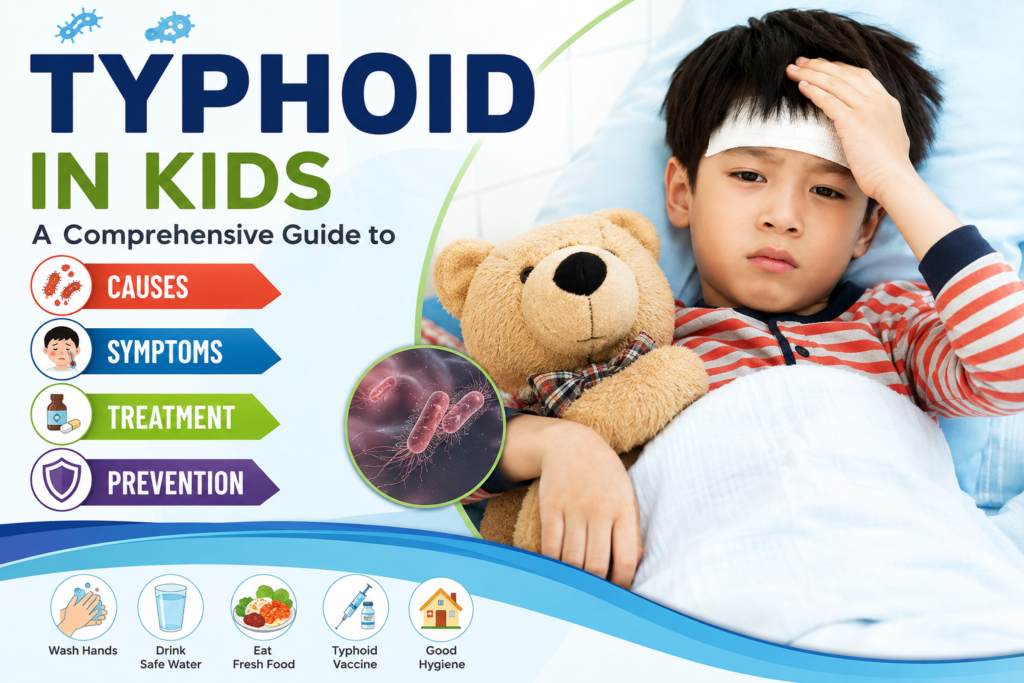
Typhoid fever in children is a bacterial infection caused by Salmonella Typhi. It is usually transmitted when a child consumes food or water contaminated with the bacteria. Because children are particularly vulnerable in areas where safe drinking water, sanitation and food hygiene are inadequate, typhoid remains an important childhood health concern in many parts of the world, including South Asia.
Typhoid is different from an ordinary stomach infection or viral fever. Without appropriate treatment, it can become serious and may cause complications involving the intestine, bloodstream and other organs. Fortunately, typhoid can be treated with appropriate antibiotics, and vaccination, safe water, sanitation and good food hygiene can significantly reduce the risk.
Many parents also ask whether herbs such as tulsi, ginger, turmeric or garlic can be used during typhoid. Some herbs and foods may be used as supportive parts of a child’s diet, but there is an important distinction between supporting recovery and treating the infection. Herbal remedies should never replace antibiotics when a child has confirmed or suspected typhoid.
What Is Typhoid in Children?
Typhoid fever is an infection caused by the bacterium Salmonella enterica serovar Typhi, commonly called Salmonella Typhi.
The bacteria live primarily in humans. They enter the body through contaminated food or water, pass through the digestive system and can subsequently invade the bloodstream.
Unlike many short lived stomach infections, typhoid can cause prolonged fever and systemic illness.
Children may initially appear to have an ordinary fever, but symptoms can progressively develop over several days.
Common symptoms include:
- Persistent or prolonged fever
- Weakness and tiredness
- Headache
- Loss of appetite
- Abdominal pain
- Nausea
- Constipation or diarrhea
- Sometimes vomiting
- Sometimes a skin rash
Severe typhoid can lead to serious complications and can become life-threatening if untreated.
Children can be particularly vulnerable to typhoid in communities where:
- Drinking water is contaminated
- Sewage systems are inadequate
- Food hygiene is poor
- Handwashing facilities are limited
- Food is prepared or stored under unhygienic conditions
- Typhoid vaccination coverage is inadequate
WHO identifies children and populations without reliable access to safe drinking water and sanitation as groups at higher risk.
For parents, the most important message is simple:
Persistent fever in a child should not automatically be assumed to be typhoid.
Malaria, dengue, urinary infections, pneumonia, viral infections and other illnesses can also cause fever. A healthcare professional should determine the likely cause.
What Causes Typhoid in Kids?
Typhoid is caused by Salmonella Typhi.
The infection usually spreads through the fecal-oral route. This means bacteria from the stool of an infected person can contaminate food, water or hands and eventually enter another person’s mouth.
- Contaminated Drinking Water
Water contaminated with human waste can transmit Salmonella Typhi.
Children may become infected by drinking:
- Contaminated tap water
- Unsafe well water
- Contaminated ice
- Unboiled or untreated water
- Water handled under poor sanitary conditions
- Contaminated Food
Food can become contaminated when:
- It is prepared with unsafe water.
- An infected food handler does not wash their hands properly.
- Food is stored at unsafe temperatures.
- Raw and cooked foods are handled together.
- Fruits or vegetables are washed with contaminated water.
- Poor Hand Hygiene
Hands can transfer bacteria from contaminated surfaces or toilets to food and eventually into a child’s mouth.
Teaching children to wash their hands properly is therefore one of the simplest preventive measures.
- Contact With an Infected Person
A person infected with typhoid can continue shedding bacteria in their stool, even after symptoms improve.
WHO notes that some people can become chronic carriers and continue spreading Salmonella Typhi.
Typhoid Symptoms in Children
Symptoms can vary from child to child.
One of the most important symptoms is prolonged fever.
The fever may gradually increase and remain for several days.
Parents should take persistent fever seriously, particularly when it occurs together with abdominal symptoms, weakness or poor appetite.
- Weakness and Fatigue
A child may become:
- Less active
- Sleepier than usual
- Uninterested in playing
- Physically weak
- Easily tired
- Headache
Some children complain of headaches along with fever.
Younger children may simply become irritable or unusually quiet.
- Loss of Appetite
A child with typhoid may refuse food or eat much less than usual.
This can increase the risk of:
- Weight loss
- Weakness
- Dehydration
- Nutritional deficiencies
- Abdominal Pain
Abdominal discomfort or pain can occur.
Parents should report significant abdominal pain to the doctor.
- Diarrhea or Constipation
Typhoid can cause either diarrhea or constipation.
Therefore, the absence of diarrhea does not rule out typhoid.
- Nausea and Vomiting
Some children experience nausea or vomiting.
Repeated vomiting is particularly concerning because it can make maintaining hydration difficult.
- Skin Rash
Some patients develop small, faint spots or a rash, although this is not present in every child.
- Cough or Other Symptoms
Some children may initially have symptoms that resemble another infection.
Because typhoid symptoms overlap with many other illnesses, diagnosis should not be based on symptoms alone.
Typhoid vs. Viral Fever: How Are They Different?
Parents often wonder whether prolonged fever means typhoid.
Not necessarily.
Many childhood illnesses cause fever, including:
- Viral respiratory infections
- Influenza
- Dengue
- Malaria
- Urinary tract infections
- Pneumonia
- Gastrointestinal infections
- Other bacterial infections
Typhoid may cause prolonged fever, fatigue, headache, abdominal pain, nausea and bowel changes, but these symptoms are not unique to typhoid. WHO notes that typhoid can be clinically difficult to distinguish from other febrile illnesses.
Therefore, testing and medical evaluation are important.
When Should Parents Take a Child to a Doctor?
Parents should seek medical evaluation when a child has:
- Persistent fever
- Fever associated with significant weakness
- Abdominal pain
- Repeated vomiting
- Persistent diarrhea
- Poor drinking
- Reduced urination
- Severe headache
- Confusion or unusual sleepiness
- Weight loss
- Signs of dehydration
- Fever after possible exposure to contaminated food or water
A child who appears seriously ill should be assessed urgently.
Emergency Warning Signs of Typhoid
Typhoid can occasionally cause serious complications.
Seek urgent medical care if the child develops:
- Severe or worsening abdominal pain
- Abdominal swelling
- Blood in the stool
- Black or tarry stool
- Persistent vomiting
- Severe dehydration
- Confusion
- Extreme weakness
- Difficulty waking
- Breathing difficulty
- Seizures
- Collapse or fainting
Serious intestinal complications can occur in severe typhoid, particularly when treatment is delayed.
Do not attempt to manage severe symptoms at home with herbs.
How Is Typhoid Diagnosed in Children?
A doctor may consider:
- The child’s symptoms
- Duration and pattern of fever
- Travel or residence in a typhoid-endemic area
- Exposure to unsafe food or water
- Physical examination
- Laboratory testing
Blood testing and other microbiological tests may be used depending on the clinical situation and local medical practice.
Because many diseases can produce prolonged fever, a positive test or appropriate clinical assessment is important before treatment decisions are made.
Why Is Proper Diagnosis Important?
Treating every fever as typhoid can be harmful.
Unnecessary antibiotics can:
- Cause side effects
- Disturb the gut microbiome
- Promote antibiotic resistance
- Delay diagnosis of another illness
At the same time, failing to treat genuine typhoid can allow the infection to become more serious.
Therefore, parents should avoid self-diagnosing typhoid based only on fever and stomach symptoms.
Typhoid Treatment in Children
The primary treatment for typhoid is appropriate antibiotic therapy prescribed by a healthcare professional.
WHO confirms that typhoid can be treated with antibiotics, but increasing antimicrobial resistance is making treatment more complicated in some regions.
Antibiotics
The choice of antibiotic depends on factors such as:
- Local antibiotic resistance
- Suspected or confirmed bacterial susceptibility
- Severity of illness
- Child’s age
- Weight
- Medical history
- Previous antibiotic exposure
- Local clinical guidelines
Therefore, parents should never choose an antibiotic based on a previous prescription or advice from someone else.
Important:
Do not:
- Use leftover antibiotics.
- Share antibiotics.
- Change the dose yourself.
- Stop antibiotics simply because the fever improves.
- Use herbal remedies as a substitute for prescribed treatment.
WHO specifically recommends taking prescribed antibiotics for the full duration instructed by the doctor.
Why Antibiotic Resistance Makes Typhoid More Difficult
Salmonella Typhi has developed resistance to multiple antibiotics in different parts of the world.
This means an antibiotic that worked previously may not always be the best choice now.
Antibiotic resistance can result in:
- Longer illness
- More complicated treatment
- Greater healthcare costs
- Increased risk of complications
This is another reason parents should never self-medicate a child with antibiotics.
Hydration During Typhoid
Hydration is one of the most important aspects of supportive care.
Fever, diarrhea and vomiting can increase fluid loss.
Offer the child frequent small amounts of:
- Clean drinking water
- Oral rehydration solution when appropriate
- Clear soups
- Broths
- Milk if tolerated
- Other age-appropriate fluids
If the child is vomiting, small frequent sips may be easier to tolerate than a large quantity at once.
Signs of dehydration
Watch for:
- Dry mouth
- Reduced urination
- Dark urine
- No tears when crying
- Sunken eyes
- Unusual sleepiness
- Weakness
- Excessive thirst
Significant dehydration requires medical attention.
Typhoid Diet for Kids
A child recovering from typhoid may have a poor appetite.
Instead of forcing large meals, provide small, frequent, nutritious meals.
Good Food Choices
Depending on the child’s tolerance:
- Rice
- Khichdi
- Dal
- Soft-cooked vegetables
- Oatmeal
- Banana
- Stewed apple
- Yogurt if tolerated
- Eggs
- Soft chicken or fish where appropriate
- Soups
- Curd rice
- Soft roti with suitable foods
- Nut or seed preparations when age-appropriate and safe
The goal is to gradually restore:
- Energy
- Protein
- Calories
- Vitamins
- Minerals
- Fluids
Protein Is Important During Recovery
Protein supports tissue maintenance and recovery.
Age-appropriate protein sources may include:
- Eggs
- Milk
- Yogurt
- Dal
- Beans
- Lentils
- Paneer
- Fish
- Chicken
- Soy foods
If the child has significant weight loss or prolonged illness, a pediatrician or dietitian can help develop an individualized nutrition plan.
Fruits and Vegetables During Typhoid
Fruits and vegetables provide important vitamins, minerals and other nutrients.
Choose foods that the child can comfortably digest.
Examples include:
- Banana
- Apple, preferably cooked or peeled when appropriate
- Papaya
- Soft-cooked vegetables
- Carrot
- Pumpkin
- Potato
- Sweet potato
Food safety is particularly important.
Wash produce thoroughly with safe water and maintain good kitchen hygiene.
Foods Parents May Temporarily Limit
If they worsen digestive symptoms, temporarily reduce:
- Very spicy foods
- Deep-fried foods
- Very oily meals
- Excessively sugary drinks
- Unpasteurized products
- Raw foods prepared under uncertain hygiene
- Street foods from questionable hygiene conditions
There is no universal “typhoid diet.” The child’s tolerance, hydration status and medical condition matter most.
Herbal Herbs for Typhoid in Kids: Can They Be Used?
This is one of the most important sections for parents interested in natural health.
Herbs cannot be considered a proven cure for typhoid.
Typhoid is a bacterial infection, and confirmed or strongly suspected disease may require appropriate antibiotic treatment.
NCCIH warns that many herbal supplements have not been adequately tested in children. Children can also respond differently from adults because their bodies and organs are still developing.
Therefore, the safest approach is:
Use herbs primarily as foods or gentle supportive dietary ingredients when appropriate—not as “natural antibiotics.”
- Ginger for Children With Typhoid
Ginger is widely used as a culinary spice and traditional remedy.
It may be incorporated into food or a mild beverage for an older child who tolerates it.
However, there is no good evidence that ginger eliminates Salmonella Typhi or cures typhoid fever.
Safer approach
Instead of concentrated ginger supplements:
- Use a small culinary amount.
- Add it to food or a mild beverage.
- Avoid very strong preparations.
- Stop if it causes stomach discomfort.
A child with significant nausea, abdominal pain or vomiting may not tolerate ginger well.
Ginger should never replace antibiotics.
- Turmeric
Turmeric is a common Indian culinary spice containing curcuminoids.
It is perfectly reasonable to use a small amount of turmeric as part of normal cooking when the child tolerates it.
However, parents should distinguish between:
Culinary turmeric:
A normal food ingredient.
Concentrated curcumin supplement:
A high-dose product with different safety considerations.
There is not enough evidence to recommend concentrated turmeric/curcumin as a treatment for childhood typhoid.
For children, food-level use is generally a much more sensible approach than high-dose supplements.
- Tulsi (Holy Basil)
Tulsi is traditionally used in Indian households for respiratory and general wellness purposes.
However, typhoid is a systemic bacterial infection, and there is no reliable clinical evidence that tulsi tea or tulsi preparations can cure typhoid in children.
If parents want to use tulsi as a traditional food/beverage, they should first consider the child’s:
- Age
- Medical condition
- Other medicines
- Allergies
- Ability to tolerate the preparation
For young children, concentrated herbal extracts should be avoided unless recommended by a qualified healthcare professional.
- Garlic
Garlic is an excellent culinary food and can be included in normal meals when tolerated.
It contains biologically active compounds and has been investigated for various health effects.
However, eating garlic is not equivalent to treating typhoid with an antibiotic.
NCCIH notes that evidence for garlic supplements in infection-related conditions is limited, and there is a lack of adequate pediatric evidence for many uses.
Best approach
Use garlic as a normal food ingredient rather than giving concentrated garlic supplements to a child with typhoid.
- Cumin and Coriander
Cumin and coriander are common culinary spices in Indian diets.
Small amounts used in normal cooking may help make food more palatable.
But neither should be promoted as a treatment that kills Salmonella Typhi inside a child’s body.
The main benefit is nutritional and culinary—not a replacement for medical treatment.
- Fennel
Fennel is sometimes used traditionally for digestive comfort.
However, there is insufficient evidence to recommend fennel preparations as treatment for typhoid.
Parents should be particularly cautious with concentrated herbal teas or extracts in young children.
- Herbal Teas: Use Extra Caution
Parents sometimes give children multiple herbal teas during fever.
This can become problematic because:
- The ingredients may not be standardized.
- The concentration can vary.
- Some herbs interact with medicines.
- Some products can contain contaminants.
- Pediatric safety information may be limited.
NCCIH emphasizes that “natural” does not necessarily mean safe and that herbal supplements can have side effects, interactions and quality concerns.
Therefore, do not give a child several herbal preparations simultaneously.
Herbs and Antibiotics: An Important Warning
Parents sometimes believe that herbs are harmless because they are natural.
This is not always true.
Some herbal products can interact with medicines or contain contaminants. NCCIH specifically recommends discussing complementary products with a child’s healthcare provider.
Therefore, tell the pediatrician if your child is taking:
- Herbal syrup
- Herbal tea
- Herbal powder
- Ayurvedic medicine
- Botanical supplement
- Essential oils
- Traditional remedies
This helps the doctor make safer treatment decisions.
Herbal Remedies That Parents Should Avoid Using as Typhoid Treatment
Do not rely on:
- “Natural antibiotic” mixtures
- Concentrated herbal extracts
- Unknown Ayurvedic mixtures
- Essential oils taken orally
- Very strong herbal decoctions
- Unlabelled powders
- Adult herbal supplements
- Products claiming to “kill typhoid bacteria naturally”
The problem is not that every herb is harmful. The problem is that many products have insufficient evidence for pediatric use, uncertain dosing and possible interactions.
NCCIH notes that some supplements can differ from their labels and may contain contaminants or undeclared ingredients.
Can Honey Be Given During Typhoid?
Honey may be used as a food in children older than 1 year, provided the child tolerates it.
It can provide calories and may be soothing if the child has throat irritation or cough.
However:
Honey does not treat Salmonella Typhi.
And honey must never be given to infants under 12 months because of the risk of infant botulism.
A Safe Natural Recovery Approach
For a child recovering from typhoid, the emphasis should be:
- Medical treatment
Follow the pediatrician’s antibiotic and treatment plan.
- Hydration
Provide adequate fluids.
- Nutrition
Gradually restore calories and protein.
- Food-based herbs
Use small amounts of culinary herbs and spices if tolerated.
- Rest
Allow adequate sleep and recovery time.
- Hygiene
Prevent transmission to other family members.
This approach combines evidence-based medicine with sensible nutrition and traditional food practices without replacing necessary treatment.
Typhoid Prevention in Children
Prevention is extremely important because typhoid spreads through contaminated food and water.
- Safe Drinking Water
Give children water that is known to be safe.
When the safety of water is uncertain, appropriate treatment such as boiling or another reliable purification method may be necessary.
- Handwashing
Teach children to wash their hands with soap and safe water:
- Before eating
- Before handling food
- After using the toilet
- After returning from school
- After playing outside
- After touching potentially contaminated surfaces
- Safe Food
Make sure food is:
- Thoroughly cooked
- Properly stored
- Protected from flies and contamination
- Prepared using safe water
- Wash Fruits and Vegetables
Use safe water for washing produce.
- Avoid Unsafe Street Food
Especially during outbreaks or in areas with questionable sanitation, avoid food that:
- Has been sitting uncovered
- Is handled repeatedly
- Is served with unsafe water
- Is visibly poorly prepared
- Avoid Unsafe Ice
Ice made from contaminated water can transmit infection.
- Do Not Share Food Utensils Carelessly
Good personal hygiene reduces the chance of spreading infections.
Typhoid Vaccine for Children
Vaccination is one of the most important tools for preventing typhoid.
WHO recommends the typhoid conjugate vaccine (TCV) for children from 6 months of age and notes that it can be given as a single injectable dose.
Vaccination recommendations can vary according to the country, local disease burden and immunization program.
Parents in India should discuss the appropriate typhoid vaccine and timing with their child’s pediatrician.
Important:
A vaccine provides important protection but does not mean that a child can safely consume contaminated food or water.
WHO emphasizes that even vaccinated people should continue following food and water safety practices because vaccination does not provide 100% protection.
Can a Child Get Typhoid More Than Once?
Yes.
Having typhoid once does not guarantee lifelong protection.
A child can become infected again after another exposure.
Therefore, even after recovery, continue:
- Safe water practices
- Hand hygiene
- Food safety
- Appropriate vaccination
How Can Parents Prevent Typhoid at Home?
Create simple daily habits:
Morning
- Give the child safe drinking water.
- Encourage handwashing before breakfast.
School Time
- Send safe homemade food when practical.
- Provide a clean water bottle.
After School
- Encourage handwashing before eating.
- Wash hands after outdoor play.
At Home
- Keep cooked food covered.
- Use safe water.
- Wash kitchen utensils properly.
- Keep toilets clean.
These simple measures can substantially reduce exposure to contaminated food and water.
What Happens If Typhoid Is Not Treated?
Untreated typhoid can become progressively more severe.
Possible complications include:
- Intestinal bleeding
- Intestinal perforation
- Severe dehydration
- Encephalopathy or altered mental state
- Sepsis
- Other organ complications
WHO states that severe typhoid can lead to serious complications or death.
This is why parents should not rely on home remedies alone when typhoid is suspected.
Recovery After Typhoid
Recovery may take time even after the fever improves.
A child may continue experiencing:
- Tiredness
- Reduced appetite
- Weakness
- Weight loss
- Digestive discomfort
Parents should gradually return the child to normal activities.
Recovery nutrition should emphasize:
- Protein
- Energy-rich foods
- Fruits
- Vegetables
- Whole grains
- Adequate fluids
If the child lost significant weight or continues to have poor appetite, consult a pediatrician or qualified dietitian.
Returning to School After Typhoid
The child should return to school only when they are well enough and according to the doctor’s advice and local public-health/school requirements.
This is particularly important because some people can continue shedding Salmonella Typhi after symptoms improve. WHO recommends appropriate follow-up to ensure that bacteria are no longer being carried when indicated.
Parents should also emphasize handwashing after using the toilet.
FAQ About Typhoid in Kids
Is typhoid dangerous for children?
It can be serious, particularly when untreated. Early medical evaluation and appropriate antibiotic treatment significantly improve the outlook.
What is the main symptom of typhoid?
Prolonged fever is a major feature, but typhoid can also cause fatigue, headache, abdominal pain, nausea, constipation or diarrhea and sometimes rash.
Can typhoid be cured?
Yes. Typhoid can be treated with appropriate antibiotics. Antibiotic resistance can make treatment more complicated in some regions.
Can herbs cure typhoid?
There is no reliable evidence that herbal remedies can replace antibiotic treatment for typhoid.
Can I give turmeric to my child?
Small culinary quantities of turmeric used as part of normal food are different from concentrated turmeric/curcumin supplements. Do not use high-dose supplements as typhoid treatment without medical advice.
Can children drink tulsi tea during typhoid?
There is insufficient evidence to recommend tulsi tea as a treatment for typhoid. For young children, concentrated herbal preparations should not be used without pediatric guidance.
Can ginger help during typhoid?
Small food-level amounts may be tolerated by some children, but ginger does not cure typhoid and should not replace medical treatment.
Can garlic kill typhoid bacteria?
Garlic has biologically active compounds, but eating garlic is not a substitute for antibiotics. There is insufficient pediatric evidence to recommend garlic supplements as typhoid treatment.
What should a child eat during typhoid?
Give small, frequent, nutritious meals according to tolerance. Soft foods such as khichdi, rice, dal, yogurt, eggs, soups, bananas and cooked vegetables may be suitable for many children.
How can typhoid be prevented?
The most effective prevention strategies include safe water, sanitation, food hygiene, handwashing and vaccination.
At what age can children receive typhoid conjugate vaccine?
WHO recommends typhoid conjugate vaccine beginning at 6 months of age. The exact vaccine and schedule should be discussed with the child’s pediatrician and followed according to the applicable immunization program.
Final Takeaway for Parents
Typhoid in children is a bacterial infection that should be taken seriously, particularly when fever persists for several days or is accompanied by weakness, abdominal symptoms or poor appetite.
The most important steps are:
- Get persistent fever evaluated by a healthcare professional.
- Do not assume every prolonged fever is typhoid.
- Use appropriate testing and medical assessment.
- Give antibiotics exactly as prescribed when they are indicated.
- Never use leftover or inappropriate antibiotics.
- Maintain good hydration.
- Provide nutritious, easily tolerated foods.
- Use herbs only as optional food-based supportive measures—not as a cure.
- Avoid concentrated herbal supplements in children unless recommended by a qualified professional.
- Follow safe water and food practices.
- Discuss typhoid vaccination with your child’s pediatrician.
- Seek urgent care for severe abdominal pain, bleeding, confusion, severe dehydration, repeated vomiting or other emergency symptoms.
For parents interested in natural health, the safest philosophy is “food first, evidence first, and medical treatment when necessary.”
Culinary ingredients such as small amounts of ginger, turmeric, garlic, cumin or coriander can be incorporated into an age-appropriate diet when tolerated, but they should not be presented as natural substitutes for antibiotics. This distinction is particularly important in children because many herbal supplements have not been adequately studied for pediatric safety or effectiveness.