
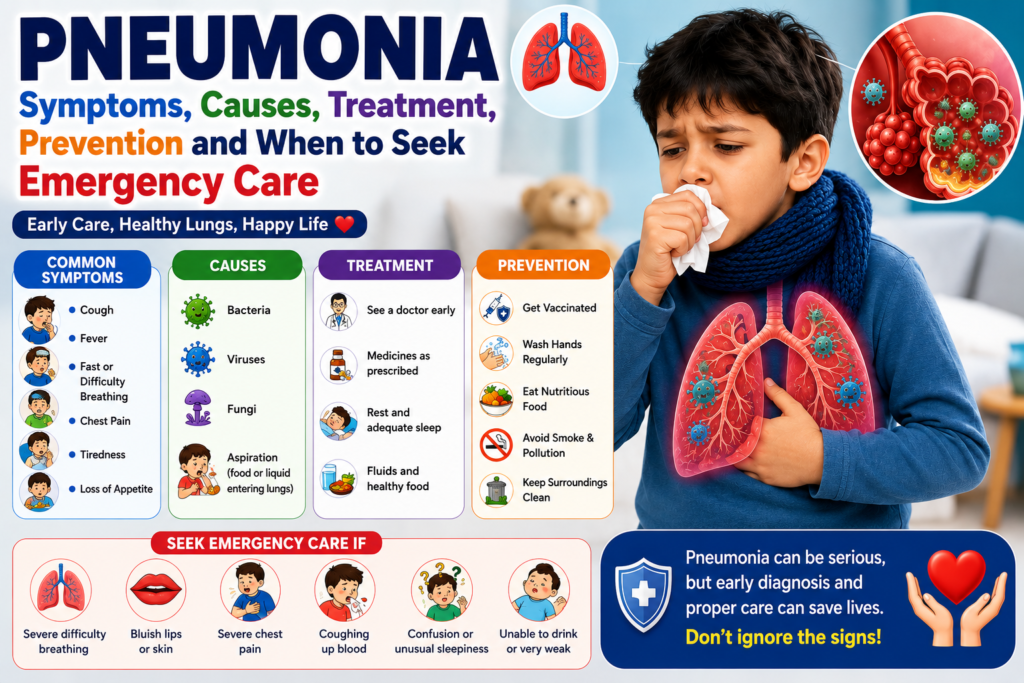
Pneumonia is a potentially serious infection of one or both lungs that can affect people of any age. It occurs when the tiny air sacs (alveoli) inside the lungs become inflamed and may fill with fluid or pus, making it harder for the body to get enough oxygen. Pneumonia can be caused by bacteria, viruses or, less commonly, fungi. Its severity ranges from a mild illness that can be managed at home to a life-threatening condition requiring hospitalization.
Recognizing pneumonia early is important, particularly in babies and young children, adults over 65, people with chronic diseases, smokers and people with weakened immunity. Early medical evaluation and appropriate treatment can significantly reduce the risk of complications.
This comprehensive guide explains pneumonia symptoms, causes, types, risk factors, diagnosis, treatment, home care, prevention, vaccination and emergency warning signs in simple language.
What Is Pneumonia?
Pneumonia is an infection or inflammation of the lungs in which the alveoli—the tiny air sacs responsible for exchanging oxygen and carbon dioxide—can become filled with fluid or pus.
Normally, air reaches the alveoli during breathing and oxygen passes into the bloodstream. During pneumonia, inflammation and fluid accumulation interfere with this process. As a result, a person may develop cough, fever, chest pain, rapid breathing, shortness of breath and fatigue.
Pneumonia can affect one lung or both lungs. The infection may involve a small area of the lung or a much larger portion.
According to the World Health Organization (WHO), pneumonia is most commonly caused by viruses or bacteria and can range from mild to life-threatening.
Is pneumonia contagious?
Some infections that cause pneumonia can spread from person to person through respiratory droplets, close contact or contaminated respiratory secretions. However, not everyone exposed to the same germ will necessarily develop pneumonia.
Whether pneumonia is contagious depends largely on the underlying infection.
What Causes Pneumonia?
Pneumonia can have several causes. The major categories are:
- Bacterial pneumonia
Bacteria are an important cause of pneumonia, particularly in adults.
One of the best-known bacterial causes is Streptococcus pneumoniae (pneumococcus). Other bacteria can also cause pneumonia, including Haemophilus influenzae, Mycoplasma pneumoniae and Legionella pneumophila.
Bacterial pneumonia can sometimes occur after a viral respiratory infection such as influenza.
- Viral pneumonia
Respiratory viruses can also cause pneumonia. These include influenza viruses, respiratory syncytial virus (RSV), SARS-CoV-2 and other respiratory viruses.
Viral pneumonia may initially resemble a common cold or flu. Some cases remain relatively mild, while others can become severe and require hospitalization.
- Fungal pneumonia
Fungal pneumonia is less common in healthy people but can occur more frequently in individuals with weakened immune systems or certain chronic illnesses.
Examples include infections caused by Pneumocystis jirovecii, Histoplasma and other fungi.Difference them.
- Aspiration pneumonia
Aspiration pneumonia occurs when food, liquid, vomit or secretions accidentally enter the lungs rather than going down the digestive tract.
The risk can be higher in people who have swallowing difficulties, certain neurological disorders, impaired consciousness or other conditions affecting the normal protective cough and swallowing reflexes.
Types of Pneumonia
Pneumonia can be classified in different ways depending on its cause and where it was acquired.
Community-acquired pneumonia
This is pneumonia acquired outside a hospital or healthcare facility. It is one of the most common forms of pneumonia.
Hospital-acquired pneumonia
Hospital-acquired pneumonia develops during a hospital stay and may involve bacteria that are more resistant to certain antibiotics.
Viral pneumonia
This develops as a result of a viral infection.
Bacterial pneumonia
This occurs when bacteria infect the lungs and cause inflammation.
Fungal pneumonia
This is associated with fungal infections and is particularly important in people with weakened immune systems.
Aspiration pneumonia
This occurs when food, liquids, stomach contents or oral secretions enter the lungs.
Pneumonia Symptoms
Pneumonia symptoms can vary significantly depending on the person’s age, general health, underlying disease and the organism causing the infection.
Common symptoms include:
- Cough
- Fever
- Chills or shivering
- Shortness of breath
- Chest pain, particularly while breathing deeply or coughing
- Fatigue and weakness
- Sweating
- Loss of appetite
- Headache
- Nausea or vomiting
- Diarrhea in some cases
WHO lists cough, shortness of breath, fever, chills, fatigue and chest pain among the common symptoms of pneumonia.
Cough with mucus
Some people with pneumonia develop a cough that produces mucus or phlegm. The mucus may appear yellowish or greenish, although mucus color alone cannot reliably determine whether pneumonia is bacterial.
Shortness of breath
Difficulty breathing can be an important warning sign. A person may feel breathless while walking, climbing stairs or even while resting if the pneumonia is severe.
Chest pain
Pneumonia can cause sharp or aching chest pain that becomes worse during deep breathing or coughing.
Fever and chills
Fever, sweating and chills are common, although not every person with pneumonia develops a high fever.
Fatigue
The infection can cause substantial tiredness and weakness, sometimes continuing for weeks after the acute infection improves.
Confusion in older adults
Older adults may not always develop classic symptoms. Instead, pneumonia can sometimes present with unusual weakness, confusion or a change in mental status.
Pneumonia Symptoms in Babies and Children
Pneumonia can be particularly dangerous for infants and young children.
A child may develop:
- Cough
- Fever
- Fast breathing
- Difficulty breathing
- Chest retractions or the lower chest pulling inward during breathing
- Poor feeding
- Vomiting
- Weakness or unusual sleepiness
- Irritability
- Wheezing in some viral infections
WHO notes that in children under five with cough and/or difficult breathing, pneumonia may be identified by signs such as fast breathing or lower chest wall indrawing.
Very severely ill infants may have difficulty feeding or drinking and can develop serious symptoms such as unconsciousness, hypothermia or convulsions.
When should parents worry?
Parents should not wait at home if a child has significant difficulty breathing, is unable to drink or breastfeed, becomes unusually sleepy or unresponsive, develops bluish lips or skin, or appears severely ill.
Young children can deteriorate more quickly than healthy adults, so medical assessment is important when pneumonia is suspected.
Who Is at Higher Risk of Pneumonia?
Although anyone can develop pneumonia, some people have a greater risk of serious illness.
Risk factors include:
Young children
Children, particularly infants and young children, are more vulnerable to severe respiratory infections.
Older adults
People aged 65 and above have a greater risk of complications.
Smoking
Smoking damages the respiratory system and can increase susceptibility to respiratory infections.
Chronic lung disease
Conditions such as COPD and other chronic lung diseases can increase pneumonia risk.
Weakened immune system
People with weakened immune systems may be more susceptible to serious infections.
Diabetes and other chronic diseases
Certain long-term health conditions, including diabetes, heart disease, kidney disease and liver disease, can increase the risk of complications.
Malnutrition
Poor nutritional status can weaken the body’s defenses against infection. WHO emphasizes adequate nutrition as an important component of pneumonia prevention, especially in children.
Indoor air pollution
Smoke and pollutants from household cooking and heating can increase respiratory health risks, particularly where ventilation is poor.
Difficulty swallowing
People with swallowing problems may have a greater risk of aspiration pneumonia.
How Is Pneumonia Diagnosed?
Pneumonia cannot always be diagnosed accurately based only on symptoms because its symptoms can resemble influenza, COVID-19, bronchitis and other respiratory illnesses.
A healthcare professional may:
- Ask about symptoms and medical history.
- Examine the chest.
- Listen to the lungs with a stethoscope.
- Measure blood oxygen levels using pulse oximetry.
- Recommend a chest X-ray.
- Order blood tests when appropriate.
- Examine sputum in selected cases.
- Perform additional tests when pneumonia is severe or complications are suspected.
A chest X-ray is commonly used when pneumonia is suspected, while blood tests, sputum testing, CT scans and other investigations may be used depending on the situation.
Can pneumonia be diagnosed at home?
You may suspect pneumonia based on symptoms, but home symptoms alone cannot reliably determine whether someone has pneumonia or what caused it.
A cough and fever could be caused by several different illnesses. A healthcare professional should determine whether testing or treatment is necessary.
Pneumonia Treatment
Treatment depends on the cause and severity of pneumonia.
Treatment of bacterial pneumonia
Bacterial pneumonia may require antibiotics.
However, antibiotics should not be taken without medical advice. The appropriate antibiotic depends on the suspected organism, age, health status, allergies, local resistance patterns and severity of illness.
Antibiotics do not treat viral pneumonia.
WHO states that bacterial pneumonia can be treated with antibiotics, while MedlinePlus notes that antibiotics are used for bacterial pneumonia and not viral pneumonia.
Why should you not self-medicate with antibiotics?
Taking the wrong antibiotic, using an inappropriate dose or stopping treatment without medical guidance can contribute to treatment failure and antimicrobial resistance.
Never use leftover antibiotics from an earlier illness or someone else’s prescription.
Treatment of Viral Pneumonia
Viral pneumonia may improve with supportive care, but some viral infections can require specific antiviral treatment.
The appropriate treatment depends on the virus, severity, timing and individual risk factors.
Severe cases may require hospital treatment and oxygen therapy.
Hospital Treatment for Severe Pneumonia
People with severe pneumonia may require hospitalization.
Hospital treatment can include:
- Oxygen therapy
- Intravenous fluids
- Antibiotics when bacterial infection is suspected or confirmed
- Antiviral medicines in selected viral infections
- Breathing support
- Monitoring of oxygen levels and vital signs
- Treatment of complications
Some patients may require intensive care if they develop respiratory failure or other serious complications.
Home Care During Pneumonia Recovery
If a healthcare professional has diagnosed pneumonia and recommends home treatment, supportive care can help recovery.
- Get adequate rest
The immune system needs energy to fight infection. Avoid strenuous activity until you begin to recover.
- Stay hydrated
Drink adequate fluids unless your doctor has advised you to restrict fluids because of another medical condition.
Fluids can help prevent dehydration and may make respiratory secretions easier to clear.
- Take prescribed medicines correctly
Follow your healthcare professional’s instructions.
If antibiotics are prescribed, take them exactly as directed. Do not change the dose or stop treatment without medical advice.
- Eat nutritious foods
During recovery, focus on balanced meals containing adequate protein, fruits, vegetables, whole grains and other nutrient-rich foods according to your dietary needs.
Good nutrition supports normal immune function, although no particular food can cure pneumonia.
- Avoid smoking
Do not smoke while recovering from pneumonia. Avoid exposure to second-hand smoke as well.
- Monitor symptoms
Pay attention to breathing difficulty, worsening weakness, persistent fever or other signs that the condition may be getting worse.
Can Herbs or Home Remedies Cure Pneumonia?
This is an important question because many people search online for natural remedies for pneumonia.
There is currently no evidence that a household herb, herbal tea or home remedy can replace appropriate medical treatment for pneumonia.
Some warm fluids may help with comfort and hydration, but they do not eliminate bacterial, viral or fungal infections from the lungs.
Therefore, herbs should not be used as a substitute for antibiotics when bacterial pneumonia requires antibiotic treatment, antiviral treatment when indicated, oxygen therapy or other medical care.
For NutritionsValue.com, it is especially important to distinguish between:
Supportive nutrition → may support general recovery
and
Disease treatment → requires appropriate medical diagnosis and treatment.
This distinction helps prevent potentially dangerous delays in treatment.
Pneumonia Complications
Most people recover from pneumonia, but complications can occur, particularly in older adults, young children and people with underlying medical conditions.
Potential complications include:
Respiratory failure
The lungs may become unable to provide enough oxygen to the body.
Bloodstream infection
Bacteria can sometimes enter the bloodstream and cause a serious systemic infection.
Lung abscess
An abscess is a collection of pus that can develop inside the lung.
Pleural complications
Fluid or infection can develop around the lungs.
Kidney or other organ problems
Severe infection can affect other organs.
MedlinePlus lists bloodstream infection, lung abscess, pleural disorders and respiratory failure among possible complications of pneumonia.
Emergency Warning Signs of Pneumonia
Pneumonia can become a medical emergency.
Seek urgent medical attention if someone with suspected or diagnosed pneumonia develops:
- Severe difficulty breathing
- Gasping or struggling to breathe
- Blue, pale or blotchy lips or skin
- Severe chest pain
- Coughing up blood
- Sudden confusion
- Unusual difficulty staying awake
- Inability to drink or keep fluids down
- Severe weakness
- A baby who is unusually floppy or difficult to wake
The NHS specifically advises emergency assessment for severe breathing difficulty, blue or blotchy skin, coughing up blood and sudden confusion.
For babies and young children, inability to feed, severe breathing difficulty, reduced responsiveness or convulsions require urgent medical attention.
How to Prevent Pneumonia
Prevention is one of the most effective ways to reduce pneumonia risk.
- Stay up to date with vaccinations
Vaccination can reduce the risk of several infections that can cause pneumonia.
Depending on age and individual health status, important vaccines may include those against:
- Pneumococcal disease
- Influenza
- Haemophilus influenzae type b (Hib)
- Measles
- Pertussis
- COVID-19 and other vaccine-preventable respiratory infections where recommended
WHO identifies immunization as an important pneumonia-prevention strategy.
Vaccination schedules vary by country, age and medical condition, so discuss appropriate vaccines with a healthcare professional.
- Wash your hands regularly
Handwashing with soap and water can reduce the spread of respiratory infections.
Be particularly careful after coughing, sneezing, blowing your nose, caring for someone who is sick or before eating.
- Avoid smoking
Smoking damages lung defenses and increases the risk of respiratory disease.
Quitting smoking is beneficial for overall lung health.
- Improve indoor air quality
Reduce exposure to smoke, fumes and indoor air pollution.
Good ventilation and cleaner cooking fuels can be particularly important in households where biomass fuels are used.
WHO identifies indoor air pollution as an environmental risk factor for childhood pneumonia.
- Maintain good nutrition
A balanced diet helps support normal immune function.
For infants, WHO recommends exclusive breastfeeding during the first six months of life as part of measures that help protect against pneumonia and other infections.
- Manage chronic health conditions
People with conditions such as diabetes, chronic lung disease or heart disease should follow their treatment plans and attend regular medical appointments.
Good management of underlying diseases may reduce the risk of serious respiratory infections and complications.
Pneumonia vs Cold vs Flu
Pneumonia can sometimes begin like a common cold or influenza, making it difficult to distinguish at home.
Feature | Common Cold | Flu | Pneumonia |
Cough | Common | Common | Very common |
Fever | Sometimes | Often | Common |
Chills | Less common | Common | Common |
Shortness of breath | Usually uncommon | Sometimes | Important warning sign |
Chest pain | Uncommon | Sometimes | Can occur |
Severe weakness | Usually mild | Often significant | Can be significant |
Oxygen problems | Unusual | Possible in severe cases | Possible |
Hospitalization | Rare | Sometimes | More likely in severe cases |
These conditions can overlap considerably. A person should not rely on symptoms alone to diagnose pneumonia.
How Long Does Pneumonia Take to Recover?
Recovery time varies.
Some people begin feeling better within several days after appropriate treatment, while others take two to four weeks or longer to return to normal activity. Fatigue and cough may persist after the infection itself has improved.
Older adults and people with chronic diseases may require a longer recovery period.
If symptoms are getting worse rather than better, medical reassessment is important.
Can Pneumonia Come Back?
Yes. Having pneumonia once does not guarantee lifelong protection.
A person may develop pneumonia again because different bacteria, viruses or other causes can produce the disease.
Reducing risk factors, maintaining good nutrition, avoiding smoking, keeping vaccinations up to date and managing chronic illnesses can help reduce future risk.
Frequently Asked Questions About Pneumonia
- What is pneumonia?
Pneumonia is an infection or inflammation of the lungs in which the alveoli may fill with fluid or pus, interfering with normal oxygen exchange.
- What are the first symptoms of pneumonia?
Common symptoms include cough, fever, chills, fatigue, chest pain and shortness of breath. Symptoms vary according to age, cause and severity.
- Is pneumonia caused by bacteria or viruses?
Both. Pneumonia can be caused by bacteria, viruses or fungi. Aspiration of food or fluids can also cause pneumonia.
- Is pneumonia contagious?
Some infections that cause pneumonia can spread from person to person through respiratory droplets or close contact. The contagiousness depends on the underlying infection.
- Can pneumonia be treated at home?
Some mild cases can be treated at home under medical guidance. Severe pneumonia may require hospitalization, oxygen and other treatments.
- Do antibiotics cure pneumonia?
Antibiotics treat bacterial pneumonia but do not work against viruses. They should only be used when medically appropriate.
- Can herbs cure pneumonia?
No herbal remedy should be considered a replacement for medically indicated pneumonia treatment. Some foods or warm fluids may provide supportive comfort, but they cannot reliably eliminate a serious lung infection.
- Is pneumonia dangerous for children?
Yes. Pneumonia remains an important cause of serious illness and death among young children worldwide. Children with breathing difficulty or severe symptoms need prompt medical assessment.
- Is pneumonia dangerous for older people?
Older adults, particularly those over 65 or those with chronic diseases, have a greater risk of severe pneumonia and complications.
- How can pneumonia be prevented?
Vaccination, hand hygiene, avoiding smoking, reducing indoor air pollution, maintaining good nutrition and managing underlying health conditions can help reduce the risk.
Conclusion
Pneumonia is a potentially serious lung infection that should never be ignored.
Remember these important points:
- Pneumonia can affect children and adults.
- Bacteria, viruses and fungi can cause pneumonia.
- Cough, fever, chest pain, fatigue and shortness of breath are common symptoms.
- Young children and older adults may show different or less obvious symptoms.
- Severe breathing difficulty is an emergency warning sign.
- Bacterial pneumonia may require antibiotics.
- Antibiotics do not treat viral pneumonia.
- Severe pneumonia may require hospitalization and oxygen.
- Adequate rest, fluids and nutritious food can support recovery.
- Herbal remedies should not replace evidence-based medical treatment.
- Vaccination can prevent several infections associated with pneumonia.
- Avoiding smoking and indoor air pollution supports lung health.
- Early medical evaluation is especially important for high-risk individuals.
Pneumonia is treatable in many cases, but early recognition and appropriate medical care are crucial. A persistent cough accompanied by fever, breathing difficulty, chest pain or significant weakness should not automatically be assumed to be a simple cold or seasonal infection.
If pneumonia is suspected—especially in a young child, older adult or person with an underlying health condition—consult a qualified healthcare professional promptly.
A healthy lifestyle, adequate nutrition, vaccination, good hygiene, clean indoor air and avoidance of tobacco smoke can all contribute to better respiratory health and help reduce pneumonia risk.