
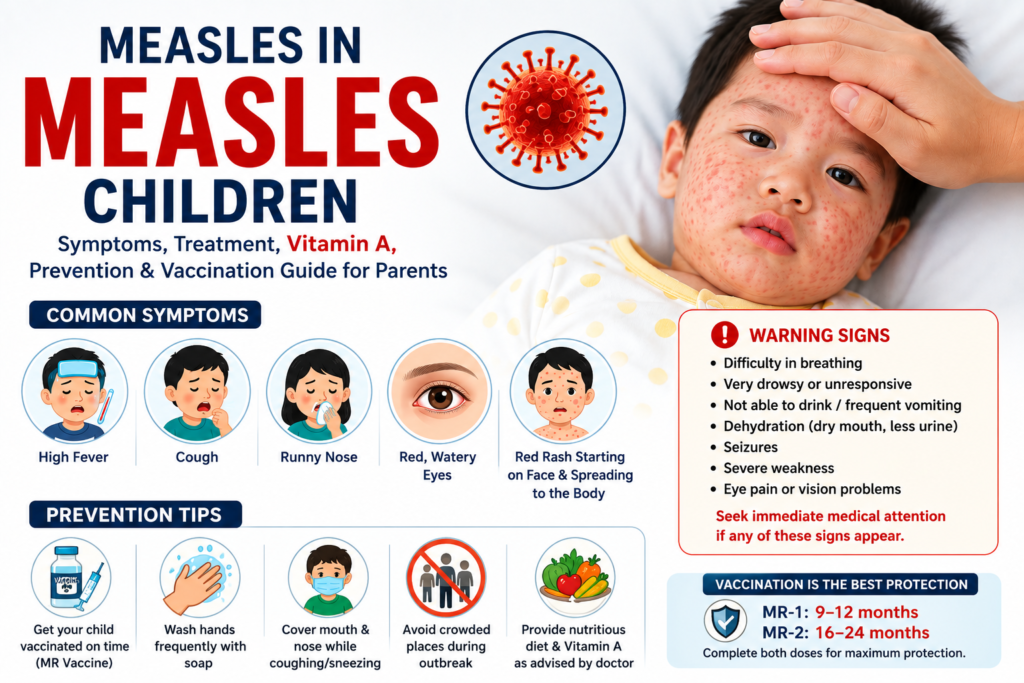
Measles in Children: Symptoms, Causes, Treatment, and Prevention
What is measles in children?
Measles is a highly contagious viral disease. It is caused by the measles virus and spreads easily through droplets or airborne particles released when an infected person coughs, sneezes, or breathes.
Measles is not merely a common childhood illness characterized by a red rash. In some children, it can lead to serious complications such as pneumonia, severe diarrhea and dehydration, ear infections, severe eye problems, and encephalitis (inflammation of the brain). Young children, malnourished children, and those with Vitamin A deficiency are at a higher risk of severe illness.
According to the World Health Organization (WHO), there were an estimated 95,000 measles deaths worldwide in 2024, with the majority occurring in unvaccinated or under-vaccinated children under the age of five. Therefore, vaccination plays a crucial role in preventing measles.
How does measles spread among children?
Measles spreads very rapidly. When an infected person coughs or sneezes, the virus can enter the air and infect others nearby.
According to the WHO, the measles virus can remain active in the air or on contaminated surfaces for up to two hours. An infected person can transmit the virus to others from approximately four days before the rash appears until four days after its onset.
Therefore, if a child is suspected of having measles, they should not be sent to school, daycare, playgrounds, or crowded places; it is advisable to consult a doctor by phone first.
Early symptoms of measles in children
Symptoms of measles do not appear immediately after exposure to the virus. Typically, symptoms begin about 7–14 days after exposure.
Early symptoms may include:
High fever
Dry cough
Runny nose
Red, watery eyes
Weakness and irritability
Loss of appetite
Small white spots inside the mouth
The small white spots visible inside the mouth are known as Koplik spots. These can be important clinical signs of measles, but one should not attempt a diagnosis at home based on them alone.
What does a measles rash look like?
The measles rash usually appears a few days after the initial symptoms of the illness.
According to the WHO, the rash typically starts around the face and neck and spreads downwards to the rest of the body and limbs. It can persist for several days and gradually fades away.
It is important for parents to understand that:
Not every fever accompanied by a rash is measles.
Many viral infections and other illnesses can also cause a fever and rash. Therefore, rather than attempting a self-diagnosis, it is better to have the child evaluated by a pediatrician.
When should you take the child to the doctor during measles?
If the child has
High fever + cough/runny nose + red eyes + a spreading rash on the body
then consult a doctor, keeping the possibility of measles in mind.
If the child has recently come into contact with a confirmed measles patient, be sure to inform the doctor about this.
Why call the doctor beforehand?
Because measles is highly contagious. If the child enters a clinic or hospital waiting room without prior notice, the infection could spread to other children and vulnerable individuals.
If measles is suspected, it is best to call the healthcare facility first and follow their instructions.
Serious complications of measles in children
Most children recover, but measles should not be dismissed as a mild illness.
Potential complications include:
Pneumonia is a significant complication of measles. Difficulty breathing, rapid breathing, or a worsening of the child’s condition can be serious warning signs.
If measles is accompanied by diarrhea or vomiting, the child’s body may lose water and electrolytes.
Watch out for:
Passing very little urine
A very dry mouth
Inability to drink fluids
Extreme lethargy
as these could indicate dehydration.
An ear infection can also occur following measles. 4. Eye problems
Measles can increase the risk of serious eye complications, especially in children with Vitamin A deficiency.
Encephalitis is a rare but serious complication; it involves inflammation of the brain and can lead to neurological problems.
Seek immediate medical help if these danger signs of measles appear in children
Difficulty breathing
The child appears extremely lethargic or semi-conscious
Seizures/convulsions
Inability to drink water or milk
Persistent vomiting
Signs of severe dehydration
The child is becoming very weak
Severe eye pain, light sensitivity, or changes in vision
Blue discoloration of the lips or face
High fever accompanied by a continuously worsening condition
Do not rely on home remedies in such situations.
How is measles treated in children?
The most important point:
There is no specific antiviral medicine available to eliminate the measles virus.
Treatment primarily focuses on supportive care and the prevention or timely treatment of complications. Adequate fluids, nutrition, and monitoring for complications are crucial.
If a bacterial infection such as pneumonia or an ear infection develops, the doctor may prescribe antibiotics. Antibiotics do not kill the measles virus and should only be taken for bacterial complications under a doctor’s advice.
Why is Vitamin A important in cases of measles?
This is a particularly important topic for parents.
According to the WHO, Vitamin A levels in the body can drop during a measles infection, even in well-nourished children. Vitamin A supplementation can help reduce the severity of the illness and the risk of eye complications.
Current WHO guidelines state that the need for Vitamin A therapy in children with measles should be assessed by a healthcare professional; typically, two doses are administered 24 hours apart.
However, parents should avoid this mistake:
Do not administer high-dose Vitamin A capsules to the child on your own.
A doctor or health worker should determine the appropriate dose and schedule based on the child’s age, previous Vitamin A intake, nutritional status, and clinical condition.
Vitamin A supplementation has also been integrated into the childhood immunization program under India’s National Immunization Schedule.
Should a child stop eating during measles?
No.
It is crucial to provide adequate nutrition and fluids to the child during the illness.
If the child is breastfeeding, continue to do so.
For older children, depending on their tolerance, the following can be given:
Water
Milk/breast milk
Appropriate fluids
Light and easily digestible food
Fruits and vegetables
Energy- and protein-rich foods
If dehydration occurs due to diarrhea or vomiting, Oral Rehydration Solution (ORS) can be beneficial, as advised by a doctor.
Instead of force-feeding the child, it is better to offer small amounts frequently.
Are herbal remedies useful for measles?
While information regarding herbs and traditional wellness is available on platforms like NutritionsValue.com, one thing must be absolutely clear regarding measles in children:
Herbs are not a substitute for the measles vaccine, nor are they a proven cure for the measles virus.
It is inappropriate to claim that Tulsi (holy basil), ginger, turmeric, honey, or other household ingredients can cure measles or eliminate the virus.
While certain foods can help provide nutrition and hydration, they cannot replace medical evaluation or necessary treatment. Do not give herbal mixtures, concentrated extracts, or supplements to young children without consulting a pediatrician.
What is the best way to prevent measles?
Vaccination:
According to the WHO, vaccination is the most effective way to prevent measles. Two doses of a measles-containing vaccine provide a high level of protection.
According to India’s National Immunization Schedule:
Age Vaccine
9–12 months MR-1
16–24 months MR-2
In the National Immunization Schedule of India’s Ministry of Health and Family Welfare, the first dose of MR is administered at 9–12 months and the second dose at 16–24 months.
If a child has missed the vaccine at the scheduled age for any reason, vaccination should not be skipped. According to the Government of India’s immunization FAQs, catch-up vaccination can be arranged for missed doses; consult a pediatrician or an immunization centre in such situations.
What should be done if a child comes into contact with a measles patient?
This is a critical situation, and timely action may be necessary.
If a child has been exposed to someone with measles and their vaccination or immunity status is unclear, contact a healthcare provider immediately.
In certain circumstances, administering a measles-containing vaccine shortly after exposure can help provide protection or influence the severity of the illness. According to the CDC, administering the MMR vaccine to a susceptible individual within 72 hours of exposure may offer some protection; for certain high-risk individuals, immunoglobulin may be used within 6 days of exposure.
A healthcare professional will make this decision based on the child’s age, vaccination history, and medical condition.
Can a person get measles again after having it once?
Immunity generally develops after a measles infection, but parents should not unilaterally skip the vaccination schedule.
According to India’s Ministry of Health and Family Welfare, a child should receive two doses of the MR vaccine as per the National Immunization Schedule, even if they have a history of a prior fever-and-rash illness resembling measles or rubella.
Therefore, keep the child’s vaccination record safe. Measles Home-Care Checklist for Parents
If measles is confirmed or strongly suspected in the child:
Do not send the child to school or daycare.
Minimize unnecessary contact with other children.
Exercise special caution regarding pregnant women, young infants, and immunocompromised individuals in the home.
Ensure adequate fluid intake.
Continue breastfeeding.
Pay attention to the child’s nutrition.
Administer only the medicines prescribed by the doctor.
Do not administer high doses of Vitamin A on your own.
Do not start antibiotics on your own.
Note the date of onset of the rash and fever.
Show the vaccination record to the doctor.
Call ahead to inform the clinic about the possibility of measles.
Monitor the child’s breathing, hydration, and overall activity levels.
10 Important Questions About Measles
- Are measles and a common viral rash the same thing?
No. Many illnesses can cause a rash. Measles is diagnosed through clinical assessment and testing, as required.
- Is measles highly contagious?
Yes. It is a highly contagious viral disease, and an infected person can spread the virus even before the rash appears.
- Is there an antibiotic treatment for measles?
No. Antibiotics do not work against viruses. They may only be prescribed by a doctor for certain secondary bacterial infections.
- Does Vitamin A cure measles?
Vitamin A does not directly cure the measles virus. However, the WHO recommends Vitamin A supplementation for measles cases because it can help reduce the severity of the illness and the risk of complications, particularly eye-related issues.
- Is the measles vaccine safe?
According to the WHO, the measles vaccine is safe and effective, and vaccination is the most effective way to prevent measles.
- Should a child be bathed if they have measles?
Generally, there is no need to completely stop bathing a child just because they have measles. Keep the child comfortable and clean. Consult a doctor if there are any specific skin complications.
- Can the child be taken outdoors?
When the child is in the infectious phase, they should be kept away from crowds, schools, daycare centers, and public places.
- Can herbs treat measles?
Based on proven evidence, herbs are not considered an antiviral treatment for measles. Consult a pediatrician before giving herbal medicines to children.
- Can one still contract measles after vaccination?
Vaccination significantly boosts protection, but no vaccine guarantees 100% protection. Protection is very strong after two doses.
- What is the most important thing for parents to remember?
Do not ignore the combination of high fever, respiratory symptoms, and a spreading rash; consider vaccination as the primary method of prevention.
Conclusion
Measles in children is a highly contagious disease; it should not be dismissed as merely a common childhood rash. Most children recover, but some may develop serious complications such as pneumonia, dehydration, ear infections, eye complications, and encephalitis.
The three most important things for parents to consider are:
- Timely identification
Symptoms such as fever, cough, runny nose, red or watery eyes, and a rash that starts on the face and spreads to the rest of the body may indicate measles.
- Timely medical care
There is no specific antiviral cure for measles. Supportive care, hydration, nutrition, and the timely detection of complications are crucial. Vitamin A should be administered based on the advice of a healthcare professional if required.
- Vaccination offers the strongest protection
In India, under the National Immunization Schedule, the first dose of the MR vaccine is administered at 9–12 months of age, and the second dose at 16–24 months. Regularly check your child’s vaccination record; if any dose has been missed, consult a healthcare provider about catch-up vaccination.
The aim of NutritionsValue.com is to provide parents with reliable, evidence-informed health and nutrition information. If you suspect a child has measles, prioritize the advice of a qualified healthcare professional over internet-based self-treatment.
References
World Health Organization — What you need to know about measles.
WHO — Vitamin A supplementation guidance.
Ministry of Health & Family Welfare, Government of India — National Immunization Schedule.
Ministry of Health & Family Welfare, Government of India — Immunization FAQs.
CDC — Measles vaccination and post-exposure prophylaxis guidance.