
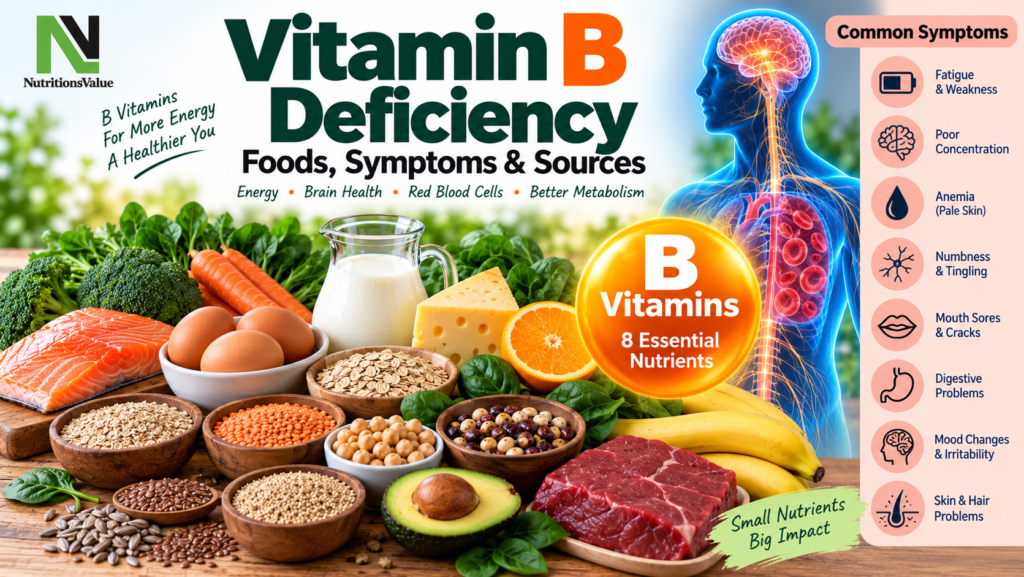
Vitamin B is not a single vitamin but a family of eight water soluble B vitamins that work together to support energy metabolism, red blood cell formation, nervous-system function, DNA synthesis, cell growth, and other essential processes. These vitamins are B1 (thiamin), B2 (riboflavin), B3 (niacin), B5 (pantothenic acid), B6 (pyridoxine), B7 (biotin), B9 (folate), and B12 (cobalamin).
Because each B vitamin has different functions, “vitamin B deficiency” is an umbrella term rather than one specific medical condition. A person can be deficient in one B vitamin or have multiple nutrient deficiencies at the same time. The symptoms and treatment therefore depend on which vitamin is deficient and why.
A balanced diet containing whole grains, legumes, vegetables, fruits, nuts and seeds, eggs, dairy products, fish, meat, and fortified foods can provide many of the B vitamins. However, some people have a higher risk of deficiency because of restricted diets, malabsorption, certain medical conditions, medications, pregnancy, or other factors.
What Are B Vitamins?
B vitamins are water-soluble vitamins. Unlike fat-soluble vitamins, the body generally stores only limited amounts of most B vitamins, although vitamin B12 can be stored in substantial amounts, which is one reason B12 deficiency can take years to become apparent.
The eight B vitamins are:
Vitamin | Name | Major roles |
B1 | Thiamin | Energy metabolism and nerve function |
B2 | Riboflavin | Energy production, cell growth and metabolism |
B3 | Niacin | Energy metabolism and cellular function |
B5 | Pantothenic acid | Coenzyme A production and fat metabolism |
B6 | Pyridoxine | Amino-acid metabolism, immune and nervous-system functions |
B7 | Biotin | Metabolism of carbohydrates, fats and proteins |
B9 | Folate/Folic acid | DNA synthesis and cell division |
B12 | Cobalamin | Red blood cells, DNA and nervous-system function |
What Does Vitamin B Do in the Body?
B vitamins perform different but interconnected functions.
Energy metabolism
B1, B2, B3, B5, B6, biotin, and other B vitamins participate in biochemical pathways that help the body use carbohydrates, fats, and proteins.
This does not mean that taking extra B vitamins automatically gives a healthy person more energy. Their primary role is to help normal metabolic processes function properly.
Nervous system function
Several B vitamins are important for normal nervous-system function. Vitamin B1 supports energy metabolism in nerve cells, while B6 and B12 have important roles in nervous-system processes. Vitamin B12 is required for development, myelination, and function of the central nervous system.
Red blood cell formation
Folate and vitamin B12 are particularly important for normal DNA synthesis and red blood cell production. Deficiency of either can contribute to megaloblastic anemia.
DNA synthesis and cell division
Folate is required for DNA and RNA synthesis and for normal cell division. This makes adequate folate especially important during periods of rapid cell growth, including pregnancy.
What Causes Vitamin B Deficiency?
There is no single cause because each B vitamin has different sources and absorption mechanisms.
Common contributing factors can include:
- Inadequate dietary intake
- Highly restrictive diets
- Poor overall nutrition
- Alcohol dependence
- Gastrointestinal disorders affecting absorption
- Certain surgeries, including bariatric surgery
- Certain medications
- Increased nutritional requirements during pregnancy
- Conditions affecting the kidneys or other organs
- Problems with vitamin metabolism or transport
- Specific genetic disorders
For example, chronic alcohol use is an important risk factor for thiamin deficiency, while gastrointestinal disorders can interfere with folate, B6, or B12 status.
Vitamin B Deficiency Symptoms
Because the B-vitamin family contains eight different vitamins, symptoms vary considerably.
Possible symptoms include:
- Fatigue or weakness
- Pale skin
- Anemia
- Cracks at the corners of the mouth
- Sore or swollen tongue
- Skin changes
- Poor appetite
- Digestive problems
- Numbness or tingling
- Muscle weakness
- Confusion
- Memory problems
- Difficulty concentrating
- Balance problems
- Headaches
- Changes in mood
- Neurological problems
However, these symptoms can have many other causes. They should not be used by themselves to diagnose vitamin B deficiency.
Vitamin B1 Deficiency: Thiamin
Vitamin B1, or thiamin, plays an important role in energy metabolism and normal cellular function.
Symptoms of B1 deficiency
Early deficiency may cause:
- Loss of appetite
- Weight loss
- Confusion
- Memory problems
- Muscle weakness
- Cardiovascular symptoms
More severe deficiency can cause beriberi, which can involve peripheral neuropathy, muscle wasting, impaired reflexes, and cardiovascular complications.
Severe thiamin deficiency can also contribute to Wernicke-Korsakoff syndrome, particularly in people with chronic alcohol dependence.
Foods rich in vitamin B1
Good sources include:
- Whole grains
- Pork
- Fish
- Beans
- Fortified cereals
- Enriched grain products
- Nuts and seeds
Vitamin B2 Deficiency: Riboflavin
Vitamin B2, or riboflavin, is involved in energy production, cell growth, development, and metabolism.
Symptoms of B2 deficiency
Possible signs include:
- Cracked lips
- Sores at the corners of the mouth
- Swollen or cracked lips
- Sore throat
- Skin problems
- Hair loss
- Red or itchy eyes
- Anemia in prolonged severe deficiency
Severe prolonged deficiency can also affect the eyes and nervous system.
Foods rich in vitamin B2
- Milk
- Yogurt
- Eggs
- Lean meat
- Liver and other organ meats
- Mushrooms
- Spinach
- Fortified cereals
- Enriched grain products
Vitamin B3 Deficiency: Niacin
Vitamin B3, or niacin, helps the body convert food into usable energy and supports normal cellular function.
Symptoms of B3 deficiency
Severe deficiency causes pellagra.
Pellagra can involve:
- Rough or inflamed skin
- A bright-red tongue
- Digestive symptoms such as diarrhea
- Extreme tiredness
- Headaches
- Depression
- Memory problems
- Neurological or behavioral changes
Severe untreated pellagra can become life-threatening.
Foods rich in vitamin B3
- Chicken and other poultry
- Beef
- Pork
- Fish
- Peanuts and some other nuts
- Legumes
- Whole or enriched grains
- Fortified cereals
The body can also produce some niacin from the amino acid tryptophan.
Vitamin B5 Deficiency: Pantothenic Acid
Vitamin B5, or pantothenic acid, is involved in the synthesis and metabolism of fats and in the production of coenzyme A.
Pantothenic acid deficiency is very rare because it is present in a wide variety of foods.
Severe deficiency can cause:
- Extreme tiredness
- Irritability
- Headache
- Sleep problems
- Numbness or burning in the hands and feet
- Digestive symptoms
- Loss of appetite
Food sources
Pantothenic acid occurs in many foods, including:
- Meat
- Fish
- Eggs
- Milk
- Mushrooms
- Avocado
- Whole grains
- Legumes
- Potatoes
Vitamin B6 Deficiency
Vitamin B6 is involved in more than 100 enzyme reactions, including processes related to metabolism, brain development, and immune function.
Symptoms of B6 deficiency
Possible symptoms include:
- Anemia
- Skin rashes
- Scaly skin around the lips
- Cracks at the corners of the mouth
- Swollen tongue
- Confusion or other neurological symptoms in more severe cases
Vitamin B6 food sources
- Poultry
- Fish
- Organ meats
- Potatoes
- Other starchy vegetables
- Bananas and other non-citrus fruits
- Chickpeas
- Fortified foods
Vitamin B7 Deficiency: Biotin
Vitamin B7 is commonly called biotin. It helps the body metabolize carbohydrates, fats, and proteins.
Biotin deficiency is rare in most people.
Possible symptoms
- Thinning hair
- Loss of body hair
- Skin rash
- Brittle nails
- Pinkeye
- Nervous-system problems
- Seizures in severe cases
Foods containing biotin
- Eggs
- Fish
- Meat
- Liver
- Nuts
- Seeds
- Sweet potatoes
- Spinach
- Broccoli
Although biotin supplements are widely marketed for hair, skin, and nails, evidence that supplementation improves these features in people who are not deficient is limited. High-dose biotin can also interfere with certain laboratory tests.
Vitamin B9 Deficiency: Folate
Vitamin B9 is generally referred to as folate when it occurs naturally in foods and folic acid when referring to the form commonly used in fortified foods and many supplements.
Folate is essential for:
- DNA synthesis
- Cell division
- Normal red blood cell formation
- Fetal development
Symptoms of folate deficiency
Deficiency can cause megaloblastic anemia, which may lead to:
- Fatigue
- Weakness
- Difficulty concentrating
- Irritability
- Headache
- Shortness of breath
- Heart palpitations
- Mouth or tongue sores
Folate-rich foods
- Spinach
- Other dark-green leafy vegetables
- Asparagus
- Brussels sprouts
- Beans
- Peas
- Peanuts
- Citrus fruits
- Beef liver
- Fortified grains and cereals
Adequate folic acid intake before conception and during early pregnancy helps reduce the risk of neural tube defects such as spina bifida.
Vitamin B12 Deficiency
Vitamin B12 is one of the most clinically important B-vitamin deficiencies because it can affect both blood cells and the nervous system.
Vitamin B12 is required for:
- Red blood cell formation
- DNA synthesis
- Normal nervous-system function
- Myelination and neurological development
Symptoms of B12 deficiency
Possible symptoms include:
- Fatigue
- Weakness
- Pale skin
- Loss of appetite
- Weight loss
- Numbness or tingling in the hands and feet
- Balance problems
- Memory problems
- Confusion
- Soreness of the mouth or tongue
- Megaloblastic anemia
B12 deficiency can damage the nervous system even when anemia is not present, making appropriate evaluation and treatment important.
Foods rich in vitamin B12
Naturally occurring B12 is found mainly in animal-derived foods, including:
- Fish
- Shellfish
- Meat
- Poultry
- Eggs
- Milk
- Yogurt
- Cheese
- Liver
Fortified foods, such as some breakfast cereals and fortified plant-based products, can also provide B12.
People following a vegan diet generally need a reliable source of vitamin B12 from fortified foods or supplements, because unfortified plant foods are not reliable natural sources of B12.
Best Foods for B Vitamins
There is no single food that provides all B vitamins in optimal amounts. A varied diet is more useful than relying on one “B-vitamin-rich” food.
Food | B Vitamins Commonly Provided |
Eggs | B2, B5, B7, B12 |
Milk & dairy | B2, B5, B12 |
Fish | B2, B3, B6, B12 |
Poultry | B3, B6, B12 |
Meat | B1, B3, B6, B12 |
Liver | B2, B3, B5, B6, B7, B9, B12 |
Whole grains | B1, B3, B5, B6 |
Beans & lentils | B1, B6, B9 |
Spinach & leafy greens | B2, B9 |
Nuts & seeds | B1, B6, B7 |
Potatoes | B6 |
Bananas | B6 |
Fortified cereals | Several B vitamins |
Fortified plant milks | May provide B2 and B12, depending on product |
Food composition varies by food, variety, preparation, and fortification. For exact nutrient values, consult a reliable food-composition database such as USDA FoodData Central.
Vitamin B Sources for Vegetarians
A well-planned vegetarian diet can provide many B vitamins through:
- Milk
- Yogurt
- Cheese
- Eggs
- Whole grains
- Lentils
- Chickpeas
- Beans
- Nuts
- Seeds
- Green leafy vegetables
- Fortified cereals
- Fortified foods
However, vitamin B12 deserves special attention because reliable natural B12 sources are concentrated in animal-derived foods. Vegetarians who consume little or no dairy or eggs may need fortified foods or supplements to meet their needs.
Vitamin B Sources for Vegans
Vegan diets can provide substantial amounts of:
- B1
- B2
- B3
- B5
- B6
- B7
- B9
through plant foods such as:
- Whole grains
- Legumes
- Nuts
- Seeds
- Vegetables
- Fruits
- Fortified foods
However, B12 requires particular attention. Unfortified fruits, vegetables, grains, nuts, and seeds should not be considered dependable B12 sources.
How Much of Each B Vitamin Do Adults Need?
Recommended amounts vary by age, sex, pregnancy, and breastfeeding status. For adults, commonly used U.S. reference values include:
B Vitamin | Adult Daily Amount |
B1 – Thiamin | 1.2 mg men; 1.1 mg women |
B2 – Riboflavin | 1.3 mg men; 1.1 mg women |
B3 – Niacin | 16 mg NE men; 14 mg NE women |
B5 – Pantothenic acid | 5 mg |
B6 | 1.3 mg for adults 19–50 |
B7 – Biotin | 30 mcg |
B9 – Folate | 400 mcg DFE |
B12 | 2.4 mcg |
Pregnancy and breastfeeding generally increase requirements for several B vitamins.
Note: These values are U.S. reference values and may differ from recommendations used by other national health authorities.
Who Is at Higher Risk of Vitamin B Deficiency?
Risk depends on the specific B vitamin, but higher-risk groups can include:
People with restricted diets
Very restrictive diets can reduce intake of multiple micronutrients.
People with alcohol dependence
Chronic alcohol use can substantially increase the risk of thiamin deficiency and can also be associated with other nutritional deficiencies.
People with gastrointestinal disorders
Conditions that affect digestion or nutrient absorption can increase the risk of certain B-vitamin deficiencies.
People who have undergone bariatric surgery
Bariatric procedures can affect nutrient absorption and are associated with risks of micronutrient deficiencies, including severe thiamin deficiency in some circumstances.
Vegans and people consuming little animal food
Vitamin B12 deserves particular attention because natural food sources are concentrated largely in animal-derived foods.
Pregnant and breastfeeding women
Nutritional requirements increase during pregnancy and lactation, making an adequate dietary pattern particularly important.
How Is Vitamin B Deficiency Diagnosed?
Diagnosis depends on the specific vitamin involved.
A healthcare professional may consider:
- Symptoms and medical history
- Dietary pattern
- Physical examination
- Underlying medical conditions
- Medication use
- Blood tests
- Other laboratory tests when appropriate
For example, B12 and folate deficiency can cause megaloblastic anemia, while B12 deficiency may also produce neurological abnormalities.
A single symptom such as fatigue is not enough to diagnose a B-vitamin deficiency.
How Is Vitamin B Deficiency Treated?
Treatment depends on which B vitamin is deficient and why.
Possible approaches include:
- Improving dietary intake
- Using fortified foods
- Oral vitamin supplementation
- Higher-dose supplementation under medical supervision
- Treating an underlying absorption problem
- Treating the medical condition responsible for the deficiency
Some severe deficiencies may require medically supervised treatment with injectable vitamins.
It is important not to assume that a general B-complex supplement is the correct treatment for every suspected deficiency.
Can You Get Too Much Vitamin B?
Although B vitamins are water soluble, “water-soluble” does not mean that unlimited supplementation is harmless.
For example, excessive supplemental vitamin B6 over time can cause serious nerve damage, while high-dose niacin can cause adverse effects and should not be used therapeutically without appropriate medical supervision.
Biotin at high supplemental doses can interfere with certain laboratory tests.
Therefore, more is not necessarily better.
Vitamin B Deficiency vs. Vitamin B12 Deficiency
These terms are sometimes used interchangeably online, but they are not the same.
Vitamin B deficiency refers broadly to inadequate levels of one or more B vitamins.
Vitamin B12 deficiency refers specifically to inadequate vitamin B12.
Similarly, someone may have:
- B1 deficiency
- B2 deficiency
- B3 deficiency
- B6 deficiency
- Folate deficiency
- B12 deficiency
- Multiple B-vitamin deficiencies
The symptoms and treatment can be different for each condition.
How to Prevent Vitamin B Deficiency
A varied eating pattern is one of the best ways to obtain B vitamins.
Try to include a combination of:
- Whole grains
- Beans and lentils
- Nuts and seeds
- Vegetables
- Fruits
- Eggs
- Dairy products
- Fish
- Poultry
- Meat, when part of the diet
- Fortified foods
People following vegan diets should pay particular attention to vitamin B12.
People with gastrointestinal disorders, previous bariatric surgery, chronic alcohol use, or other risk factors should discuss nutritional needs with a qualified healthcare professional.
FAQs
What are the most common symptoms of vitamin B deficiency?
Symptoms vary by the specific B vitamin but can include fatigue, weakness, anemia, mouth or skin changes, digestive symptoms, numbness or tingling, and neurological changes.
Which foods are highest in B vitamins?
There is no single food highest in every B vitamin. Meat, fish, eggs, dairy, whole grains, legumes, nuts, seeds, leafy vegetables, and fortified foods collectively provide a broad range of B vitamins.
Can vitamin B deficiency cause tiredness?
Some B-vitamin deficiencies can contribute to fatigue, particularly when they cause anemia or interfere with normal metabolism. However, tiredness has many possible causes and should not automatically be attributed to a B-vitamin deficiency.
Which vitamin B deficiency causes anemia?
Folate and vitamin B12 deficiency can cause megaloblastic anemia. Vitamin B6 deficiency can also contribute to certain forms of anemia.
Can vitamin B deficiency cause hair loss?
Some B-vitamin deficiencies can be associated with hair or skin changes. However, hair loss has many possible causes, and biotin deficiency is relatively rare.
Can vegetarians get enough B vitamins?
Yes, a well-planned vegetarian diet can provide many B vitamins. However, vitamin B12 deserves particular attention depending on how much dairy and eggs are consumed.
Can vegans get vitamin B12 from vegetables?
Unfortified vegetables are not reliable natural sources of vitamin B12. Vegans should use reliable fortified foods or an appropriate supplement to obtain B12.
Are B-complex supplements necessary for everyone?
No. Many people can meet their B-vitamin needs through a varied diet. Supplements can be useful when dietary intake is inadequate or when a specific medical or nutritional need exists.
Is vitamin B deficiency serious?
Some B-vitamin deficiencies can become serious if untreated. For example, severe thiamin deficiency can cause beriberi or Wernicke-Korsakoff syndrome, while untreated B12 deficiency can cause neurological damage.
Final Conclusion
Vitamin B deficiency is not one single condition. It can involve any of the eight B vitamins, each with different functions, food sources, symptoms, and treatment requirements.
A diverse diet containing whole grains, legumes, vegetables, fruits, nuts, seeds, eggs, dairy products, fish, meat, and appropriately fortified foods can help provide a broad range of B vitamins. People following restrictive diets or living with conditions that affect nutrient absorption may need additional attention to specific nutrients, particularly vitamin B12.
Persistent fatigue, numbness, weakness, anemia, mouth changes, or neurological symptoms should not simply be assumed to be caused by vitamin B deficiency. A healthcare professional can determine whether a deficiency is present and identify the underlying cause.
Explore More Health Related Article
🩺 Vitamin B12 Deficiency
🥗 Nutrition Science
🍎 Comparative Analysis of the Most Nutritious Fruits
🌿 Top 10 Herbs & Wellness
⚖️ Spinach Nutrition
🥦 Compare Spinach vs Broccoli
Medical Disclaimer
The information provided in this article is intended for general educational and informational purposes only. It is not intended to diagnose, treat, cure, or prevent any disease or medical condition and is not a substitute for professional medical or dietary advice.
Vitamin B deficiency can have different causes, and symptoms may overlap with many other health conditions. Diagnosis should be based on an appropriate clinical evaluation and, when necessary, laboratory testing.
References
- NIH Office of Dietary Supplements – Thiamin (Vitamin B1)
- NIH Office of Dietary Supplements — Riboflavin (Vitamin B2)
- NIH Office of Dietary Supplements — Niacin (Vitamin B3)
- NIH Office of Dietary Supplements — Pantothenic Acid (Vitamin B5)
- NIH Office of Dietary Supplements — Vitamin B6
- NIH Office of Dietary Supplements — Biotin (Vitamin B7)
- NIH Office of Dietary Supplements — Folate (Vitamin B9)
- NIH Office of Dietary Supplements — Vitamin B12
USDA FoodData Central — Food nutrient composition data.