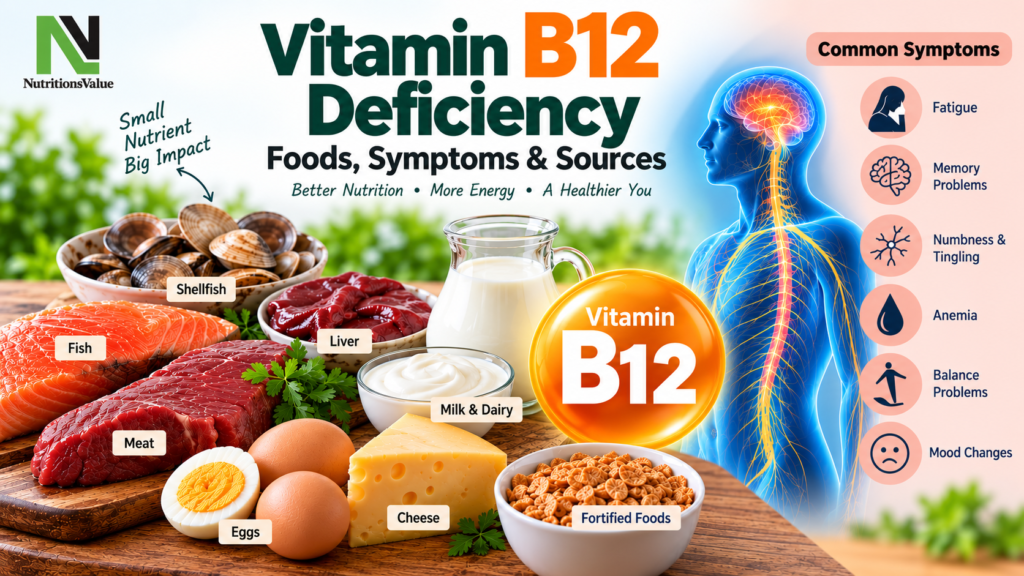
Vitamin B12 is an essential nutrient that supports red blood cell formation, DNA production, and normal nerve function. Because the body cannot make B12 on its own, it must come from food or supplements.
A deficiency can develop gradually and may cause fatigue, weakness, numbness, tingling, memory or concentration problems, and anemia. The good news is that vitamin B12 deficiency is often treatable when the underlying cause is identified.
What Is Vitamin B12?
Vitamin B12, also called cobalamin, is a water soluble vitamin that plays several important roles in the body.
It helps with:
- Red blood cell production
- DNA and genetic material synthesis
- Normal nervous-system function
- Energy metabolism
- Formation and maintenance of nerve cells
- Normal neurological function
Unlike some nutrients, vitamin B12 is naturally concentrated mainly in animal-derived foods. Some plant-based foods are fortified with B12, making them useful sources for people following vegetarian or vegan diets.
Vitamin B12 Deficiency Symptoms
Vitamin B12 deficiency can develop slowly, so symptoms may initially be subtle.
Common symptoms include:
- Fatigue and Weakness
Low B12 can interfere with normal red blood cell production. This may contribute to anemia and reduced oxygen delivery to tissues, resulting in tiredness and weakness.
- Pale Skin
B12 deficiency can cause certain types of anemia, which may make the skin appear unusually pale.
- Numbness and Tingling
A deficiency can affect nerves and may cause:
- Tingling in the hands or feet
- Numbness
- Burning sensations
- Pins-and-needles sensations
Persistent neurological symptoms should be medically evaluated because prolonged B12 deficiency can potentially cause nerve damage.
- Balance Problems
More significant deficiency can affect the nervous system and may contribute to difficulty walking or maintaining balance.
- Memory or Concentration Problems
Some people with B12 deficiency experience difficulties with concentration, memory, or thinking.
However, these symptoms have many possible causes, so they should not automatically be attributed to B12 deficiency.
- Sore or Swollen Tongue
A B12 deficiency may cause glossitis, in which the tongue becomes sore, smooth, swollen, or unusually red.
- Mouth Problems
Some people may experience mouth ulcers or other oral changes.
- Mood Changes
B12 deficiency can sometimes be associated with mood changes or irritability.
- Digestive Symptoms
Some people develop:
- Reduced appetite
- Weight loss
- Constipation
- Diarrhea
- Nausea
These symptoms are nonspecific and can occur with many other conditions.
Best Vitamin B12 Food Sources
Food | Serving Size | Vitamin B12 |
|
Beef liver, cooked | 3 oz (85 g) | 70.7 µg |
|
Clams, cooked | 3 oz (85 g) | 17.0 µg |
|
Oysters, cooked | 3 oz (85 g) | 14.9 µg |
|
Fortified nutritional yeast | ~¼ cup | 8.3–24 µg |
|
Salmon, cooked | 3 oz (85 g) | 2.6 µg |
|
Tuna, canned in water | 3 oz (85 g) | 2.5 µg |
|
Ground beef, cooked | 3 oz (85 g) | 2.4 µg |
|
Milk (2% fat) | 1 cup (240 mL) | 1.3 µg |
|
Plain fat-free yogurt | 6 oz (170 g) | 1.0 µg |
|
Fortified breakfast cereal | 1 serving | 0.6 µg |
|
Cheddar cheese | 1½ oz (42 g) | 0.5 µg |
|
Egg, whole, cooked | 1 large | 0.5 µg |
|
Turkey breast, roasted | 3 oz (85 g) | 0.3 µg |
|
Tempeh | ½ cup | 0.1 µg |
|
NIH/FDA Daily Value for vitamin B12 is 2.4 µg/day for adults and children age 4+.
The exact amount of B12 varies substantially depending on the food, serving size, preparation, and whether a product has been fortified.
- Fish and Seafood
Fish and seafood can provide substantial amounts of vitamin B12.
Examples include:
- Sardines
- Salmon
- Tuna
- Trout
- Shellfish
- Clams
Including fish regularly can help increase dietary B12 intake.
- Liver
Liver is exceptionally rich in vitamin B12.
However, because liver is also very high in vitamin A and other nutrients, it generally doesn’t need to be eaten frequently to obtain B12.
- Meat
Beef, chicken, turkey, and other meats can contribute to B12 intake.
Organ meats generally contain considerably more B12 than ordinary muscle meat.
- Eggs
Eggs contain vitamin B12, particularly in the yolk.
They can be a useful source for people who consume eggs but eat little or no meat.
- Milk and Dairy Products
Milk, yogurt, and some cheeses contain vitamin B12.
For lacto-vegetarians, dairy foods can therefore contribute to daily B12 intake.
Vitamin B12 Sources for Vegetarians and Vegans
This is particularly important because unfortified plant foods generally do not provide reliable amounts of naturally occurring vitamin B12.
Vegetarians who consume dairy and eggs can obtain B12 from these foods, although intake may still be inadequate depending on the overall diet.
Vegans generally need to obtain B12 from fortified foods and/or supplements.
Useful fortified foods can include:
- Fortified plant-based milk
- Fortified breakfast cereals
- Fortified nutritional yeast
- Certain fortified meat alternatives
Always check the nutrition label because fortification levels vary between products.
Who Is at Higher Risk of B12 Deficiency?
Certain groups have a greater risk.
Vegans and Some Vegetarians
People who avoid animal products and don’t regularly consume B12-fortified foods or supplements may not get enough B12.
Older Adults
B12 absorption can decrease with age in some people.
People With Absorption Problems
Conditions affecting the stomach or small intestine can interfere with B12 absorption.
Examples include certain gastrointestinal disorders and conditions affecting the stomach’s ability to produce intrinsic factor.
People Who Have Had Certain Gastrointestinal Surgeries
Some stomach or intestinal surgeries can reduce the body’s ability to absorb B12.
People Taking Certain Medications
Long-term use of some medications, including metformin and certain acid-reducing medicines, can be associated with lower B12 levels.
This does not mean that people taking these medicines should stop them. Medication changes should be discussed with a healthcare professional.
Vitamin B12 Deficiency and Anemia
One of the best known consequences of significant B12 deficiency is megaloblastic anemia.
In this condition, red blood cells become abnormally large and don’t develop normally.
Possible symptoms include:
- Fatigue
- Weakness
- Pale skin
- Shortness of breath
- Dizziness
- Rapid heartbeat
However, neurological problems can occur with B12 deficiency even when anemia is not obvious.
How Is Vitamin B12 Deficiency Diagnosed?
Symptoms alone cannot reliably diagnose B12 deficiency.
A healthcare professional may consider:
- Medical history
- Diet
- Symptoms
- Blood count
- Serum vitamin B12
- Methylmalonic acid (MMA)
- Homocysteine
- Other laboratory tests when appropriate
The appropriate tests depend on the individual situation.
If you have persistent numbness, weakness, balance problems, severe fatigue, or cognitive changes, medical evaluation is important.
Can Vitamin B12 Deficiency Be Treated?
Yes. Treatment depends on why the deficiency developed and how severe it is.
Treatment may involve:
- Increasing B12-rich foods
- B12-fortified foods
- Oral vitamin B12 supplements
- Higher-dose supplementation when medically appropriate
- Vitamin B12 injections in certain situations
People with absorption problems may require a different treatment strategy from someone whose deficiency is simply caused by inadequate dietary intake.
Vitamin B12 Foods: Vegetarian vs Non-Vegetarian
Dietary pattern | Potential B12 sources |
Omnivorous | Fish, meat, eggs, dairy |
Lacto-vegetarian | Milk, yogurt, cheese |
Ovo-vegetarian | Eggs |
Vegan | Fortified foods and B12 supplements |
Plant-based | Fortified foods and/or supplements |
Important: Foods such as spinach, bananas, almonds, lentils, beans, and most ordinary fruits and vegetables should not be considered reliable sources of vitamin B12 unless they are specifically fortified.
Vitamin B12 Deficiency Prevention
For most people, prevention starts with maintaining a consistent source of B12 in the diet.
A practical approach is:
- Include B12-rich foods regularly if you eat animal products.
- Choose B12-fortified foods if you follow a vegetarian or vegan diet.
- Check food labels for the actual B12 content.
- Discuss supplementation with a healthcare professional if your diet provides little or no B12.
- If you have risk factors for poor absorption, consider discussing B12 testing with your doctor.
Final Takeaway
Vitamin B12 is essential for red blood cell formation, DNA synthesis, and healthy nervous-system function. Deficiency can cause fatigue and anemia, but it can also produce neurological symptoms such as numbness, tingling, balance problems, and cognitive changes.
The main dietary sources are fish, seafood, meat, eggs, milk, and other dairy products. People following vegetarian or vegan diets should pay particular attention to B12-fortified foods and appropriate supplementation.
If you suspect you have a deficiency, don’t rely solely on symptoms. A healthcare professional can determine whether testing is appropriate and identify the underlying cause.
Explore More Health Related Article
🩺 Health & Nutrition Conditions
🥗 Nutrition Science
🍎 Comparative Analysis of the Most Nutritious Fruits
🌿 Top 10 Herbs & Wellness
⚖️ Spinach Nutrition
🥦 Compare Spinach vs Broccoli
Medical Disclaimer
The information provided in this article is intended for general educational and informational purposes only. It is not intended to diagnose, treat, cure, or prevent any disease or medical condition and is not a substitute for professional medical or dietary advice.
Vitamin B12 deficiency can have different causes, including inadequate dietary intake, problems with vitamin B12 absorption, certain medical conditions, gastrointestinal surgery, or the use of certain medications. Symptoms can also overlap with other health conditions. Therefore, symptoms alone should not be used to diagnose vitamin B12 deficiency.
If you suspect that you have vitamin B12 deficiency, have persistent or worsening symptoms, or are concerned about your nutritional status, consult a qualified healthcare professional for appropriate evaluation, testing, and treatment.
Sources / References
- NIH Office of Dietary Supplements – Vitamin B12
NIH provides information on B12 functions, recommended intake, food sources, fortified foods, deficiency, risk factors and B12 content of selected foods. - NIH Office of Dietary Supplements – Vitamin B12 Consumer Fact Sheet
Useful for general readers and covers B12 food sources, daily requirements, fortified foods and groups at risk of deficiency. - NHS – Vitamin B12 or Folate Deficiency Anaemia
Useful for symptoms, causes, diagnosis and treatment information. - USDA FoodData Central
Useful for checking nutrient composition of individual foods and comparing food-specific nutrient values. NIH’s B12 fact sheet also points readers to USDA FoodData Central for detailed food nutrient data.