Weight management is not just about losing weight. It is about achieving and maintaining a healthy body weight while supporting good nutrition, physical fitness, metabolic health, mental well-being, and a high long-term quality of life.
Many people attempt to manage their weight through restrictive diets, skipping meals, detox products, or intense short-term exercise programs. While these approaches may yield temporary changes, sustainable weight management usually requires a more practical approach: healthy eating habits, regular physical activity, adequate sleep, stress management, realistic goals, and consistent lifestyle changes.
Your body weight is influenced by numerous factors, including food intake, physical activity, genetics, hormones, sleep, medications, age, environment, and underlying health conditions. Therefore, a successful weight-management strategy should be personalized rather than based on a single diet or exercise routine.
In this article, we will explain how to create a sustainable diet and exercise plan, identify foods that support a healthy weight, highlight common mistakes to avoid, and discuss when professional medical guidance may be necessary.
What Is Weight Management?
Weight management means maintaining a weight over the long term that is beneficial for one’s health and well-being.
It can include the following:
- Reducing excess body fat when necessary
- Preventing unnecessary weight gain
- Maintaining weight after weight loss
- Preserving muscle mass
- Improving physical fitness
- Adopting sustainable dietary habits
- Improving metabolism and heart health
It is important to note that weight management is not just about achieving the lowest number on the weighing scale.
Two people with the same weight can have vastly different body compositions, fitness levels, dietary habits, and health risks.
Therefore, one should focus on factors beyond just weight, such as waist circumference, physical fitness, blood pressure, blood glucose, cholesterol levels, diet quality, and overall health.
Why Does Weight Matter?
Excess body fat especially fat accumulated around the abdomen can be linked to an increased risk of various health problems.
These may include:
- Type 2 diabetes
- High blood pressure
- Heart disease
- Abnormal cholesterol levels
- Sleep apnea
- Fatty liver disease
- Osteoarthritis
- Certain types of cancer
- Reduced physical mobility
However, body weight is just one aspect of health.
One should not assume that weight alone determines whether a person is healthy or unhealthy.
The goal should be to improve overall health and body composition, rather than simply achieving a specific weight figure.
Understanding Energy Balance
At its core, body weight is regulated by energy balance the relationship between calories consumed and calories expended. But this simple equation sits inside a much more complex biological system involving hormones, metabolism, genetics, gut bacteria, sleep, stress, and behavior. This is why two people can eat similar diets and see very different results.
While the balance of calories in versus calories out is the fundamental physical principle governing weight change, factors such as the quality of those calories, meal timing, hormonal signaling (insulin, leptin, ghrelin, cortisol), and even gut bacterial composition influence how the body stores or burns energy. Two diets with identical calorie counts can yield different results based on protein content, fiber, the level of food processing, and how they affect satiety and blood sugar levels.
Metabolism is often blamed for weight related issues, yet metabolic disorders are actually quite rare. The Basal Metabolic Rate (BMR) the energy your body requires while at rest accounts for the majority of daily calorie expenditure, followed by physical activity and the thermic effect of food (the energy needed to digest what you eat). Factors such as muscle mass, age, gender, and body size all influence BMR. This is why strength training is highly beneficial for long term weight management: having more muscle tissue slightly increases the body’s energy expenditure while at rest.
Healthy Weight Loss Is Usually Gradual
One of the biggest mistakes people make is expecting to lose a significant amount of weight in just a few days or weeks.
Rapid changes in weight can sometimes be due to fluctuations in:
- Water
- Glycogen
- Contents of the digestive tract
- Muscle tissue
- Body fat
A sustainable approach generally focuses on gradual progress.
For overweight individuals, a common clinical goal is to lose about 5% to 10% of their initial weight over time, as even modest weight loss can yield significant health benefits.
However, the ideal goal may vary from person to person.
Factors such as age, current weight, medications, medical conditions, physical activity, and nutritional status should be taken into account.
Nutrition: The Foundation of Weight Management
If there is one area supported by the most robust scientific evidence, it is Nutrition. Certain principles consistently emerge from research.
Prioritize whole and minimally processed foods
A diet based on vegetables, fruits, whole grains, legumes, lean protein, and healthy fats is associated with better body weight and superior long-term outcomes compared to a diet high in ultra-processed foods. Processed foods are often high in calories and low in fiber; they are also engineered to be highly palatable, which can override the body’s natural satiety signals.
The role of protein in satiety and muscle maintenance
Adequate protein intake promotes satiety, helps maintain lean muscle mass (especially during weight loss), and has a higher thermic effect than carbohydrates or fats meaning the body expends more energy digesting it. Good sources include lean meat, fish, eggs, dairy, legumes, tofu, and tempeh.
Fiber and gut health
Fiber slows digestion, promotes satiety, nourishes beneficial gut bacteria, and helps control blood sugar levels. Vegetables, fruits, whole grains, nuts, seeds, and legumes are excellent sources. Research has also linked a healthy gut microbiome to metabolic health, although this remains an emerging field of study.
Healthy fats are also essential
Instead of avoiding fat altogether, focus on the quality of the fat. Unsaturated fats from sources like olive oil, nuts, seeds, and fatty fish support hormone production, nutrient absorption, and heart health; when included in a balanced diet, they can also contribute to a feeling of fullness.
Hydration (Maintaining Proper Fluid Levels)
Drinking adequate water aids metabolism and digestion, and can help distinguish between true hunger and thirst. Some research suggests that drinking water before meals may slightly reduce calorie intake.
Mindful Eating and Portion Awareness
Eating slowly, minimizing distractions, and paying attention to hunger and fullness cues can help prevent overeating. For many, this approach is more sustainable than strict calorie counting, although tracking can be a useful short-term tool to build awareness.
A Note on Strict Dieting
Very low calorie diets and extreme restrictions often trigger hunger stimulating hormones, lead to muscle loss, and alter metabolism, this increases the likelihood of weight regain once normal eating resumes. Gradual, balanced changes that can be maintained long term yield more sustainable results than sudden, short term diets.
Fitness: Movement as Medicine
Exercise helps manage weight not only by burning calories but also by improving insulin sensitivity, preserving muscle mass, supporting mental health, and enhancing sleep quality all of which indirectly contribute to maintaining a healthy weight.
Strength Training
Resistance training helps build and maintain lean muscle, supporting metabolic rate and body composition. It is particularly beneficial during periods of calorie restriction, when the body might otherwise break down muscle tissue alongside fat. Two to three sessions per week focusing on major muscle groups are generally recommended for beginners.
Cardiovascular Exercise
Aerobic activity such as walking, cycling, swimming, or running directly burns calories and improves heart and lung health. Research supports both moderate steady state cardio and high intensity interval training (HIIT), the best approach is often the one an individual can actually sustain over the long term.
Non Exercise Activity (NEAT)
Non Exercise Activity Thermogenesis (NEAT) the energy expended through daily activities like walking, standing, moving around, and household chores can account for a significant portion of daily calorie expenditure and is often underestimated. Small changes, such as taking the stairs, walking while on a call, or parking further away, can make a difference over time.
Consistency Over Intensity
Research consistently shows that an exercise habit one can maintain long term is superior to a highly intense program that is short lived. Establishing a sustainable routine, even a simple one, yields better results than sporadic, high intensity efforts.
Sleep and Stress: Crucial Yet Overlooked Aspects
Sleep
Poor sleep disrupts appetite-regulating hormones increasing ghrelin (which stimulates hunger) and decreasing leptin (which signals fullness) and is linked to increased cravings for high calorie foods, reduced willpower, and impaired glucose metabolism. Adults generally benefit from seven to nine hours of quality sleep each night.
Stress and Cortisol
Chronic stress raises cortisol levels, which can influence fat distribution patterns (particularly fat accumulation around the abdomen) and promote emotional or stress-induced overeating. Ways to reduce stress include activities like regular walking.
A practical approach is to make most meals revolve around whole or minimally processed foods.
- Vegetables
Vegetables can provide fiber, vitamins, minerals, and water while adding substantial volume to meals.
Examples include:
- Spinach
- Methi
- Broccoli
- Cauliflower
- Carrots
- Beans
- Bottle gourd
- Bitter gourd
- Cabbage
- Tomatoes
- Cucumber
- Pumpkin
Try to include different colors and varieties throughout the week.
- Fruits
Whole fruits can be part of a healthy weight-management diet.
Examples include:
- Apples
- Guava
- Oranges
- Papaya
- Berries
- Pomegranate
- Watermelon
- Pear
- Banana
Whole fruit is generally preferable to fruit juice because the whole fruit retains its fiber and requires more chewing.
The presence of natural sugar in fruit does not automatically make fruit unhealthy.
- Protein-Rich Foods
Protein can help support muscle maintenance and may increase feelings of fullness.
Useful sources include:
- Eggs
- Fish
- Chicken
- Milk
- Curd
- Paneer
- Soybeans
- Tofu
- Lentils
- Chickpeas
- Rajma
- Peas
- Nuts and seeds
People who are physically active or trying to lose body fat should pay particular attention to getting adequate protein.
- High-Fiber Foods
Fiber can support digestive health and help meals become more filling.
Good sources include:
- Vegetables
- Fruits
- Whole grains
- Oats
- Barley
- Beans
- Lentils
- Chickpeas
- Seeds
- Nuts
Increasing fiber gradually while drinking adequate fluids may help reduce digestive discomfort.
Reduce Ultra Processed and High Calorie Foods
Weight management does not require completely eliminating favorite foods.
Instead, reduce the frequency and quantity of foods that are easy to overconsume, such as:
- Sugary beverages
- Sweets
- Cakes
- Cookies
- Chips
- Fried snacks
- Fast food
- Highly processed desserts
- Sugar-heavy breakfast products
These foods can be enjoyed occasionally, but they should not dominate the daily diet.
Physical Activity Is Essential for Long Term Weight Management
Weight management should not be limited merely to diet or the weighing scale. Regular Fitness Activities are crucial pillars for achieving and maintaining a healthy weight in the long run.
Exercise is not merely a tool for burning calories.
Regular physical activity can support:
- Cardiovascular health
- Muscle strength
- Bone health
- Mobility
- Mood
- Sleep
- Metabolic health
- Weight maintenance
A combination of aerobic activity and resistance training is especially useful.
Walking: The Most Underrated Exercise
Walking is accessible to most people and requires little equipment.
You can increase activity by:
- Walking after meals
- Taking stairs
- Walking while speaking on the phone
- Parking farther away
- Taking short movement breaks
- Going for a morning or evening walk
If you currently have a sedentary lifestyle, start gradually.
Consistency matters more than trying to achieve an extreme step count immediately.
Strength Training Helps Preserve Muscle
When people lose weight, the goal should ideally be to reduce excess body fat while preserving as much lean muscle as possible.
Resistance training can help support muscle strength and function.
Examples include:
- Squats
- Lunges
- Push-ups
- Resistance-band exercises
- Dumbbell exercises
- Machine-based strength training
Beginners should start with manageable resistance and focus on proper technique.
Older adults may particularly benefit from strength and balance exercises, subject to individual ability and medical advice where appropriate.
Stress Can Affect Eating Behavior
Stress does not automatically cause weight gain, but chronic stress can influence eating behavior.
Some people respond to stress by eating more, particularly highly palatable foods.
Others may lose appetite.
Helpful stress-management practices can include:
- Walking
- Yoga
- Meditation
- Deep breathing
- Social connection
- Hobbies
- Time outdoors
- Adequate sleep
- Structured daily routines
The goal is not to eliminate all stress. It is to develop healthier ways of responding to it.
Set Realistic Weight Management Goals
A good goal should be measurable and realistic.
Instead of:
“I want to lose 20 kg quickly.”
Consider:
“I will walk for 30 minutes five days a week and include vegetables and a protein source in my main meals.”
Lifestyle goals are often more controllable than scale goals.
You can control whether you:
- Walk
- Exercise
- Prepare healthier meals
- Drink water
- Sleep consistently
- Reduce sugary beverages
You cannot control exactly how quickly your body weight changes from week to week.
Track Progress Beyond the Weighing Scale
Body weight naturally fluctuates.
Changes may occur because of:
- Water retention
- Salt intake
- Hormonal changes
- Digestive contents
- Exercise
- Meal timing
Therefore, evaluate progress using multiple indicators.
Consider tracking:
- Body weight trend
- Waist circumference
- Physical fitness
- Strength
- Energy levels
- Sleep quality
- Food habits
- Blood pressure
- Blood glucose where appropriate
A single day’s weight does not define success or failure.
Herbal Solutions for Weight Management: Natural Support, Not a Shortcut
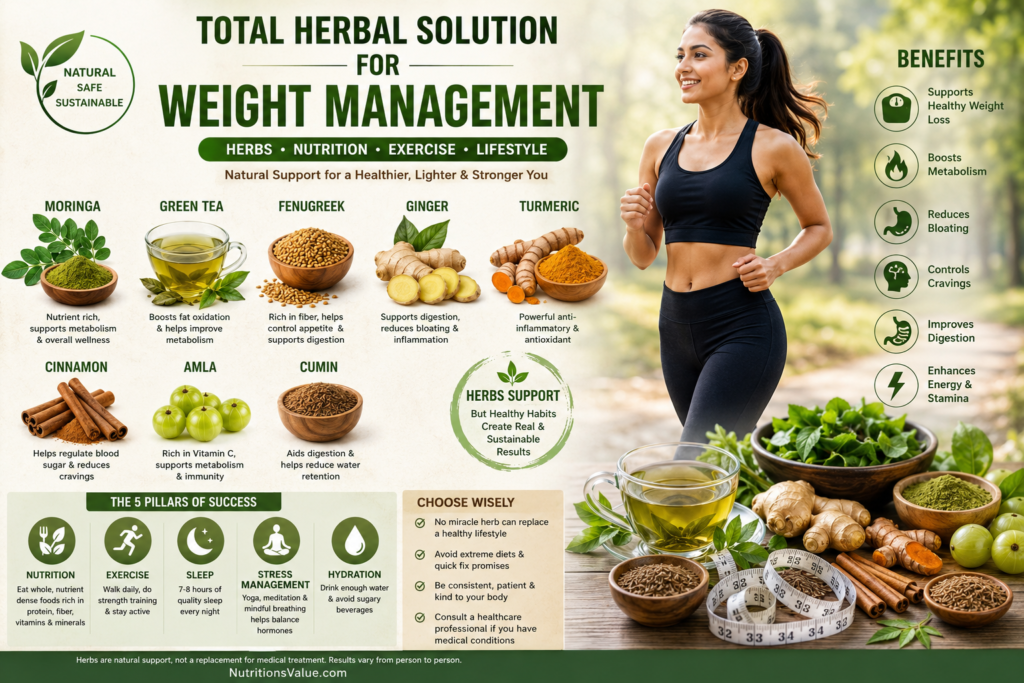
Herbal remedies have been used across cultures for centuries to support digestion, metabolism, and general wellness. Modern research on many of these herbs is still developing, and results are often modest compared to the foundational pillars of nutrition, movement, sleep, and stress management. Herbs are best understood as complementary tools not substitutes for a balanced lifestyle, and not guaranteed to produce significant weight loss on their own.
Different herbs contain different bioactive compounds. Some have been studied for their potential effects on:
- Appetite and satiety
- Blood glucose regulation
- Digestion
- Metabolic health
- Antioxidant activity
- Lipid metabolism
- Inflammation
- Energy metabolism
However, the strength of evidence varies considerably between herbs.
Most herbs should therefore be considered supportive components of a healthy lifestyle, not standalone weight loss medicines.
- Green Tea
Green tea is one of the most extensively studied beverages in relation to body weight.
It contains polyphenols, particularly catechins, along with caffeine.
Green tea may modestly support energy expenditure and fat oxidation in some individuals. However, the effect is generally not large enough to compensate for a calorie dense diet or sedentary lifestyle.
How to use it
Unsweetened green tea can be consumed as part of a healthy daily routine.
Avoid turning it into a sugary beverage.
Value addition: Green tea can be a healthier replacement for sugar sweetened beverages while providing beneficial plant compounds.
- Moringa
Moringa leaves are nutrient rich and can be incorporated into a balanced diet.
Moringa contains:
- Plant protein
- Fiber
- Vitamins
- Minerals
- Polyphenols
- Antioxidant compounds
Moringa may be particularly useful as a nutrient dense plant food, rather than being marketed as a miracle fat burner.
Moringa leaves can be added to:
- Dal
- Soups
- Vegetables
- Chutneys
- Smoothies
- Homemade foods
Moringa powder can also be incorporated into meals in appropriate quantities.
Important point
Moringa should not be promoted as a guaranteed weight loss treatment. Its value comes from its nutritional contribution within an overall healthy diet.
- Fenugreek (Methi)
Fenugreek seeds are traditionally used in Indian diets and herbal practices.
They contain soluble fiber and various plant compounds.
The fiber content may contribute to satiety and digestive health, while fenugreek has also been studied for its potential effects on blood glucose and metabolic markers.
Practical use
Fenugreek can be incorporated into food through:
- Methi vegetables
- Dal
- Roti
- Sprouted fenugreek
- Traditional preparations
People taking medication for blood glucose or other conditions should discuss concentrated herbal preparations with their healthcare professional.
- Cinnamon
Cinnamon is widely used as a culinary spice.
It contains several plant compounds and has been investigated for potential effects on glucose metabolism and other metabolic markers.
Adding cinnamon to foods can increase flavor without requiring additional sugar.
For example:
- Oatmeal
- Unsweetened yogurt
- Herbal tea
- Fruit
- Homemade foods
However, cinnamon should not be considered a standalone weight loss treatment.
- Ginger
Ginger has traditionally been used to support digestion and is commonly consumed as a spice or tea.
Ginger contains bioactive compounds such as gingerols.
It can be incorporated into a healthy routine through:
- Ginger tea
- Soups
- Vegetable dishes
- Dal
- Homemade meals
Ginger may support digestive comfort for some people, but evidence for meaningful weight loss effects remains limited.
- Turmeric
Turmeric is one of India’s most widely used culinary spices.
Its major bioactive compound, curcumin, has been extensively studied for its biological effects.
Turmeric can contribute to an overall healthy dietary pattern because it adds flavor and plant compounds without significant calories when used in normal culinary amounts.
However, turmeric should not be promoted as a direct fat burning solution.
- Cumin (Jeera)
Cumin is another traditional Indian spice that can be easily incorporated into everyday meals.
It can contribute flavor while helping reduce reliance on excessive sauces, sugar, or high calorie flavorings.
Cumin water is often promoted online for weight loss, but drinking cumin water alone should not be expected to produce significant fat loss.
Its greatest practical value may be as part of a healthy dietary pattern.
- Amla
Amla, or Indian gooseberry, is rich in vitamin C and various plant compounds.
It can be consumed as:
- Fresh fruit
- Unsweetened preparation
- Powder in appropriate amounts
- Traditional food preparations
Amla can contribute to dietary variety and antioxidant intake.
However, consuming amla does not automatically cause body fat reduction.
- Herbal Tea Instead of Sugary Drinks
One of the simplest ways herbs can support weight management is by changing what you drink.
Instead of regularly consuming:
- Soft drinks
- Sweetened tea
- Sweetened coffee
- Sugary juices
- High-calorie beverages
consider:
- Green tea
- Ginger tea
- Cinnamon tea
- Tulsi tea
- Unsweetened herbal infusions
The major advantage may come from reducing added sugar and excess calories rather than from a special “fat-burning” effect of the herb itself.
Using Herbs Safely
A few important considerations apply to any herbal approach:
- Herbs are not regulated the same way as medications. Quality, potency, and purity can vary widely between brands and products.
- Interactions are possible. Herbs can interact with medications (including blood thinners, diabetes medications, and blood pressure medications) and existing health conditions.
- “Natural” doesn’t automatically mean risk free. Some herbs are unsafe during pregnancy, breastfeeding, or for people with certain conditions.
- Consult a healthcare provider before starting any herbal supplement, especially if you take medication, are pregnant or breastfeeding, or have an underlying health condition.
- Herbs work best as part of a broader lifestyle approach supporting digestion, blood sugar balance, or stress rather than as a standalone weight loss solution.
A Better Combination
Herbs + Exercise
No herbal ingredient can substitute for Workout activity.
A weight management program should include regular movement.
Examples include:
- Walking
- Cycling
- Swimming
- Yoga
- Resistance training
- Bodyweight exercises
Even increasing everyday movement can contribute to better long-term health.
Herbs + Sleep + Stress Management
Weight management is also influenced by lifestyle factors beyond food.
Poor sleep and chronic stress can make healthy eating more difficult and may increase cravings for highly palatable foods.
Therefore, a total natural-health approach should include:
Healthy food + herbs + exercise + sleep + stress management.
This is the foundation of sustainable weight management.
Final Value: A Holistic Herbal Lifestyle
The real value of herbal weight management is not in finding one miraculous herb.
It is in creating a nutrient rich, plant forward lifestyle where herbs and spices make healthy food more enjoyable and sustainable.
A strong approach can combine:
Moringa + green tea + fenugreek + ginger + turmeric + cinnamon + amla + cumin
with:
protein + fiber + vegetables + whole foods + physical activity + adequate sleep + stress management.
This approach supports overall wellness while avoiding unrealistic promises.
Remember:
Herbs can support a healthy lifestyle, but they cannot replace the fundamentals of weight management.
If excess weight is associated with diabetes, high blood pressure, sleep apnea, hormonal disorders, medication related weight gain, or other health problems, individualized medical guidance is important.
The most effective long term strategy is not the fastest diet it is a lifestyle that you can continue safely and consistently.
Weight Management for Different Age Groups
Children
Children should generally not be placed on restrictive weight loss diets without professional guidance.
Growth and development require adequate energy and nutrients.
The emphasis should be on:
- Healthy family meals
- Physical activity
- Adequate sleep
- Reduced sugary beverages
- Healthy food environments
Teenagers
Teenagers have increased nutritional requirements because of growth and development.
Extreme dieting can be harmful.
Focus should remain on nutritious meals, physical activity, adequate sleep, and healthy body image development.
Adults
Adults can generally benefit from a combination of:
- Balanced nutrition
- Aerobic activity
- Strength training
- Sleep
- Stress management
- Regular monitoring
Individual needs vary substantially.
Older Adults
Older adults should pay particular attention to:
- Protein intake
- Muscle preservation
- Strength
- Balance
- Bone health
- Adequate micronutrients
Aggressive calorie restriction may not be appropriate for everyone.
The Most Important Principle: Sustainability
The most effective and evidence based approach to weight management involves combining several strategies rather than relying on just one:
- Consuming whole grains, adequate protein and fiber, and eating mindfully in appropriate portions.
- Engaging in regular physical activity, including strength training, cardiovascular exercise, and routine daily movements.
- Getting sufficient, regular sleep to maintain hormonal balance and curb food cravings.
- Managing stress to control cortisol levels and prevent stress eating.
- Setting realistic, achievable goals and pursuing them gradually, while practicing patience and self compassion.
- Supplementing these core strategies with the mindful and safe use of herbal or natural remedies (which complement, rather than replace, the primary methods).
Successful weight management is rarely about finding a single “perfect” solution. It is about cultivating sustainable habits that work in harmony with your body’s physiology rather than against it. This process involves making adjustments over time and allowing yourself the space to progress gradually, rather than expecting instant, drastic changes. While herbs and natural remedies can be helpful, the strongest evidence consistently points to the fundamentals: Nutritious Food, regular physical activity, quality sleep, and stress management all maintained consistently over the long term.
When Should You Talk to a Doctor or Dietitian?
Professional guidance is particularly important when weight changes are:
- Sudden
- Unexplained
- Very rapid
- Associated with significant fatigue
- Associated with other concerning symptoms
Professional support may also be useful for people with:
- Diabetes
- High blood pressure
- Kidney disease
- Liver disease
- Eating disorders
- Significant obesity
- Pregnancy
- Complex medication regimens
- Repeated unsuccessful weight-loss attempts
Some people may benefit from structured medical weight-management programs, prescription medication, or bariatric procedures when clinically appropriate.
These treatments should be evaluated individually by qualified healthcare professionals.
NutritionsValue Perspective
At NutritionsValue.com, we believe that natural health should be approached with nutrition, evidence, transparency, and responsible use of herbs.
Our goal is not to promote miracle cures.
Our goal is to help people understand how nutritious foods, traditional herbs, healthy habits, physical activity, and modern scientific knowledge can work together to support better health.
Healthy weight is not just about looking lighter. It is about becoming healthier, stronger, more active, and more resilient.
FAQ
Can I lose weight without exercising?
Yes, weight loss can occur through dietary changes that reduce overall energy intake. However, physical activity provides important benefits for cardiovascular health, fitness, muscle preservation, and long term weight maintenance.
Is rice bad for weight loss?
No. Rice can be part of a healthy weight management diet. Portion size, preparation, accompanying foods, and total dietary intake are more important than labeling rice as inherently “bad.”
Is eating at night responsible for weight gain?
Eating late at night is not automatically responsible for weight gain. However, late night eating can sometimes increase total calorie intake, particularly when people snack on high calorie foods.
Is fruit good for weight management?
Yes. Whole fruits can provide fiber, water, vitamins, minerals, and other beneficial plant compounds.
Does drinking warm water burn fat?
There is no strong evidence that warm water itself causes meaningful body fat loss. Water can support hydration and may help replace higher calorie beverages.
Can skipping dinner help with weight loss?
Skipping dinner may reduce calorie intake for some people, but it is not necessary for weight loss. A balanced, appropriately portioned dinner can fit into a healthy weight management plan.
Is protein important during weight loss?
Yes. Adequate protein can support muscle maintenance and may help with fullness. Individual protein requirements vary.
Can herbal supplements replace exercise and diet?
No. Herbal supplements should not be considered substitutes for a nutritious diet, physical activity, adequate sleep, or medically indicated treatment.
Explore Related Articles
⚖️ A Comparative Analysis of the Most Nutritious Fruits in the World
🥬 Spinach: Nutrition, Benefits, Uses & Safety
📊 Check Spinach Nutrition
📊 Check Vitamin K Rich Veggie
🥗 Explore Healthy Vegetables
⚖️ Spinach vs. Broccoli: Which Is More Nutritious?
⚖️ Moringa vs. Spinach: Nutrition Comparison
⚖️Complete Guide to Leafy Green Vegetables
📧 Get NutritionsValue Weekly
Medical Disclaimer
This article is for general educational purposes and is not a substitute for diagnosis, treatment, or individualized medical advice. Herbal supplements should be used cautiously, particularly when taking prescription medicines or managing a medical condition.
Sources
- Rothman, K. J., et al. “Effect of Acute and Chronic Dietary Supplementation with Green Tea Catechins on Resting Metabolic Rate, Energy Expenditure and Respiratory Quotient: A Systematic Review.” Nutrients, NCBI PMC7922336.
- Huang, J., et al. “EGCG Reduces Obesity and White Adipose Tissue Gain Partly Through AMPK Activation in Mice.” Frontiers in Pharmacology, 2018.
- “Green Tea Catechin Consumption Enhances Exercise-Induced Abdominal Fat Loss in Overweight and Obese Adults.” The Journal of Nutrition, 2009.
- “Effects of Catechin-Enriched Green Tea Beverage on Visceral Fat Loss in Adults with a High Proportion of Visceral Fat.” ScienceDirect / Obesity Research & Clinical Practice, 2012.
- “Effects of Dietary Supplementation with Epigallocatechin-3-Gallate on Weight Loss, Energy Homeostasis, Cardiometabolic Risk Factors and Liver Function in Obese Women.” British Journal of Nutrition, 2013.
- Broussard, J. L., et al. “Elevated Ghrelin Predicts Food Intake During Experimental Sleep Restriction.” Obesity, 2016.
- Taheri, S., et al. “Short Sleep Duration Is Associated with Reduced Leptin, Elevated Ghrelin, and Increased Body Mass Index.” PLOS Medicine, 2004.
- “Sleep Deprivation and Central Appetite Regulation.” Nutrients, NCBI PMC9783730, 2022.
- van Egmond, L., et al. “Effects of Acute Sleep Loss on Leptin, Ghrelin, and Adiponectin in Adults with Healthy Weight and Obesity.” Obesity, 2023.
- “The Impact of Sleep Deprivation on Hunger-Related Hormones: A Meta-Analysis and Systematic Review.” MDPI, 2025.
- Halton, T. L., and Hu, F. B. “The Effects of High Protein Diets on Thermogenesis, Satiety and Weight Loss: A Critical Review.” Journal of the American College of Nutrition, 2004.
- Paddon-Jones, D., et al. “Protein, Weight Management, and Satiety.” The American Journal of Clinical Nutrition, 2008.
- “Proteins and Peptides from Food Sources with Effect on Satiety and Their Role as Anti-Obesity Agents: A Narrative Review.” NCBI PMC11510221, 2024.
- Whiting, S., Derbyshire, E., and Tiwari, B. K. “Capsaicinoids and Capsinoids: A Potential Role for Weight Management? A Systematic Review of the Evidence.” Appetite, 2012.
- “The Effects of Capsaicin Intake on Weight Loss Among Overweight and Obese Subjects: A Systematic Review and Meta-Analysis of RCTs.” British Journal of Nutrition, 2023.
- “Could Capsaicinoids Help to Support Weight Management? A Systematic Review and Meta-Analysis of Energy Intake Data.” Appetite, 2014.
- “The Effects of Ginger Intake on Weight Loss and Metabolic Profiles Among Overweight and Obese Subjects: A Systematic Review and Meta-Analysis of RCTs.” Critical Reviews in Food Science and Nutrition, 2018.
- “Fenugreek and Its Effects on Muscle Performance: A Systematic Review.” NCBI PMC10054907, 2021.
- Kim, J., et al. “The Effect of Fenugreek in Type 2 Diabetes and Prediabetes: A Systematic Review and Meta-Analysis of RCTs.” International Journal of Molecular Sciences, 2023.