Fatty liver disease occurs when excess fat accumulates in the liver. It is increasingly connected with metabolic conditions such as overweight or obesity, insulin resistance, type 2 diabetes, high triglycerides and metabolic syndrome. The condition can be silent, meaning a person may have significant liver fat without obvious symptoms.
The terminology has also evolved. What was traditionally called nonalcoholic fatty liver disease (NAFLD) is now commonly referred to as metabolic dysfunction-associated steatotic liver disease (MASLD) when hepatic steatosis occurs with cardiometabolic risk factors and without harmful alcohol intake. More advanced inflammatory disease is termed metabolic dysfunction-associated steatohepatitis (MASH), previously called NASH.
For many people with fatty liver, nutrition and lifestyle are central to management. A dietary pattern emphasizing vegetables, fruits, legumes, whole grains, fiber, unsaturated fats and appropriate protein while reducing excess calories, added sugars, saturated fat and highly processed foods can support metabolic and liver health. Weight loss, when appropriate, can reduce liver fat and, with greater sustained weight reduction, may also improve liver inflammation and fibrosis.
This guide explains what to eat, what to limit, how to structure meals, the role of weight loss and exercise, common myths, and a practical Daily Diet Plan.
Quick Answer: What Should You Eat With Fatty Liver?
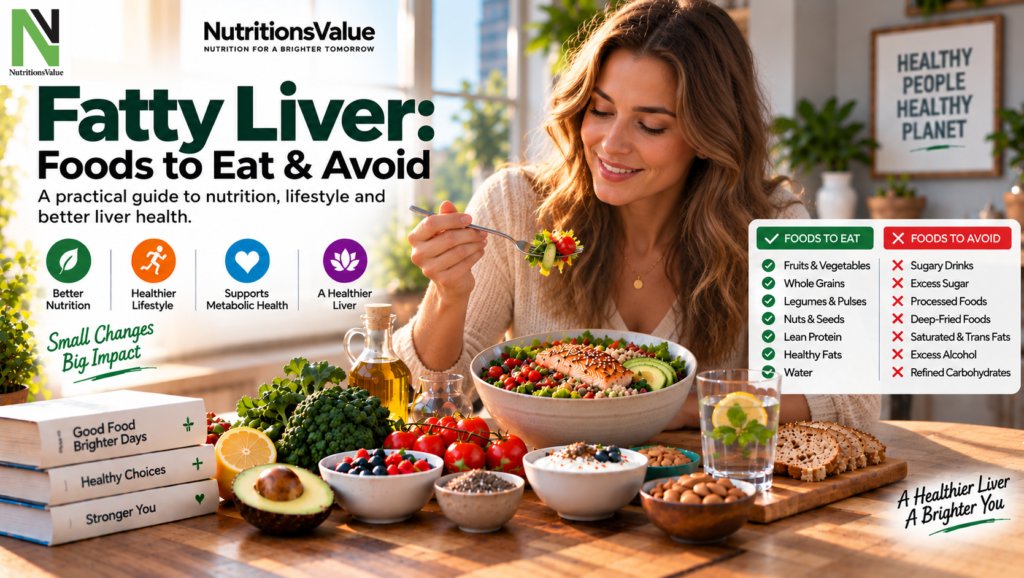
A liver friendly eating pattern generally emphasizes:
- Vegetables
- Whole fruits
- Legumes and pulses
- Whole grains
- Oats and other high-fiber foods
- Nuts and seeds in appropriate portions
- Fish and other lean protein sources
- Unsaturated fats
- Lower-sugar dairy options when suitable
- Water and unsweetened beverages
Foods and drinks worth limiting include:
- Sugar sweetened beverages
- Excess added sugar
- Large amounts of sweets and desserts
- Highly processed foods
- Foods high in saturated fat
- Trans-fat-containing foods
- Frequent deep-fried foods
- Excess refined carbohydrates
- Excess calories overall
- Alcohol, particularly when liver disease is present
NIDDK recommends replacing saturated and trans fats with unsaturated fats, choosing lower-glycemic foods such as vegetables, fruits and whole grains, and avoiding foods and drinks containing large amounts of simple sugars, particularly fructose containing sweetened beverages.
What Is Fatty Liver?
The liver naturally contains some fat. Fatty liver disease refers to excessive accumulation of fat in liver cells.
Fatty liver has several possible causes.
Metabolic dysfunction-associated steatotic liver disease
MASLD is associated with metabolic risk factors such as:
- Overweight or obesity
- Insulin resistance
- Type 2 diabetes
- High triglycerides
- Abnormal cholesterol
- Metabolic syndrome
It is not simply a disease caused by eating fatty food.
Alcohol associated liver disease
Excessive alcohol consumption can also cause fat accumulation and liver injury.
This distinction matters because fatty liver is not one single disease with one single cause. Doctors consider alcohol intake and other possible causes when evaluating someone with liver fat.
Is Fatty Liver Dangerous?
Fatty liver can range from relatively mild fat accumulation to disease involving inflammation and progressive scarring.
MASLD can progress through a spectrum that includes:
Steatosis → MASH → Fibrosis → Cirrhosis
Not everyone with fatty liver develops advanced liver disease.
However, fatty liver is closely associated with metabolic health, and people with MASLD may also have increased cardiovascular and metabolic risks.
This is why simply saying “fatty liver is harmless” is inaccurate.
NIDDK notes that fatty liver disease can progress to liver inflammation, scarring, cirrhosis and, in some cases, liver cancer or liver failure.
Symptoms of Fatty Liver
One reason fatty liver can go unnoticed is that many people have few or no symptoms.
Some people may experience:
- Fatigue
- General discomfort
- Discomfort in the upper-right abdomen
But symptoms alone cannot diagnose fatty liver. Doctors may use medical history, blood tests and imaging, and sometimes additional testing, to assess the liver and determine the severity of disease.
Why Does Diet Matter?
The liver plays a central role in:
- Energy metabolism
- Fat metabolism
- Glucose regulation
- Processing nutrients
- Producing important proteins
- Processing medications and other substances
A dietary pattern that consistently provides excessive calories, added sugars and unhealthy fats can contribute to metabolic problems associated with fatty liver.
On the other hand, a nutrient-dense diet can help address several factors at once:
better diet quality + appropriate calorie intake + improved metabolic health + healthy weight management.
This is why fatty liver nutrition should not be reduced to “stop eating oil.”
15 Best Foods to Eat With Fatty Liver
- Vegetables
Vegetables should form a major part of a fatty-liver-friendly diet.
Good options include:
- Broccoli
- Spinach
- Cauliflower
- Carrots
- Beans
- Peas
- Okra
- Cabbage
- Bell peppers
- Tomatoes
- Pumpkin
- Bottle gourd
- Bitter gourd
- Other seasonal vegetables
Vegetables provide fiber, vitamins, minerals and plant compounds while generally being relatively low in energy density.
Practical tip
Instead of asking:
“Which one vegetable cures fatty liver?”
ask:
“How can I increase the variety of vegetables in my meals?”
That is a much more useful long-term strategy.
- Whole Fruits
Fruit does not need to be completely eliminated because you have fatty liver.
Whole fruits provide:
- Fiber
- Water
- Vitamins
- Minerals
- Polyphenols and other plant compounds
Good choices include:
- Apples
- Guava
- Oranges
- Pears
- Berries
- Papaya
- Kiwi
- Pomegranate
The important distinction is between whole fruit and sugary beverages or large amounts of fruit juice.
NIDDK specifically recommends low-glycemic foods such as most fruits and vegetables while advising people with NAFLD to avoid foods and drinks containing large amounts of simple sugars, including many sweetened beverages and juices.
- Oats
Oats are a useful whole-grain option because they provide:
- Dietary fiber
- Beta-glucan
- Complex carbohydrates
- Some protein
- Several micronutrients
A breakfast based on oats, fruit and unsweetened yogurt can be much more nutrient-dense than a breakfast dominated by sugary cereals or pastries.
- Whole Grains
Choose whole or minimally refined grains more often.
Examples:
- Whole wheat
- Oats
- Barley
- Brown rice
- Millets
- Whole-grain breads
This does not mean white rice or wheat must be completely banned.
The bigger goal is to improve the overall quality and fiber content of the diet and avoid excessive portions.
NIDDK recommends low-glycemic foods such as whole grains as part of dietary management of NAFLD.
- Dal and Lentils
For Indian diets, dal is one of the most practical foods to include.
Lentils provide:
- Plant protein
- Dietary fiber
- Folate
- Minerals
- Complex carbohydrates
Examples include:
- Masoor dal
- Moong dal
- Toor dal
- Urad dal
- Mixed dals
Combining dal with vegetables and an appropriate portion of whole grains can create a balanced meal.
- Chickpeas and Beans
Chickpeas, rajma and other beans provide both protein and fiber.
Examples:
- Chickpeas
- Kidney beans
- Black beans
- Green gram
- Black-eyed peas
- Soybeans
Because they are filling and nutrient-dense, they can be useful in weight-management-oriented diets.
However, portion size still matters because even healthy foods contribute calories.
- Nuts
Nuts contain:
- Unsaturated fats
- Protein
- Fiber
- Minerals
- Plant compounds
Examples:
- Almonds
- Walnuts
- Pistachios
- Peanuts
A small portion can be included as part of a balanced diet.
NIDDK emphasizes that healthy fats from foods such as nuts can be part of a healthy eating pattern; the goal is not to eliminate all dietary fat.
- Seeds
Seeds can provide fiber, unsaturated fats and micronutrients.
Useful options include:
- Flaxseed
- Chia seeds
- Pumpkin seeds
- Sunflower seeds
- Sesame seeds
Use reasonable portions because seeds are energy-dense.
- Fish
Fish can provide high-quality protein and, depending on the type, omega-3 fatty acids.
Examples include:
- Sardines
- Salmon
- Mackerel
- Rohu
- Other suitable fish
Replacing some higher-saturated-fat meat choices with fish can fit well into a heart- and metabolic-health-oriented eating pattern.
- Lean Protein
Adequate protein can be useful when working toward healthy weight management.
Options include:
- Fish
- Skinless chicken
- Eggs
- Low-fat dairy
- Tofu
- Soy
- Lentils
- Beans
The ideal protein source depends on personal preferences, dietary pattern, medical conditions and overall calorie needs.
- Low Sugar Yogurt
Plain yogurt can provide:
- Protein
- Calcium
- Other nutrients
- Fermented cultures, depending on the product
Choose varieties without large amounts of added sugar.
If lactose or dairy causes symptoms, suitable alternatives can be considered.
- Healthy Unsaturated Fats
Fat should not be completely eliminated.
Instead, the focus should be on fat quality and quantity.
Better choices can include:
- Olive oil
- Mustard oil
- Groundnut oil
- Nuts
- Seeds
- Avocado
- Fatty fish
The goal is to replace excessive saturated and trans fats with more unsaturated fats rather than simply removing all fat. NIDDK specifically recommends replacing saturated and trans fats with unsaturated fats.
- Coffee
Coffee is frequently discussed in liver-health research.
Observational studies have associated coffee consumption with favorable liver outcomes in some populations.
However, coffee is not a treatment for fatty liver, and people who do not tolerate caffeine should not force themselves to drink it.
Avoid turning coffee into a miracle cure.
- Water
Water is an excellent default beverage.
Instead of regularly drinking:
- Soft drinks
- Sugary energy drinks
- Sweetened tea
- Sweetened coffee
- Sugary packaged drinks
choose water or other unsweetened beverages more often.
Reducing sugary beverages is particularly important because high intake of sugar-sweetened drinks can contribute substantial amounts of added sugar and calories.
- High Fiber Foods
Fiber-rich foods can help improve overall diet quality and satiety.
Examples include:
- Vegetables
- Fruits
- Beans
- Lentils
- Oats
- Barley
- Whole grains
- Nuts
- Seeds
Fiber should ideally come from a variety of foods rather than one supplement or “detox” product.
Foods to Avoid or Limit With Fatty Liver
The phrase “foods to avoid” should be used carefully.
Not every person with fatty liver needs to completely eliminate every food on a list.
The more accurate concept is:
Foods and drinks to minimize because they can make metabolic and liver-health goals harder to achieve.
- Sugar Sweetened Beverages
These are among the clearest foods/drinks to reduce.
Examples:
- Soft drinks
- Sweetened packaged juices
- Energy drinks
- Sweetened iced tea
- Sugary sports drinks
- Sweetened coffee beverages
These drinks can deliver substantial sugar and calories without providing much satiety.
NIDDK specifically recommends avoiding foods and drinks containing large amounts of simple sugars, including sweetened soft drinks, sports drinks, sweetened tea and juices.
- Excess Added Sugar
Limit frequent large portions of:
- Sweets
- Cakes
- Pastries
- Cookies
- Candy
- Ice cream
- Sweetened cereals
- Sugary desserts
You do not need to believe that one dessert “damages the liver.”
The concern is the overall dietary pattern and repeated excess intake.
- Deep Fried Foods
Frequent deep-fried foods can contribute substantial calories and fat.
Examples:
- Samosa
- Pakora
- French fries
- Fried chicken
- Poori
- Deep-fried snacks
You do not have to label one food as “toxic.”
The practical goal is to make deep-fried foods occasional rather than everyday staples.
- Foods High in Saturated Fat
Large amounts of saturated fat can make it harder to maintain a cardiometabolic-friendly diet.
Sources can include:
- Fatty meats
- Some processed meats
- Butter
- High-fat dairy
- Certain bakery products
- Large amounts of ghee
NIDDK recommends replacing saturated and trans fats with unsaturated fats in people with NAFLD.
- Trans Fats
Industrial trans fats should be minimized.
They may be found in some highly processed foods depending on the product and local regulations.
Always check ingredient lists and nutrition labels when appropriate.
- Refined Carbohydrates in Excess
Examples include:
- White bread
- Refined pasta
- Large portions of white rice
- Refined snacks
- Sugary cereals
This does not mean rice or wheat must be completely removed.
For example:
A moderate portion of rice + dal + vegetables
is very different from:
a large plate of refined rice + sugary drink + fried foods + dessert.
Overall meal composition matters.
- Processed Meats
Examples include:
- Sausages
- Bacon
- Salami
- Some cured meats
These foods can contain substantial saturated fat, sodium and other components depending on the product.
They are better treated as occasional foods rather than everyday protein staples.
- Alcohol
Alcohol deserves special attention in people with liver disease.
Alcohol can independently contribute to liver injury, and people with fatty liver should discuss alcohol use with their healthcare professional.
NIDDK advises people with NAFLD to minimize alcohol because it can further damage the liver.
If someone has advanced liver disease or alcohol-associated liver disease, the recommendation may be complete abstinence. Medical advice should guide this decision.
Is Rice Bad for Fatty Liver?
No-not automatically.
Rice can be part of a balanced diet.
The more important questions are:
- How much are you eating?
- Is the meal balanced with protein and vegetables?
- Is the rice portion appropriate for your energy needs?
- Are you regularly consuming large amounts of refined carbohydrates?
- What does the rest of your diet look like?
You do not need to eliminate rice simply because you have fatty liver.
For many Indian households, a more sustainable approach is:
moderate rice portion + dal/protein + plenty of vegetables.
Is Roti Better Than Rice?
There is no universal rule that roti is always better than rice.
A whole-wheat roti may provide more fiber than highly polished white rice, but the overall meal and portion size matter.
Both can fit into a healthy diet.
The better question is:
Which combination and portion can you consistently maintain while meeting your nutritional needs?
Is Ghee Bad for Fatty Liver?
Ghee is not a poison, but it is energy-dense and contains substantial saturated fat.
For someone with fatty liver particularly when weight loss or cardiometabolic risk reduction is a goal using large amounts of ghee routinely may make calorie and saturated-fat control more difficult.
A better approach is:
small amounts + varied fat sources + overall calorie awareness.
NIDDK recommends replacing saturated fats with unsaturated fats rather than eliminating all dietary fat.
What About Sugarcane Juice?
Sugarcane juice may appear “natural,” but natural does not automatically mean low in sugar.
For people trying to reduce added/free sugar and overall calorie intake, sugar-rich beverages can make dietary goals harder.
Whole fruits are generally a better way to obtain fruit-related nutrients and fiber.
What About Fruit Juice?
Fruit juice can contain significant amounts of naturally occurring sugar while providing less fiber than whole fruit.
For fatty liver nutrition, whole fruit is generally the more useful default.
NIDDK specifically advises avoiding drinks containing large amounts of simple sugars, including juices.
Can Weight Loss Improve Fatty Liver?
For people with overweight or obesity, gradual, sustained weight loss can improve liver health.
NIDDK notes that weight loss can reduce fat in the liver, and AASLD guidance emphasizes lifestyle modification as a cornerstone of MASLD management.
AASLD educational guidance reports that approximately 5–10% weight reduction is associated with meaningful improvements in hepatic steatosis, inflammation and fibrosis.
Importantly, this does not mean everyone with fatty liver should pursue rapid weight loss.
Crash dieting is not the goal.
A sustainable calorie deficit, nutritious food choices and regular physical activity are generally more appropriate.
Exercise and Fatty Liver
Diet is only one part of fatty liver management.
Regular physical activity can help improve:
- Insulin sensitivity
- Cardiovascular health
- Body composition
- Metabolic health
- Liver fat
AASLD educational material describes both aerobic and resistance training as useful approaches for reducing hepatic steatosis.
A practical routine could combine:
Aerobic activity
- Brisk walking
- Cycling
- Swimming
- Jogging
Resistance training
- Bodyweight exercises
- Resistance bands
- Weight training
If you have been inactive or have another medical condition, start at an appropriate level and seek professional advice when needed.
A Practical Diet Plan for Fatty Liver
The following is an example, not a personalized prescription.
Early Morning
Water
Optional:
- Unsweetened tea
- Unsweetened coffee
Avoid turning the morning routine into a sugary beverage habit.
Breakfast
Option 1
Oats + plain yogurt + fruit + a small amount of seeds
OR
Option 2
Vegetable poha + plain yogurt
OR
Option 3
2 whole-wheat vegetable rotis + protein source
The objective is to combine:
fiber + protein + minimally processed carbohydrates.
Mid-Morning
Choose one:
- Guava
- Apple
- Orange
- Papaya
- Pear
Avoid replacing whole fruit with sugary juice.
Lunch
A balanced Indian plate could contain:
½ plate
Vegetables + salad
¼ plate
Dal/beans/lean protein
¼ plate
Roti, brown rice, millet or another whole-grain carbohydrate
Optional:
- Plain curd/yogurt
This is much more useful than following an extreme “fatty liver detox diet.”
Evening Snack
Choose:
- Roasted chickpeas
- Small portion of nuts
- Fruit
- Plain yogurt
- Unsweetened tea/coffee
Avoid making biscuits, fried snacks and sugary drinks the default daily snack.
Dinner
Example:
- Mixed vegetables
- Dal/tofu/fish/chicken
- 1–2 appropriately sized whole-wheat rotis or another suitable whole-grain carbohydrate
Keep dinner balanced and portion-appropriate.
7 Day Fatty Liver-Friendly Food Rotation
Day | Breakfast | Lunch | Snack | Dinner |
Monday | Oats + fruit + seeds | Dal + roti + vegetables | Guava | Fish/tofu + vegetables |
Tuesday | Vegetable poha + curd | Rajma + moderate rice + salad | Nuts + fruit | Dal + roti + vegetables |
Wednesday | Oats + yogurt + fruit | Chana + roti + vegetables | Roasted chickpeas | Fish/chicken + vegetables |
Thursday | Vegetable upma | Dal + millet + vegetables | Apple | Tofu + roti + vegetables |
Friday | Eggs + whole-grain toast + vegetables | Rajma/chana + roti | Guava | Dal + vegetables |
Saturday | Oats + fruit | Fish/chicken + vegetables + whole grain | Yogurt | Dal + roti + salad |
Sunday | Vegetable poha | Dal + moderate rice + vegetables | Fruit + nuts | Tofu/fish + vegetables |
The exact portions should be individualized according to age, sex, body size, activity level, metabolic health and medical conditions.
A Simple Fatty Liver Plate
You do not need a complicated meal plan for every meal.
Use this basic framework:
½ plate → vegetables
¼ plate → protein
¼ plate → whole/minimally refined carbohydrate
Then add a small amount of healthy fat.
For example:
Vegetables + dal + roti + curd
or
Vegetables + fish + brown rice
or
Vegetables + tofu + millet
Foods to Eat More Often
🟢 Prioritize
Vegetables
- Broccoli
- Spinach
- Carrots
- Beans
- Cauliflower
- Tomatoes
- Seasonal vegetables
Fruits
- Guava
- Apple
- Orange
- Pear
- Papaya
- Berries
Protein
- Dal
- Chickpeas
- Beans
- Fish
- Eggs
- Tofu
- Lean poultry
- Lower-fat dairy
Whole grains
- Oats
- Barley
- Whole wheat
- Brown rice
- Millets
Healthy fats
- Nuts
- Seeds
- Olive/mustard/groundnut oils in appropriate amounts
Foods to Eat Less Often
🟠 Limit
- Sugary drinks
- Excess sweets
- Large desserts
- Deep-fried foods
- Processed meats
- Foods high in saturated fat
- Highly refined snacks
- Excess refined carbohydrates
- Alcohol
- Large portions of calorie-dense foods
The objective is not perfection.
The objective is to make healthier choices the normal pattern.
Common Fatty Liver Myths
Myth 1: Fatty liver means I must stop eating all fat.
Fact: No. Healthy unsaturated fats can be part of a balanced diet. The goal is to improve fat quality and control total energy intake.
Myth 2: Rice causes fatty liver.
Fact: Rice itself is not the sole cause of fatty liver. Portion size, dietary pattern, metabolic health and total energy intake matter.
Myth 3: Fruit should be completely avoided.
Fact: Whole fruits can be part of a healthy diet. The concern is more about excessive sugar intake and sugary beverages than eliminating all fruit.
Myth 4: Lemon water melts liver fat.
Fact: Lemon water can be a low-calorie beverage, but there is no basis for describing it as a treatment that directly “melts” liver fat.
Myth 5: Herbal detoxes can clean the liver.
Fact: There is no need for a special detox program to “clean” the liver. Some herbal products can also cause liver injury or interact with medications.
Myth 6: Fatty liver only affects people who drink alcohol.
Fact: Metabolic fatty liver disease and alcohol-associated liver disease are different conditions. MASLD is strongly associated with metabolic risk factors such as obesity, insulin resistance and type 2 diabetes.
Can Herbs Cure Fatty Liver?
This is an area where NutritionsValue should be particularly careful.
Herbs such as:
- Turmeric
- Ginger
- Garlic
- Fenugreek
- Milk thistle
- Moringa
are often discussed in relation to liver health.
Some have laboratory, animal or human research investigating metabolic or liver-related outcomes.
But research interest is not the same as established treatment.
A person with fatty liver should not replace medical evaluation, weight management, dietary improvement or prescribed treatment with an herbal supplement.
This is especially important because supplements can vary in composition and may interact with medicines.
What Medical Treatment Is Available?
Treatment depends on:
- Cause of liver fat
- Presence of MASH
- Degree of fibrosis
- Body weight
- Diabetes
- Lipid levels
- Cardiovascular risk
- Alcohol use
- Other medical conditions
Lifestyle intervention remains fundamental.
Depending on disease severity and metabolic circumstances, clinicians may also consider medications or other treatments.
AASLD currently maintains updated practice guidance for MASLD/MASH, including updates concerning specific therapies.
Therefore:
Do not self-treat diagnosed fatty liver solely through diet articles or supplements.
When Should You See a Doctor?
Seek medical evaluation if:
- Fatty liver was detected on ultrasound
- Liver enzymes are repeatedly elevated
- You have diabetes and metabolic risk factors
- You have obesity with suspected liver disease
- You have persistent upper-right abdominal discomfort
- You have unexplained fatigue with abnormal liver tests
- You have been told you have liver fibrosis
- You have a history of significant alcohol use
Seek urgent medical care for severe symptoms such as vomiting blood, black stools, severe abdominal swelling, confusion, jaundice or other signs of significant liver dysfunction.
FAQs
What is the best food for fatty liver?
There is no single best food. A dietary pattern rich in vegetables, fruits, legumes, whole grains, fiber, lean proteins and unsaturated fats is a better strategy.
Can fatty liver be reversed?
Liver fat can improve substantially with appropriate lifestyle and metabolic management, particularly when excess weight is present. The degree of improvement depends on the underlying cause and severity of disease.
Can I eat rice if I have fatty liver?
Yes, rice can fit into a balanced diet. Pay attention to portion size and combine it with vegetables, legumes or another protein source.
Is roti better than rice for fatty liver?
Not automatically. Whole-grain roti may provide more fiber, but the overall meal, portion and dietary pattern matter more than choosing one carbohydrate as universally “good” or “bad.”
Can I eat eggs with fatty liver?
Eggs can be part of a balanced diet for many people. Individual dietary needs depend on overall health, cholesterol levels and the rest of the diet.
Can I eat fruit with fatty liver?
Yes. Whole fruits can provide fiber and micronutrients. It is generally more useful to emphasize whole fruit while limiting sugar-rich beverages and large amounts of juice.
Is sugar bad for fatty liver?
Excessive intake of added sugars and sugar-sweetened beverages can contribute to excess calorie intake and metabolic risk. NIDDK specifically recommends avoiding foods and drinks containing large amounts of simple sugars.
Is ghee good for fatty liver?
Ghee is not a treatment for fatty liver. Because it is energy-dense and contains saturated fat, large amounts may make calorie and saturated-fat control more difficult. Small amounts can be considered within an appropriate overall diet.
Can coffee help fatty liver?
Coffee has been associated with favorable liver outcomes in observational research, but it should not be considered a treatment or required food. People who do not tolerate caffeine do not need to start drinking it.
Can herbs cure fatty liver?
There is insufficient evidence to recommend herbs as a replacement for evidence-based fatty liver management. Some supplements can also have adverse effects or interact with medicines.
How much weight should I lose if I have fatty liver?
There is no single target appropriate for everyone. For people with overweight or obesity, even modest weight loss can reduce liver fat, while greater sustained weight loss can provide additional benefits. AASLD educational guidance describes approximately 5–10% weight reduction as being associated with significant improvements in hepatic steatosis, inflammation and fibrosis.
NutritionsValue Bottom Line
Fatty liver is not simply a problem of eating too much fat. It is closely connected with metabolic health, diet quality, body weight, physical activity and other individual factors.
The most practical dietary strategy is to build meals around:
vegetables + whole fruits + legumes + whole grains + adequate protein + unsaturated fats
while reducing:
sugary drinks + excess added sugar + highly processed foods + frequent deep-fried foods + excessive saturated fat + excess calories.
For people with overweight or obesity, gradual and sustained weight loss can significantly improve liver fat and other aspects of metabolic health. Physical activity should be part of the strategy as well.
There is no scientifically established “fatty liver detox,” miracle food or single herb that replaces appropriate medical care.
The most powerful approach is usually much less complicated:
Eat a diverse, fiber-rich diet, control portions, choose healthier fats, reduce sugary beverages and highly processed foods, stay physically active, and manage the metabolic conditions that contribute to liver disease.
If fatty liver has already been diagnosed, the next important step is not simply asking “What should I stop eating?” but understanding why the liver is accumulating fat and whether there is inflammation or fibrosis.
Explore More Health Article
Scientific References
NIDDK — Eating, Diet & Nutrition for NAFLD/NASH: dietary patterns, fats, low-glycemic foods, sugars and alcohol.
NIDDK — NAFLD/NASH Overview: definition, risk factors and treatment principles.
NIDDK — Symptoms & Causes: symptoms, metabolic risk factors and other causes of fatty liver.
NIDDK — Diagnosis: evaluation of fatty liver and relevant metabolic and lifestyle factors.
AASLD — MASLD Clinical Practice Guidance: current evidence-based guidance and updates.
AASLD — Steatotic Liver Disease: Cutting Through the Fat: lifestyle, weight loss, diet and exercise considerations.
EASL/EASD/EASO — 2024 MASLD Clinical Practice Guidelines: updated terminology and management framework.
Medical Disclaimer
NutritionsValue content is intended for educational purposes and should not be considered a diagnosis, medical prescription or substitute for professional healthcare. Fatty liver has different causes and stages, and people with abnormal liver tests, diagnosed fibrosis/MASH, diabetes, obesity, significant alcohol use or other liver conditions should discuss their individual management with a qualified healthcare professional.