
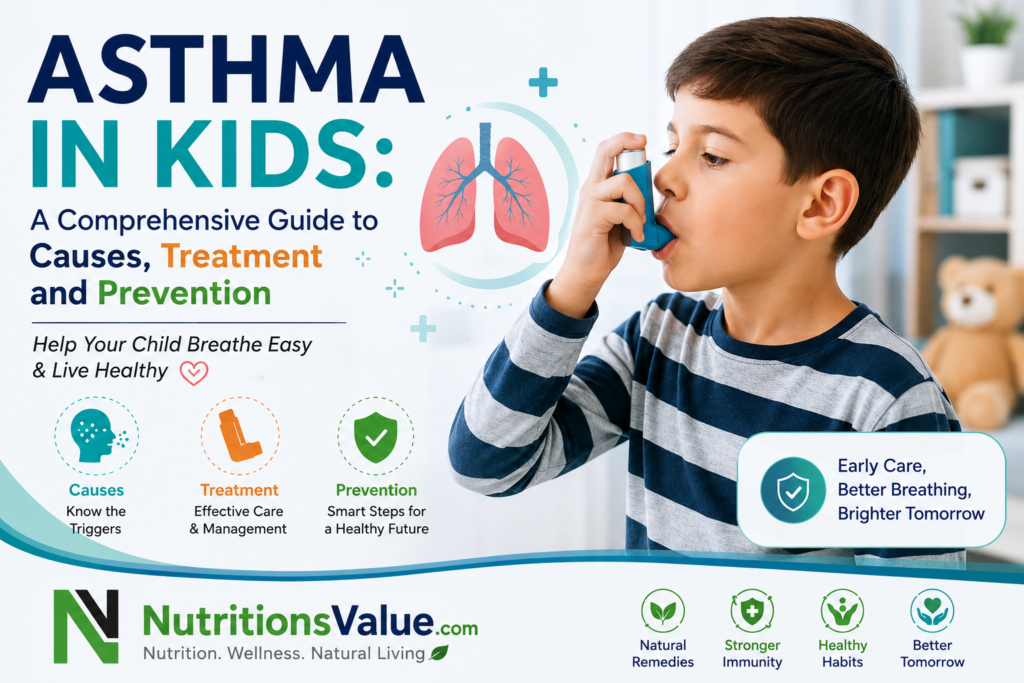
Asthma in children is a common long-term respiratory condition that can cause coughing, wheezing, chest tightness and difficulty breathing. For parents, repeated breathing problems can be worrying, especially when symptoms interfere with sleep, school or play.
The good news is that childhood asthma can often be controlled effectively. With proper medical diagnosis, prescribed treatment, avoidance of important triggers, correct inhaler technique and regular follow-up, most children with asthma can remain active and enjoy a normal childhood.
This comprehensive guide explains asthma in kids, its causes, symptoms, triggers, diagnosis, treatment, prevention, inhalers, asthma attacks, exercise, nutrition and important warning signs for parents.
What Is Asthma in Children?
Asthma is a chronic condition affecting the airways the tubes that carry air into and out of the lungs.
In children with asthma, the airways can become inflamed, swollen and overly sensitive. The muscles surrounding the airways may tighten, while mucus production can increase. Together, these changes can make breathing more difficult.
Asthma symptoms can vary from child to child. Some children experience symptoms only occasionally, while others may have frequent symptoms.
Common symptoms include:
- Coughing
- Wheezing
- Shortness of breath
- Chest tightness
- Difficulty breathing during exercise
- Night-time coughing
- Repeated breathing problems during colds
The latest WHO childhood asthma guideline covers asthma management in children and adolescents from 0–19 years and includes recommendations for both acute attacks and long-term management.
Asthma Symptoms in Kids
Recognizing symptoms early can help parents seek appropriate medical evaluation.
- Persistent or Recurrent Cough
Coughing may be an important symptom of childhood asthma.
It may become worse:
- At night
- Early in the morning
- During exercise
- After running
- During or after a cold
- After exposure to dust, smoke or other triggers
A repeated cough does not automatically mean asthma because many childhood illnesses can cause coughing.
- Wheezing
Wheezing is a high-pitched or whistling sound that may occur while a child breathes.
Some children wheeze frequently, while others experience it only during particular triggers or respiratory infections.
- Shortness of Breath
A child may complain:
“I can’t breathe properly.”
You may notice that the child stops playing, breathes faster or becomes unusually tired during physical activity.
- Chest Tightness
Older children may describe pressure or tightness in their chest.
Younger children may simply say that their chest hurts or may stop playing because breathing feels uncomfortable.
- Reduced Activity
A child who previously ran and played normally may start avoiding physical activities because of coughing or breathlessness.
This can sometimes be an overlooked sign of poorly controlled asthma.
Asthma Symptoms at Night
Night-time symptoms deserve particular attention.
A child with poorly controlled asthma may:
- Wake up coughing
- Wheeze during sleep
- Have difficulty sleeping
- Feel tired during the day
- Have difficulty concentrating at school
If asthma symptoms repeatedly disturb a child’s sleep, parents should discuss the situation with a pediatrician.
GINA recommends assessing asthma control by looking at symptoms such as daytime symptoms, night waking, reliever use and activity limitation.
What Causes Asthma in Children?
There is usually no single cause of asthma.
Asthma can develop through a combination of genetic, allergic and environmental factors.
Factors associated with childhood asthma include:
- Family history of asthma
- Allergies
- Eczema
- Allergic rhinitis
- Exposure to tobacco smoke
- Air pollution
- Dust mites
- Mould
- Animal allergens
- Respiratory infections
- Premature birth or low birth weight
- Obesity
- Certain environmental exposures
Having one of these factors does not necessarily mean that a child will develop asthma.
Common Asthma Triggers in Kids
A trigger is something that can bring on asthma symptoms or make existing symptoms worse.
Different children can have different triggers.
Dust and Dust Mites
Dust and dust mites can trigger symptoms in children who are sensitive to them.
Parents can help by:
- Washing bedding regularly
- Keeping the child’s sleeping area clean
- Reducing dust accumulation
- Keeping soft toys and furnishings clean
Tobacco Smoke
Second-hand tobacco smoke is an important respiratory risk for children.
Parents should keep the home and car completely smoke-free.
Smoking in another room does not provide adequate protection because smoke particles can remain in the environment.
Air pollution can worsen asthma symptoms in susceptible children.
On days with poor air quality, parents may need to reduce prolonged outdoor exposure, particularly if pollution is a known trigger for their child.
Mould
Damp rooms can encourage mould growth.
Fix water leaks, reduce indoor dampness and maintain appropriate ventilation.
Pollen
Some children develop symptoms after exposure to pollen from:
- Trees
- Grass
- Weeds
- Other plants
Animal Allergens
Some children are sensitive to allergens associated with cats, dogs or other animals.
A child should not automatically be separated from a pet unless there is evidence that the animal is contributing to symptoms.
Respiratory Infections
Viral respiratory infections such as colds can trigger asthma symptoms in some children.
Cold Air
Cold or dry air can trigger symptoms in some children.
Exercise itself is healthy and should not generally be avoided.
However, some children develop coughing, wheezing or breathlessness during or after exercise. This should be discussed with a healthcare professional.
Can Asthma Be Diagnosed in Young Children?
Asthma can be more difficult to diagnose in very young children.
This is because young children frequently experience coughing and wheezing with viral infections, and not every child who wheezes has asthma.
A pediatrician may consider:
- The pattern of symptoms
- How frequently symptoms occur
- Family history
- Allergies
- Previous respiratory problems
- Response to treatment
- Physical examination
- Other possible causes of breathing problems
For older children, spirometry and other lung-function tests may help support the diagnosis when appropriate.
Parents should not diagnose asthma solely from an internet article.
Asthma Treatment for Kids
Asthma treatment depends on the child’s:
- Age
- Symptoms
- Severity
- Asthma control
- Risk of attacks
- Lung function when measurable
- Response to treatment
- Other health conditions
The aim of treatment is to control symptoms, reduce attacks and allow the child to live an active life.
The updated WHO 2026 childhood guideline includes inhaled bronchodilators for acute asthma exacerbations and inhaled corticosteroid-containing approaches for long-term management.
Asthma Inhalers for Children
Many parents become concerned when their child is prescribed an inhaler.
An inhaler is simply a way of delivering medicine directly to the airways.
Depending on the medicine, inhalers can:
- Relax tightened airway muscles
- Reduce airway inflammation
- Control symptoms
- Reduce the risk of asthma attacks
The specific inhaler and dose should always be determined by the child’s healthcare professional.
Reliever Medicines
Reliever medicines are designed to provide relatively rapid relief from asthma symptoms by relaxing the airway muscles.
A commonly used reliever is salbutamol, but treatment varies according to age, clinical situation and current guidelines.
Parents should follow the child’s prescribed asthma plan rather than repeatedly increasing medication on their own.
Controller or Preventer Treatment
Some children need regular treatment to reduce airway inflammation and prevent symptoms.
Inhaled corticosteroids (ICS) are an important component of asthma management for many children.
These medicines are different from the anabolic steroids sometimes associated with bodybuilding.
Current GINA guidance recommends ICS-containing treatment for children aged 6–11 rather than relying solely on a short-acting bronchodilator.
Parents should not stop a prescribed controller medicine simply because the child feels better. Any change in treatment should be discussed with the child’s healthcare professional.
Why Is a Spacer Important for Children?
Young children may find it difficult to coordinate pressing an inhaler and breathing in at exactly the right time.
A spacer can make medicine delivery easier with many pressurized metered-dose inhalers.
For younger children, a spacer may be used with an appropriate mask.
Parents should ask a doctor, nurse or pharmacist to demonstrate the correct technique.
Correct Inhaler Technique Matters
Sometimes asthma may appear poorly controlled because the medicine is not reaching the lungs effectively.
Parents should regularly check:
- Is the inhaler being used correctly?
- Is the spacer being used correctly?
- Is the child taking prescribed medicines?
- Is the inhaler still within its usable period?
- Is the child frequently needing reliever medicine?
GINA recommends checking adherence, inhaler technique and risk factors before simply increasing treatment.
What Should Children With Asthma Eat?
There is no specific food that can cure asthma.
However, good nutrition is important for every growing child, including children with asthma.
A balanced diet should provide:
- Protein
- Vitamins
- Minerals
- Healthy fats
- Fiber
- Adequate fluids
- Sufficient calories for growth
Good food choices can include:
Fruits
- Apples
- Bananas
- Guava
- Oranges
- Papaya
- Pomegranate
- Mango
- Berries
Vegetables
- Carrots
- Spinach
- Broccoli
- Pumpkin
- Beans
- Peas
- Tomato
- Cauliflower
Protein Sources
- Dal
- Beans
- Chickpeas
- Eggs
- Milk
- Curd
- Paneer
- Fish
- Chicken
- Soy foods
- Nuts and seeds when age-appropriate
A balanced diet supports normal growth and overall health, but it should not replace asthma medicines.
Can Herbal Remedies Treat Asthma in Children?
This is an especially important issue for parents interested in natural health.
Herbs such as tulsi, turmeric, ginger, honey and others are traditionally used in many households. Some plant compounds have been studied for anti-inflammatory or respiratory effects.
However, traditional use or laboratory research does not prove that a particular herb can treat or prevent asthma in children.
Parents should be particularly cautious with:
- Concentrated herbal extracts
- Herbal syrups
- Essential oils
- Unregulated mixtures
- Products without reliable dosing information
Some herbal products can cause allergic reactions or interact with medicines.
Most important:
Do not replace a child’s prescribed asthma inhaler with an herbal remedy.
If parents want to introduce a herbal product, they should first discuss it with the child’s pediatrician.
Healthy Weight and Childhood Asthma
Maintaining a healthy weight is important for children’s overall health.
Excess weight can be associated with asthma and may make respiratory symptoms more difficult to manage.
However, children should never be placed on a strict weight-loss diet without professional guidance.
Instead, parents should encourage:
- Balanced meals
- Fruits and vegetables
- Regular physical activity
- Adequate sleep
- Water instead of sugary drinks
- Less ultra-processed food
The goal is healthy growth, not rapid weight loss.
Exercise and Asthma in Kids
Asthma should not automatically stop a child from playing sports.
Regular physical activity supports:
- Heart health
- Lung fitness
- Muscle development
- Bone health
- Healthy body weight
- Mental wellbeing
Some children experience asthma symptoms during exercise. This is sometimes called exercise-induced bronchoconstriction.
A doctor can help develop an appropriate plan.
Children may need to:
- Warm up before exercise.
- Follow their prescribed asthma plan.
- Have prescribed reliever medication available when appropriate.
- Stop and seek help if significant breathing difficulty develops.
With appropriate asthma control, many children can participate in sports and other physical activities.
How Can Parents Prevent Asthma Attacks?
Asthma cannot always be completely prevented, but parents can take steps to reduce triggers and improve control.
- Keep the Home Smoke-Free
Never smoke around a child with asthma.
Keep both the home and car smoke-free.
- Reduce Dust
Clean sleeping areas regularly and reduce unnecessary dust accumulation.
- Control Mould
Keep rooms dry and repair water leaks.
- Manage Known Allergies
If the child has diagnosed allergies, follow the pediatrician’s recommendations.
- Watch Air Quality
If air pollution triggers symptoms, reduce prolonged exposure on particularly polluted days.
- Follow Prescribed Treatment
Do not stop controller treatment without discussing it with the child’s doctor.
- Check Inhaler Technique
Correct technique helps ensure that prescribed medicine reaches the lungs.
- Keep an Asthma Action Plan
Parents should know what to do when symptoms begin to worsen.
GINA emphasizes asthma education, trigger management, inhaler technique, adherence and individualized action plans as important parts of asthma care.
Asthma Action Plan for Parents
A written asthma action plan can help parents respond appropriately when symptoms change.
Green Zone – Child Is Doing Well
The child:
- Has minimal or no symptoms
- Sleeps normally
- Can participate in normal activities
- Is following prescribed treatment
Yellow Zone – Symptoms Are Increasing
The child may have:
- More coughing
- Wheezing
- Breathlessness
- Reduced activity
- Night-time symptoms
Parents should follow the child’s individualized action plan and contact the healthcare professional when instructed.
Red Zone – Severe Symptoms
The child may have:
- Severe difficulty breathing
- Difficulty speaking because of breathlessness
- Blue or grey lips/face
- Severe exhaustion
- Rapid worsening
- Poor response to prescribed reliever medication
This can be an emergency and requires urgent medical attention.
When Should Parents Seek Emergency Help?
Get urgent medical help if a child:
- Is struggling significantly to breathe
- Cannot speak normally because of breathlessness
- Has blue or grey lips or face
- Becomes unusually sleepy or confused
- Is becoming exhausted
- Has severe chest retractions
- Has rapidly worsening symptoms
- Does not improve with the prescribed emergency treatment
Do not wait for severe symptoms to disappear on their own.
Asthma and School
Children with asthma should generally be able to attend school and participate in age-appropriate activities.
Parents should inform the school about the child’s asthma.
A school asthma plan can include:
- The child’s symptoms
- Known triggers
- Prescribed medication
- What to do during an asthma attack
- Emergency contact information
- Doctor’s instructions
Teachers and sports coaches should know how to respond if symptoms develop.
Asthma and Colds
Respiratory infections can trigger asthma symptoms in some children.
If a child with asthma develops a cold, parents should:
- Monitor breathing
- Continue prescribed treatment
- Follow the asthma action plan
- Encourage adequate fluids
- Watch for worsening symptoms
Do not discontinue prescribed asthma medication simply because the child has developed a cold.
Can Children Outgrow Asthma?
Some children’s asthma symptoms become less frequent as they grow.
However, parents should not assume that asthma has permanently disappeared just because symptoms improve.
Asthma can change over time, so medical reassessment may be appropriate.
The goal is to maintain good asthma control while the child grows.
Common Myths About Asthma in Kids
Myth 1: Children with asthma cannot play sports.
False. With appropriate asthma control, many children can participate in sports.
Myth 2: Inhalers are addictive.
False. Inhalers deliver medicines; they are not addictive drugs.
Myth 3: Herbal remedies can replace inhalers.
False. There is no reliable evidence that herbal remedies can replace prescribed asthma treatment.
Myth 4: Every child who wheezes has asthma.
False. Wheezing can occur with several childhood respiratory illnesses.
Myth 5: Asthma is contagious.
False. Asthma itself is not contagious.
Myth 6: Asthma is caused only by cold weather.
False. Cold air can be a trigger for some children, but asthma has multiple contributing factors.
Myth 7: Children should stop exercising if they have asthma.
False. Physical activity is beneficial. Asthma should be appropriately controlled so the child can remain active.
FAQ About Asthma in Children
What are the common symptoms of asthma in kids?
Common symptoms include recurrent coughing, wheezing, shortness of breath and chest tightness. Symptoms may become worse at night, during exercise or during respiratory infections.
What triggers asthma in children?
Common triggers include tobacco smoke, dust, allergens, mould, air pollution, respiratory infections, cold air and exercise in susceptible children.
Can asthma be cured permanently?
There is currently no simple cure that permanently eliminates asthma in every child. However, asthma can often be controlled very effectively with appropriate treatment and trigger management.
Can a child with asthma play sports?
Yes. Children with well-controlled asthma can often participate in sports and other physical activities.
Can food cure asthma?
No. There is no specific food that cures asthma. A balanced diet supports overall health but cannot replace medical treatment.
Can turmeric or tulsi cure childhood asthma?
No. Although these herbs are traditionally used and some plant compounds have been researched, they should not be considered a replacement for evidence-based asthma treatment.
Should a child with asthma avoid milk?
Not unless the child has a diagnosed allergy, intolerance or another medical reason to avoid it.
Is asthma contagious?
No. Asthma is not an infectious disease and cannot spread from one child to another.
Why does my child’s asthma get worse at night?
Night-time symptoms can be associated with poorly controlled asthma and other factors. Repeated night waking or coughing should be discussed with the child’s pediatrician.
When is childhood asthma an emergency?
Severe breathing difficulty, blue or grey lips/face, inability to speak normally because of breathlessness, confusion, extreme exhaustion or rapidly worsening symptoms require urgent medical attention.
Asthma in kids is manageable, and it should not automatically limit a child's childhood.
The most effective approach combines:
Correct diagnosis + appropriate treatment + trigger control + correct inhaler technique + regular medical review + healthy lifestyle.
Parents should pay attention to repeated coughing, wheezing, breathing difficulty and reduced exercise tolerance. A proper diagnosis is particularly important because not every cough or wheeze is asthma.
For children who have asthma, prescribed inhaled treatment can play an important role in controlling airway inflammation and preventing attacks. Current WHO guidance for children and adolescents includes inhaled corticosteroid-containing long-term approaches, while GINA emphasizes regular assessment, inhaler technique, adherence and individualized treatment.
Nutrition also matters, but no special food, herb, supplement or home remedy can replace prescribed asthma treatment. Children should receive a varied, balanced diet that supports normal growth and development.
Parents can further help by keeping the home smoke-free, reducing exposure to relevant allergens and pollutants, managing mould and dust, encouraging appropriate physical activity and maintaining a written asthma action plan.
Most importantly, learn the signs of a serious asthma attack. A child who is struggling to breathe, becoming exhausted, developing blue or grey lips/face or unable to speak normally because of breathlessness needs urgent medical attention.
With proper care and support, children with asthma can learn, play, exercise, sleep and grow normally.
Medical Disclaimer
This article is intended for general educational information about asthma in children. It does not replace examination, diagnosis or treatment by a qualified pediatrician or other healthcare professional. Medication choice, dose, inhaler technique, spacer use and asthma action plans should be individualized for each child. Never start, stop or change prescribed asthma medication without medical advice.
Medical References
World Health Organization (WHO) — 2026 consolidated guidelines for management of asthma in children and adolescents.
Global Initiative for Asthma (GINA) — Asthma Management and Prevention guidance.
GINA Summary Guide — Assessment and treatment principles for children aged 6–11 years.