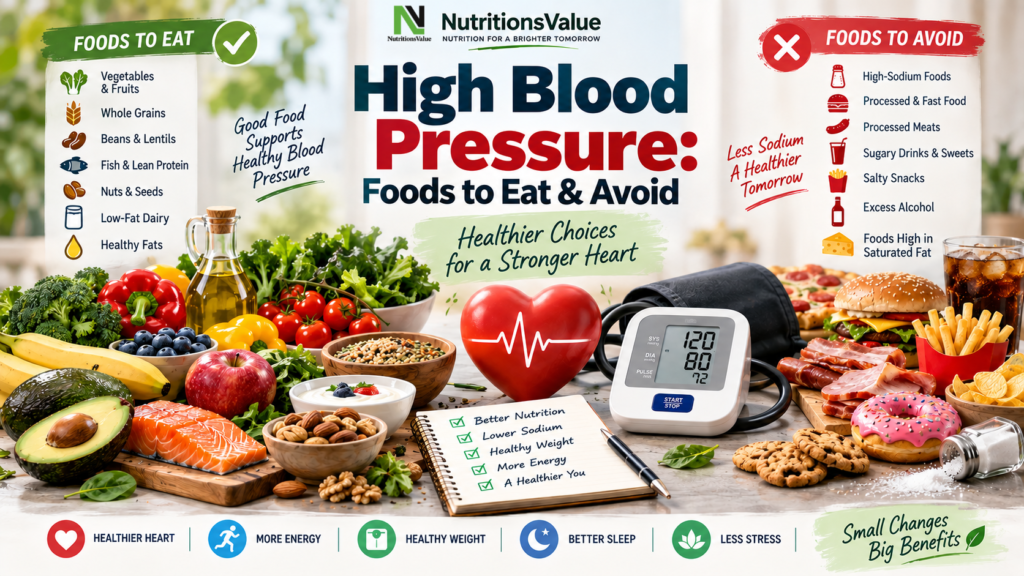
High Blood Pressure, also called Hypertension, is one of the most important risk factors for heart disease and stroke. Diet can play a major role in Blood Pressure Management, particularly when it emphasizes vegetables, fruits, whole grains, legumes, nuts, seeds, fish and lower fat dairy while reducing sodium, highly processed foods, added sugars and excess alcohol.
One of the best studied eating patterns for hypertension is the DASH diet (Dietary Approaches to Stop Hypertension). DASH emphasizes fruits, vegetables, whole grains, beans, nuts, fish, poultry and low-fat dairy while limiting sodium, saturated fat, sugary drinks and sweets.
Important: Food choices can support blood-pressure control, but they do not replace prescribed medication. People with diagnosed hypertension should follow their healthcare professional’s treatment plan.
Quick Answer
For high blood pressure, focus on:
- Vegetables and leafy greens
- Whole fruits
- Whole grains
- Beans, lentils and other legumes
- Unsalted nuts and seeds
- Fish and other lean proteins
- Low-fat or fat-free dairy
- Foods naturally rich in potassium
- Unsaturated fats such as olive oil
- Water and other unsweetened drinks
Limit:
- High sodium processed foods
- Processed meats
- Fast food
- Salty snacks
- Canned foods with added sodium
- Highly processed ready meals
- Foods high in saturated fat
- Sugary drinks
- Excess sweets
- Excess alcohol
The DASH eating pattern is specifically designed around many of these principles.
What Is High Blood Pressure?
Blood pressure is the force of blood pushing against the walls of your arteries.
It is measured using two numbers:
Systolic pressure / Diastolic pressure
For example:
120/80 mmHg
The 2025 American Heart Association/American College of Cardiology guideline classifies adult blood pressure as:
Category | Systolic | Diastolic |
Normal | <120 | <80 |
Elevated | 120–129 | <80 |
Stage 1 hypertension | 130–139 | 80–89 |
Stage 2 hypertension | ≥140 | ≥90 |
These categories are based on the guideline’s framework and should not be used to diagnose yourself from a single reading.
Why Does Diet Matter for Blood Pressure?
Diet can influence blood pressure through several pathways, including:
- Sodium intake
- Potassium intake
- Body weight
- Overall calorie intake
- Dietary fat quality
- Fiber intake
- Alcohol consumption
- Overall dietary pattern
The DASH diet was developed specifically to improve blood-pressure-related nutrition. Research supported by NHLBI has found that DASH can lower blood pressure, and reducing sodium alongside DASH can produce greater reductions.
Best Foods to Eat for High Blood Pressure
Best Foods to Eat for High Blood Pressure
- Leafy Green Vegetables
Examples include:
- Spinach
- Kale
- Swiss chard
- Collard greens
- Romaine lettuce
- Arugula
Leafy greens can provide potassium, magnesium, fiber and other nutrients that fit well into a heart-healthy eating pattern.
- Other Vegetables
Build meals around vegetables such as:
- Broccoli
- Carrots
- Tomatoes
- Bell peppers
- Cauliflower
- Green beans
- Zucchini
- Sweet potatoes
- Squash
NHLBI’s heart-healthy guidance specifically emphasizes vegetables such as leafy greens, broccoli, carrots and other vegetables.
- Whole Fruits
Good options include:
- Apples
- Oranges
- Pears
- Bananas
- Berries
- Kiwi
- Melons
- Peaches
- Grapes
Whole fruits provide fiber and minerals such as potassium.
You generally do not need to eliminate fruit simply because you have high blood pressure.
- Bananas and Other Potassium-Rich Foods
Potassium can help counter some of the effects of sodium and supports normal blood-vessel function.
Other potassium-containing foods include:
- Potatoes
- Sweet potatoes
- Beans
- Spinach
- Tomatoes
- Avocado
- Oranges
- Yogurt
- Melons
- Fish
However, more potassium is not automatically better for everyone.
People with kidney disease or those taking certain medications may need to restrict potassium or avoid potassium-containing salt substitutes.
- Beans and Lentils
Beans and lentils provide:
- Fiber
- Plant protein
- Potassium
- Magnesium
- Other micronutrients
Examples:
- Black beans
- Kidney beans
- Chickpeas
- Lentils
- Navy beans
- Pinto beans
Choose lower-sodium canned versions when possible, or rinse canned beans before eating.
Rinsing and draining canned foods can substantially reduce their sodium content.
- Oats
Plain oats are a useful whole-grain choice.
Try:
Oatmeal + berries + unsalted nuts + plain yogurt
instead of heavily sweetened flavored oatmeal.
- Whole Grains
Good choices include:
- Oatmeal
- Brown rice
- Barley
- Whole-wheat bread
- Whole-grain pasta
- Quinoa
- Whole-grain cereals
DASH recommends whole grains as important sources of fiber and nutrients.
- Unsalted Nuts and Seeds
Examples:
- Almonds
- Walnuts
- Pistachios
- Pumpkin seeds
- Chia seeds
- Flaxseeds
- Sunflower seeds
Choose unsalted versions whenever possible because salted nuts can contribute significant sodium.
- Fish
Fish can be an excellent protein choice.
Examples:
- Salmon
- Trout
- Tuna
- Sardines
- Cod
- Herring
DASH includes fish as part of its recommended eating pattern.
- Low-Fat or Fat-Free Dairy
Examples:
- Plain low-fat yogurt
- Low-fat milk
- Fat-free yogurt
- Lower-fat dairy products
Dairy foods can provide calcium and protein and are included in the DASH eating pattern.
- Avocado
Avocado provides potassium and unsaturated fats.
It can be used in:
- Whole-grain toast
- Salads
- Grain bowls
- Sandwiches
- Homemade dips
Portion size still matters because avocado is calorie-dense.
- Olive Oil
Extra-virgin olive oil can be used instead of butter or other sources of saturated fat.
Try it with:
- Vegetables
- Salads
- Fish
- Whole grains
The overall dietary pattern matters more than any individual oil.
- Unsalted Seeds
Chia, flax, pumpkin and sunflower seeds can add fiber and healthy fats.
A small portion can be added to:
- Oatmeal
- Yogurt
- Salads
- Smoothies
- Herbs and Spices
One of the easiest ways to reduce dependence on salt is to increase flavor using:
- Garlic
- Black pepper
- Basil
- Rosemary
- Parsley
- Coriander
- Paprika
- Oregano
- Lemon
- Lime
- Ginger
NHLBI specifically recommends herbs, spices and lemon or lime juice as ways to flavor foods without relying on salt.
- Water
Water is an excellent default beverage.
Try replacing:
Sugary soda → Water
Sweetened iced tea → Unsweetened tea
Sugary coffee drinks → Unsweetened or lightly sweetened coffee
This can reduce added sugar and unnecessary calories.
Foods to Avoid or Limit With High Blood Pressure
“Foods to avoid” does not mean that every person with hypertension must permanently eliminate every item below.
The bigger goal is to reduce frequent exposure to high-sodium, highly processed and nutritionally poor foods.
- Processed Meats
Examples:
- Bacon
- Ham
- Sausages
- Hot dogs
- Salami
- Deli meats
- Cured meats
These can contain substantial sodium.
WHO notes that processed meats such as bacon, ham and salami can be important sources of dietary salt.
- Salty Snacks
Limit foods such as:
- Potato chips
- Pretzels
- Salted crackers
- Salted nuts
- Cheese snacks
- Packaged snack mixes
These foods can add sodium quickly.
- Fast Food
Fast-food meals may contain high amounts of sodium, saturated fat and calories.
Examples include:
- Burgers
- Fries
- Pizza
- Fried chicken
- Processed sandwiches
You don’t necessarily have to eliminate restaurant food completely, but choosing lower-sodium options and smaller portions can help.
- Instant and Ready-to-Eat Meals
Examples:
- Instant noodles
- Frozen meals
- Boxed pasta meals
- Ready-made soups
- Some frozen pizzas
- Convenience meals
Always check the nutrition label because sodium can vary dramatically between products.
- Canned Foods With Added Sodium
Canned vegetables, soups and beans can contain substantial sodium.
Choose:
No-salt-added / low-sodium versions
when available.
For canned beans and vegetables, draining and rinsing can also reduce sodium.
- Pickles and High-Sodium Condiments
Be careful with:
- Pickles
- Soy sauce
- Teriyaki sauce
- Bottled sauces
- Stock cubes
- Bouillon
- Salt-heavy dressings
These can add sodium even when the main ingredients in your meal are healthy.
- Highly Processed Bread Products
Bread may not taste particularly salty, but it can contribute meaningful sodium because people often eat it frequently.
This does not mean bread must be eliminated.
Instead:
- Compare labels
- Choose whole-grain options
- Watch serving size
- Combine with low-sodium foods
WHO specifically notes that bread can be a frequent source of dietary salt in some populations.
- Foods High in Saturated Fat
Limit frequent consumption of:
- Fatty cuts of meat
- Full-fat dairy
- Butter
- Some processed baked goods
- Foods prepared with large amounts of saturated fat
DASH emphasizes limiting saturated fat while increasing foods such as vegetables, fruits, whole grains, beans, nuts and fish.
- Sugary Drinks
Examples:
- Soda
- Sweetened iced tea
- Energy drinks
- Sweetened coffee beverages
- Sweetened fruit drinks
These add sugar and calories without providing much nutritional value.
- Excess Alcohol
Alcohol can raise blood pressure, and the 2025 AHA/ACC guideline recommends reducing or eliminating alcohol as part of blood-pressure management.
If you don’t drink alcohol, there is no health reason to start.
How Much Sodium Should You Have?
This is one of the most important questions for hypertension.
AHA/ACC approach
The 2025 guideline recommends:
≤2,300 mg sodium/day
with an ideal goal of moving toward:
<1,500 mg/day
for adults with elevated blood pressure or hypertension when appropriate.
WHO recommendation
WHO recommends that adults consume:
<2,000 mg sodium/day
equivalent to:
<5 g salt/day
These recommendations are expressed differently by organizations, but they agree on the central message:
Most adults should reduce excessive sodium intake, particularly when managing high blood pressure.
Salt vs Sodium: What's the Difference?
They are not exactly the same.
Salt = sodium chloride
Sodium is one component of salt.
Approximately:
1 gram sodium ≠ 1 gram salt
This is important when reading food labels.
For general nutrition planning, follow the sodium value listed on packaged-food labels rather than trying to estimate sodium from the weight of salt.
Potassium and High Blood Pressure
Potassium is important because it can help reduce the effects of sodium and support healthy blood-vessel function.
Potassium-rich foods include:
- Bananas
- Potatoes
- Sweet potatoes
- Spinach
- Beans
- Avocado
- Oranges
- Yogurt
- Tomatoes
- Fish
But do not start potassium supplements or potassium-based salt substitutes without medical advice if you have kidney disease or take medications that affect potassium levels.
DASH Diet for High Blood Pressure
DASH = Dietary Approaches to Stop Hypertension.
It is one of the best-established dietary approaches for managing blood pressure.
DASH emphasizes:
- Vegetables
- Fruits
- Whole grains
- Beans
- Nuts
- Seeds
- Fish
- Poultry
- Low-fat dairy
- Healthy vegetable oils
while limiting:
- Sodium
- Saturated fat
- Added sugars
- Sugary beverages
- Sweets
- Fatty meats
DASH sodium levels
The traditional DASH plan uses:
2,300 mg sodium/day
A lower-sodium version uses:
1,500 mg/day
NHLBI notes that 1,500 mg can lower blood pressure even further than 2,300 mg in appropriate adults.
Simple Plate Method for High Blood Pressure
A practical meal can look like:
½ plate
Vegetables
¼ plate
Lean protein
Examples:
- Fish
- Chicken
- Beans
- Lentils
- Tofu
¼ plate
Whole grains or other high-fiber carbohydrates
Examples:
- Brown rice
- Barley
- Quinoa
- Whole-grain pasta
Add
A small amount of unsaturated fat such as olive oil or avocado.
One-Day High Blood Pressure Diet Plan
Breakfast
Oatmeal bowl
- Plain oats
- Blueberries
- Banana
- Chia seeds
- Unsalted walnuts
- Plain low-fat yogurt
Drink:
Water or unsweetened tea
Lunch
Salmon grain bowl
- Grilled salmon
- Quinoa
- Spinach
- Tomatoes
- Cucumber
- Avocado
- Lemon
- Small amount of olive oil
Snack
Apple + unsalted almonds
Dinner
Chicken and vegetable plate
- Grilled chicken
- Roasted broccoli
- Sweet potato
- Large green salad
- Olive-oil and lemon dressing
Evening
Water or unsweetened herbal tea.
7 Day High Blood Pressure Food Rotation
Day | Breakfast | Lunch | Dinner |
Monday | Oats + berries + walnuts | Chicken salad + whole grain | Salmon + vegetables + quinoa |
Tuesday | Plain yogurt + fruit + seeds | Lentil soup + whole-grain bread | Chicken + sweet potato + greens |
Wednesday | Eggs + whole-grain toast + avocado | Tuna & bean salad | Vegetable + chickpea bowl |
Thursday | Oatmeal + banana + chia | Salmon grain bowl | Chicken + barley + vegetables |
Friday | Yogurt + berries + nuts | Lentil & vegetable bowl | Baked fish + potatoes + greens |
Saturday | Eggs + vegetables | Chickpea salad | Chicken + brown rice + vegetables |
Sunday | Oats + fruit + seeds | Vegetable soup + whole-grain bread | Salmon + roasted vegetables |
The exact portions should be adjusted according to calorie needs, age, activity level and medical conditions.
How to Reduce Sodium Without Losing Flavor
Instead of adding more salt, experiment with:
Acid
- Lemon
- Lime
- Vinegar
Herbs
- Basil
- Parsley
- Rosemary
- Cilantro
Spices
- Black pepper
- Paprika
- Turmeric
- Cumin
- Garlic
Cooking methods
- Roasting
- Grilling
- Baking
- Sautéing
These techniques can intensify flavor without requiring large amounts of salt.
Reading Food Labels for Blood Pressure
When buying packaged food, look for:
- Sodium
Compare different brands and choose lower-sodium options.
- Serving size
A package may contain multiple servings.
- Saturated fat
Lower is generally preferable in a heart-healthy eating pattern.
- Added sugars
Compare similar products and choose options with less added sugar.
- Fiber
Higher-fiber options can fit well within DASH-style eating.
High Blood Pressure and Weight Management
For people with excess weight, losing weight can help lower blood pressure.
The 2025 AHA/ACC guideline notes that losing about 5% of body weight can support overall health and help lower or prevent high blood pressure in appropriate individuals.
The goal should be sustainable change rather than extreme dieting.
Exercise and High Blood Pressure
Diet is only one part of Blood Pressure Management.
Regular physical activity is also important.
A practical target is approximately:
30 minutes of moderate activity on most days
Examples:
- Brisk walking
- Cycling
- Swimming
- Hiking
- Dancing
- Jogging, depending on fitness level
CDC recommends about 30 minutes of physical activity a day, 5 days a week, alongside healthy eating, weight management and stress management.
Sleep and Blood Pressure
Good sleep should also be part of a healthy lifestyle.
Poor sleep can make it more difficult to maintain healthy weight, physical activity and eating patterns.
If you regularly have:
- Loud snoring
- Pauses in breathing during sleep
- Excessive daytime sleepiness
talk with a healthcare professional about possible sleep apnea, particularly if you also have hypertension.
The 2025 AHA/ACC guideline identifies sleep apnea among conditions that can contribute to high blood pressure.
Stress Management
Stress management can complement other lifestyle changes.
Useful activities include:
- Walking
- Meditation
- Controlled breathing
- Yoga
- Exercise
- Spending time outdoors
- Social connection
- Relaxing hobbies
Stress management should complement not replace medical treatment.
Common Myths
Myth 1: “People with high blood pressure cannot eat bananas.”
False.
Bananas are a potassium-containing fruit and can fit into a heart-healthy diet for many people.
However, people with kidney disease or certain medication-related potassium concerns should ask their healthcare professional about potassium intake.
Myth 2: “Sea salt is safe for high blood pressure.”
Not necessarily.
Sea salt still contains sodium.
The important issue is total sodium intake, not whether the salt is marketed as sea salt, Himalayan salt or another specialty salt.
Myth 3: “You need to completely stop eating salt.”
Not necessarily.
The goal is to reduce excessive sodium intake and build a flavorful diet that relies more on herbs, spices, citrus and minimally processed foods.
Myth 4: “Only older people get high blood pressure.”
False.
Hypertension can occur in younger adults as well.
Myth 5: “If I feel fine, my blood pressure is fine.”
Not necessarily.
High blood pressure often has no obvious symptoms, which is why measuring it matters.
Can Diet Cure High Blood Pressure?
It is better to think in terms of Management and Risk Reduction, rather than a guaranteed cure.
A DASH-style eating pattern, reduced sodium intake, physical activity, weight management, appropriate alcohol reduction and other lifestyle changes can substantially support blood-pressure control. Some people will still need medication.
Do not stop prescribed blood-pressure medication because your readings improve without discussing it with your healthcare professional.
When to Seek Medical Care
Talk to a healthcare professional if you:
- Repeatedly have elevated blood-pressure readings
- Have been diagnosed with hypertension
- Have diabetes
- Have kidney disease
- Have cardiovascular disease
- Are pregnant and have elevated blood pressure
- Take medications that affect blood pressure or potassium
Seek urgent medical attention
Very high blood pressure accompanied by concerning symptoms such as:
- Chest pain
- Severe shortness of breath
- New neurological symptoms
- Severe headache with neurological changes
- Confusion
- Vision changes
requires prompt medical assessment.
FAQs
What are the best foods for high blood pressure?
Vegetables, fruits, whole grains, beans, lentils, unsalted nuts and seeds, fish, low-fat dairy and other minimally processed foods are central to DASH-style eating.
What foods should people with high blood pressure avoid?
Limit high-sodium processed foods, processed meats, salty snacks, many fast foods, highly processed ready meals, foods high in saturated fat, sugary drinks and excess alcohol.
Is banana good for high blood pressure?
Bananas provide potassium and can fit into a heart-healthy diet. However, people with kidney disease or certain medications may need individualized potassium advice.
Is rice bad for high blood pressure?
Rice does not automatically need to be avoided. Whole-grain varieties such as brown rice can fit well within a DASH-style eating pattern. Portion size and the sodium content of the overall meal matter.
Is coffee bad for high blood pressure?
Caffeine can temporarily raise blood pressure in some people. Individual responses vary, so people with hypertension should discuss their caffeine intake with their healthcare professional if they are concerned.
Can I eat eggs with high blood pressure?
Eggs can be part of a balanced diet. Focus on the overall meal pattern and avoid pairing them routinely with high-sodium processed meats.
Can high blood pressure be controlled without medication?
Some people can improve their blood pressure substantially through lifestyle changes, but others require medication. Never discontinue prescribed medication without medical advice.
How much salt can I eat with high blood pressure?
Recommendations vary by organization and individual circumstances. AHA/ACC recommends no more than 2,300 mg sodium/day, moving toward 1,500 mg/day for adults with elevated blood pressure or hypertension when appropriate; WHO recommends less than 2,000 mg/day for adults.
NutritionsValue Bottom Line
A blood pressure friendly diet doesn’t have to be boring or restrictive.
The strongest general approach is to build meals around:
🥦 Vegetables
🍎 Whole fruits
🌾 Whole grains
🫘 Beans & lentils
🐟 Fish & lean proteins
🥜 Unsalted nuts & seeds
🥛 Lower-fat dairy
🫒 Unsaturated fats
while reducing:
🧂 Excess sodium
🥓 Processed meats
🍟 Highly processed foods
🥤 Sugary drinks
🍰 Excess added sugar
🍺 Excess alcohol
The DASH eating pattern, combined with appropriate physical activity, healthy weight management, stress management and medical care when needed, provides a strong evidence-based framework for managing high blood pressure.
Most importantly, don’t think about blood pressure as a problem that can be solved by one “superfood.” Your overall dietary pattern and lifestyle matter much more than any single food.
Explore More Health Article
🩺 Health & Nutrition Conditions
🥗 Nutrition Science
🍎 Comparative Analysis of the Most Nutritious Fruits
🌿 Top 10 Herbs & Wellness
⚖️ Spinach Nutrition
Scientific References
2025 AHA/ACC High Blood Pressure Guideline
NHLBI DASH Eating Plan
1997 NEJM DASH Trial
2001 NEJM DASH-Sodium Trial
2026 WHO Sodium Reduction
CDC — Preventing High Blood Pressure
AHA — Managing Blood Pressure With a Heart-Healthy Diet
AHA — Potassium
CDC — Physical Activity
2026 AHA Dietary Guidance