
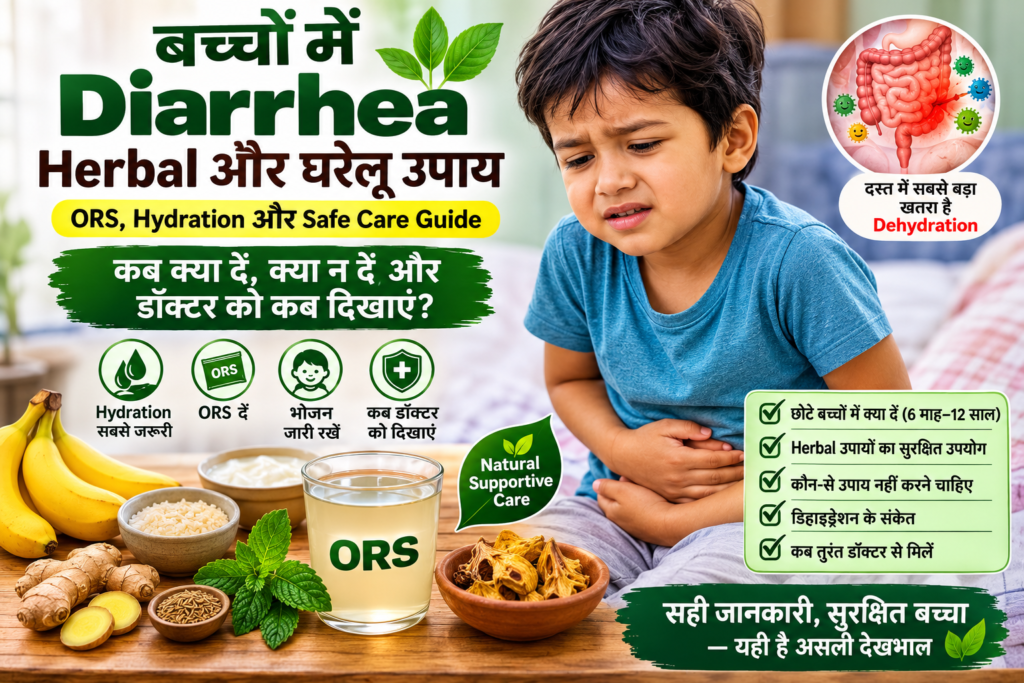
What is Diarrhea?
Diarrhea is a very common issue in children. Symptoms include frequent loose or watery stools, abdominal cramps, weakness, loss of appetite, and sometimes vomiting or fever.
When faced with diarrhea, parents often want to immediately use home remedies or herbs such as cumin, fennel, ginger, holy basil (Tulsi), turmeric, Bael (wood apple), and banana. These have long been used in traditional Indian home medicine.
However, there is an important point to understand regarding children:
Not every natural or herbal remedy is safe for children, and no herb is a proven substitute for ORS in treating acute diarrhea.
The biggest risk associated with diarrhea is dehydration—a loss of water and electrolytes from the body. Therefore, instead of relying solely on herbal remedies, the primary focus should be on hydration and ORS. According to the WHO, key measures for managing diarrhea in children include the use of Oral Rehydration Solution (ORS), appropriate zinc supplementation, and continuing to provide nutrient-rich food.
In this article, we will explore which herbal and home remedies can be used relatively safely for diarrhea in children, which remedies lack evidence-based support, what to avoid, and when to consult a doctor immediately.
Diarrhea is generally defined as passing three or more loose or liquid stools in a day. However, since breastfed babies may normally pass loose stools, a diagnosis of diarrhea should not be made based solely on the softness of the stool.
Diarrhea in children can be caused by several factors:
* Viral infection
* Bacterial infection
* Parasitic infection
* Contaminated water
* Contaminated food
* Food intolerance
* Certain medicines, especially antibiotics
* Food allergy
* Other intestinal issues
Viral infections are a common cause of diarrhea in young children.
The biggest risk in diarrhea: Dehydration
During diarrhea, the body loses not only water but also sodium, chloride, potassium, and other electrolytes.
If these fluids and electrolytes are not replenished, dehydration can occur. According to the WHO, severe dehydration can be life-threatening for children.
Potential signs of dehydration
A child may exhibit these symptoms:
* Excessive thirst
* Dry mouth or tongue
* Sunken eyes
* Reduced urination
* Extreme lethargy
* Weakness
* Inability to drink fluids
* Fewer wet diapers than usual (in infants/young children)
* Irritability or unusual behavior
In cases of severe dehydration, the child may become extremely lethargic or unconscious, unable to drink properly, and have sunken eyes.
Therefore, the primary goal during diarrhea is not to stop the loose motions immediately, but to prevent dehydration.
What to do:
ORS: More important than herbal remedies
When a child has diarrhea, the first priority should be Oral Rehydration Solution (ORS).
ORS is designed to replace the water and electrolytes lost from the body due to diarrhea. The WHO and UNICEF consider ORS the primary treatment for childhood diarrhea.
Points to remember when administering ORS:
* Use a standard ORS sachet from a pharmacy.
* Prepare it exactly according to the water quantity specified on the packet.
* Do not add too little or too much water.
* Store the prepared ORS in a clean container.
* Give small amounts to the child frequently.
* If the child is vomiting, offer small sips instead of a large amount at once.
Water alone does not fully replenish the electrolytes lost during diarrhea.
Therefore, relying solely on water, juice, or herbal drinks during severe or frequent diarrhea is not advisable.
Do not stop breastfeeding
If a breastfeeding baby develops diarrhea, breastfeeding should generally be continued.
Breast milk provides the child with nutrition and fluids.
The WHO recommends continuing breastfeeding and providing nutrient-rich foods during the management of childhood diarrhea. Therefore, during diarrhea,
one should avoid advice like “stop giving milk because of the diarrhea.”
Should the child stop eating?
No.
If the child is willing to eat, it is important to continue offering age-appropriate food.
Light and easily digestible foods can be given, such as:
* Khichdi
* Rice
* Lentils (Dal)
* Banana
* Potato
* Curd/Yogurt (if the child normally tolerates dairy)
* Soft-cooked vegetables
* Age-appropriate, regular family foods
The WHO recommends continuing nutrient-rich food during diarrhea because diarrhea can exacerbate nutritional deficiencies and malnutrition.
Keeping the child solely on water or herbal drinks for an extended period is not advisable.
Can herbs be used?
Yes, some herbs are used in food or for mild, traditional supportive purposes.
However, there is an important distinction here:
Herbal food ≠ Herbal medicine
It is one thing if a child consumes small amounts of cumin, fennel, or turmeric as part of a regular meal.
But concentrated herbal extracts, strong kadha (herbal decoctions), herbal capsules, essential oils, or blends of multiple herbs can raise specific safety concerns for children.
According to the NCCIH, there is insufficient evidence regarding the safety and effectiveness of many herbal/dietary supplements for children, and discrepancies may exist between the ingredients listed on the label and the actual contents.
Therefore, herbs should be viewed as a supportive option for children, not as a replacement for ORS.
- Cumin (Jeera)
Cumin is a spice commonly used in Indian cuisine.
Traditionally, cumin water or mild cumin preparations are used for indigestion and abdominal discomfort.
However, there is insufficient clinical evidence to support the use of cumin for curing acute infectious diarrhea in children.
How to use it?
For older children, small amounts of cumin used in regular meals can be part of normal culinary practice.
But:
Do not give concentrated cumin water.
Do not give very strong cumin decoction.
Do not replace ORS by repeatedly giving cumin water to a young child.
If diarrhea is severe, ORS remains the priority.
- Fennel (Saunf)
Fennel is traditionally used for digestion and abdominal discomfort.
Some families give fennel water to children.
However, there is insufficient clinical evidence regarding the effectiveness of fennel in stopping acute diarrhea in children.
Therefore, it would be incorrect to consider fennel a treatment for diarrhea.
If the child is young, it is best to consult a pediatrician before administering concentrated fennel preparations or herbal supplements.
- Ginger (Adrak)
Ginger is a traditional remedy for digestion and nausea.
However, special caution is required when giving ginger to a child with diarrhea.
Ginger can cause gastrointestinal irritation in some children.
Therefore, it is not advisable to give concentrated ginger juice or strong ginger *kadha* during diarrhea. A Better Approach
Small amounts of ginger can be included in an older child’s regular diet, provided the child tolerates it well.
However, it should not be used as a substitute for ORS in treating diarrhea.
- Tulsi (Holy Basil)
Tulsi is a very popular herb in traditional Indian wellness practices.
It is traditionally used to support respiratory and digestive health.
However, there is insufficient high-quality clinical evidence to support the use of Tulsi for curing acute diarrhea in children.
It is more prudent to limit its use to normal culinary levels rather than giving children concentrated Tulsi juice or strong Tulsi kadha (herbal decoction).
- Turmeric
Turmeric contains several compounds, including curcumin, and has long been used in traditional medicine.
However, turmeric cannot be considered a proven treatment for acute diarrhea in children.
Using turmeric in normal culinary quantities is very different from taking high-dose turmeric supplements.
What is better for children?
Small amounts of turmeric in regular food may be acceptable.
However:
turmeric capsules
high-dose curcumin
concentrated turmeric drinks
kadha with excessive turmeric
should not be given to the child.
- Bael
In India, the Bael fruit is used as a traditional remedy for digestive issues.
Bael pulp or Bael-based preparations are traditionally used for diarrhea.
However, Bael should not be considered a standard, evidence-based treatment for acute diarrhea in children.
If a child is becoming dehydrated due to diarrhea, replacing ORS with a Bael drink can be dangerous.
If the family wishes to use Bael traditionally, it is best to consult a pediatrician, especially for young children.
- Banana: Not an herb, but a useful food
A banana is not an herb, but it can be a useful food option for children suffering from diarrhea.
Bananas contain various nutrients, including carbohydrates and potassium.
If the child normally eats bananas and has no allergies or intolerances, they can be given in age-appropriate quantities during diarrhea. However, bananas do not immediately “cure” diarrhea.
They should not be considered a replacement for ORS.
- Yogurt and Probiotics
Yogurt is not an herb, but it is frequently mentioned in the context of gut health.
Evidence suggests that certain probiotic strains can be beneficial during infectious or antibiotic-associated diarrhea; however, the benefit depends on the specific strain, dosage, and condition.
According to the NCCIH, evidence regarding the use of probiotics for diarrhea in children varies across different products and strains, and in many cases, the research remains insufficient or conflicting.
Therefore, one should not automatically assume that any given probiotic product is a “cure for every child’s diarrhea.”
Age-wise Safety of Herbal Remedies for Children
Under 6 months
Diarrhea must be treated with particular seriousness at this age.
It is not advisable to give the child the following on your own:
herbal kadha (decoction)
cumin water
fennel water
Tulsi (holy basil) juice
Bael (wood apple) preparations
ginger water
Continue breastfeeding and seek immediate medical advice regarding the risk of dehydration.
6–12 months
Concentrated herbal remedies should be avoided at this age as well.
Focus on hydration through breast milk/age-appropriate feeding and medical guidance.
Consult a pediatrician or health professional regarding the use of ORS.
1–2 years
The child can continue eating age-appropriate foods at this age.
ORS and fluids are the priority.
While using herbs in normal quantities in food is acceptable, it is better to consult a pediatrician before administering concentrated herbal preparations.
3–5 years
The child can eat many normal foods at this age.
Light meals, ORS, adequate fluids, and rest are important.
It is best to limit herbal remedies to supportive, food-level use.
6–12 years
Older children can consume regular family foods.
However, strong herbal mixtures, supplements, or multi-herb formulations should not be given without medical advice.
Even though the child is older, the risk remains if the diarrhea is severe.
A Safe Home-based Diarrhea Care Plan
Step 1: Start ORS
Prioritize standard ORS during diarrhea.
Step 2: Continue fluids
Keep giving the child age-appropriate fluids.
Step 3: Continue breastfeeding
Do not stop breastfeeding a breastfed baby.
Step 4: Continue feeding
Keep offering nutritious food if the child is ready to eat.
Step 5: Treat herbal remedies as secondary
No herbal drink can replace ORS.
Step 6: Monitor for dehydration
Pay attention to urination, thirst, behavior, and fluid intake.
Step 7: Watch for red flags
Contact a doctor if there is blood in the stool, severe dehydration, persistent vomiting, or signs of serious illness.
What should not be given to children during diarrhea?
Some home remedies can be harmful or delay necessary treatment.
- Strong herbal kadha (decoction)
Safe dosages for concentrated kadhas made from a blend of herbs have not been established for children.
- Herbal supplements
Despite being natural, supplements can cause side effects and interact with other medications.
- Essential oils
Ingesting essential oils or using them without proper guidance can be unsafe for children.
- Excessive spices
Very spicy food can aggravate stomach discomfort.
- Very sugary drinks
High-sugar drinks are not suitable for rehydration during diarrhea.
- Soft drinks
Soda or sugary carbonated drinks are not a substitute for ORS (Oral Rehydration Salts).
- Plain water only
In cases of severe diarrhea, plain water alone does not adequately replenish lost electrolytes.
- Anti-diarrheal medicines without a doctor’s advice
It is not advisable to administer anti-diarrheal medicines to young children on one’s own.
- Antibiotics without medical advice
Not all diarrhea is bacterial. Antibiotics should be used based on the underlying cause and clinical assessment.
What is the role of zinc?
The WHO considers zinc supplementation crucial in the management of childhood diarrhea. Research has shown that zinc helps reduce the duration and severity of diarrhea.
However, zinc is not an herbal remedy.
The dosage should be confirmed with a healthcare professional based on the child’s age and local clinical guidelines.
WHO recommendations regarding zinc have been updated; therefore, parents should follow the advice of a pediatrician or local treatment guidelines rather than blindly following dosages found in old internet articles.
When should you see a doctor immediately?
Take the following signs seriously in a child with diarrhea:
The child is very lethargic
The child is unable to drink properly
Persistent vomiting
Sunken eyes
Very little urine output
The child is excessively thirsty
Very dry mouth
Blood in the stool
The child appears unconscious or extremely weak
High or persistent fever
Diarrhea continues for a long time
The child is rapidly becoming weak
Severe abdominal pain
The child is very young and the diarrhea is significant
The WHO specifically recommends consulting a healthcare professional in cases of blood in the stool, persistent diarrhea, and signs of dehydration.
What is Persistent Diarrhea?
If diarrhea lasts for 14 days or longer, it is termed persistent diarrhea.
In such a situation, one should not rely solely on home-based herbal or dietary remedies.
Persistent diarrhea can be caused by infections, nutritional problems, food intolerance, or other medical issues.
Such a child may require a pediatric evaluation.
How to prevent diarrhea?
It is better to focus on preventing diarrhea than treating it after it occurs.
Hand washing
Children and caregivers should wash their hands with soap and clean water after using the toilet and before cooking or eating.
Safe water
Use safe drinking water for drinking and cooking.
Food hygiene
Keep food covered and avoid spoiled or contaminated food.
Clean utensils
Keep the child’s feeding bottles, cups, and utensils thoroughly clean.
Breastfeeding
Exclusive breastfeeding during the first six months helps protect against various infections, including diarrhea.
Vaccination
Rotavirus vaccination is a crucial part of preventing childhood diarrhea.
12 Golden Rules for Parents
- Prioritize preventing dehydration during diarrhea.
- Give preference to ORS.
- Do not stop breastfeeding.
- Continue providing age-appropriate food to the child.
- Do not rely solely on herbal drinks.
- Avoid strong kadha (herbal decoctions).
- Do not administer herbal supplements without professional advice.
- Ensure the child receives adequate fluids.
- Never ignore blood in the stool.
- Seek medical advice in cases of severe vomiting.
- Pay immediate attention to signs of dehydration.
- Consult a doctor rather than continuing home remedies if severe symptoms arise.
Can Herbs Cure Diarrhea in Children?
This is a crucial question.
Based on current evidence, no common herb should be considered a proven cure for acute diarrhea in children.
Herbs like cumin, fennel, ginger, holy basil (Tulsi), turmeric, and Bel (wood apple) are significant in traditional Indian practices; however, it is incorrect to equate their use with standard diarrhea treatment.
Evidence regarding herbal supplements for children—as well as their safety—can vary from product to product. According to the NCCIH, the composition and quantity of active ingredients in natural products can vary, and there is insufficient research on the safety and effectiveness of many such products for children.
Therefore, the best approach is:
ORS + Hydration + Continued Feeding + Breastfeeding + Medical Monitoring
and viewing herbs merely as optional, supportive dietary or traditional practices.
Conclusion
Diarrhea in children should not be dismissed as a mere “upset stomach.” Persistent diarrhea can rapidly lead to a loss of water and electrolytes, especially in young children.
Consequently, the primary goal during diarrhea should be the prevention of dehydration.
ORS is the most important home-care treatment for this. The child should continue to receive age-appropriate fluids and nutritious food, and breastfeeding should be maintained. The WHO recognizes ORS, zinc supplementation, and continued nutrition as key interventions in diarrhea management.
While herbs like cumin, fennel, ginger, holy basil, turmeric, and Bel are used in traditional Indian health practices, they should not be considered a proven cure for diarrhea in children. It is safer to seek medical advice rather than attempting herbal treatments at home, especially for children under six months of age or those showing symptoms of dehydration.
Contact a healthcare professional immediately if the child has blood in their stool, severe dehydration, persistent vomiting, extreme weakness, an inability to consume fluids, or persistent diarrhea.
The safest principle for natural treatment is: “Use natural remedies backed by evidence and safety.”
Frequently Asked Questions (FAQ)
Can cumin water be given to children with diarrhea?
Cumin water is a traditional home remedy, but it is not considered a proven treatment for acute diarrhea. It should not be used as a substitute for ORS.
Can fennel water be given to children with diarrhea?
Fennel is a traditional digestive remedy, but there is insufficient clinical evidence to support its use in curing acute diarrhea in children. Consult a pediatrician before giving concentrated preparations to young children.
Is ginger useful for diarrhea?
Ginger is traditionally used for digestion and nausea, but it is not a proven treatment for acute diarrhea. Concentrated ginger juice or strong ginger decoctions (kadha) should not be given to children.