
Herbal Remedies
Medicated and aromatic herbs are nature’s gift to humanity, offering healing, fragrance, and wellness without chemicals. These herbs enhance physical and mental well being sustainably.
From centuries, medicated and aromatic herbs have played a vital role in human health, wellness, and daily life. From ancient Ayurveda and Traditional Chinese Medicine to modern aromatherapy and herbal supplements, these natural wonders offer healing, fragrance, and therapeutic benefits.
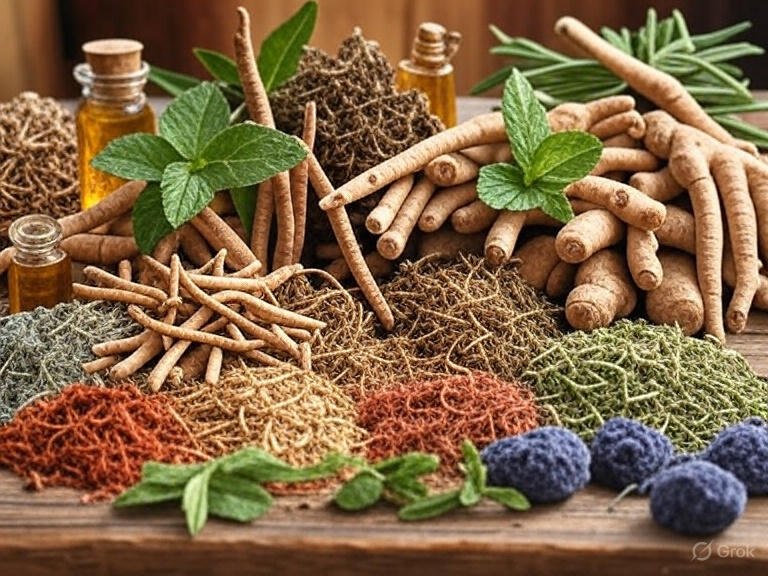
History, importance and treatment of medicinal and aromatic plants for human life.
History and Importance:
The Ayurvedic system of medicine has flourished in the Indian subcontinent for over 5000 years. Before Ayurvedic texts were written down, it existed as an oral tradition. Gurus and disciples would sing hymns expressing Ayurvedic knowledge. This tradition still exists in some traditional families, where knowledge is passed on from one generation to the next by reciting and memorizing hymns. One can clearly see that Ayurveda has been a living tradition for a long time and its concepts are still a part of everyday life in the Indian subcontinent.

The number of Ayurvedic literary works available shows that Ayurveda had a glorious past. Albrecht Weber in his History of Indian Literature comments: “The number of medical works compiled in the Sanskrit language and by authors is exceptionally large. The sum of knowledge contained in their contents appears to be most respectable. Many statements on dietetics and the origin and diagnosis of disease speak of very keen observation.”
The problem: modern medicine can't always solve everything.
If you are feeling tired, stressed, irritable or suffering from any disease. You have tried almost all medical treatments but have not found any permanent solution, then you should support to Ayurveda. Ayurveda has no side effects, so it is completely safe and effective. Medicinal, aromatic and Ayurvedic plants have been used for centuries to overcome health problems and are supported by both history and science.
Playing with health and behaving against nature:
Modern life is continuously weakening our whole body. Stress, contaminated food, toxic environment are weakening the immunity of our body due to which we easily become victims of diseases. According to the World Health Organization (WHO) 2024, diseases like heart disease and diabetes cause 40% of deaths worldwide every year. Most diseases are caused by irregular lifestyle. Allopathic medicines provide relief in the short term but also bring side effects like nausea, fatigue, other physical problems, which further weaken the body. We have become away from nature’s solutions. Plants like turmeric, neem, mint, lemongrass and lavender are not only beautiful or smell good, but they have also been used as remedies for millennia. Yet, most of us do not know how to use them or how they work.
Solution: Recognize the power of medicinal, aromatic and ayurvedic plants.
Let’s explore the great world of medicinal, aromatic, and ayurvedic plants. These aren’t just relics of the past, they’re practical, proven remedies that have the power to transform your health. From ancient civilizations to modern laboratories, these plants have a rich history and a growing body of evidence supporting their use. Here’s a clear look at their history, why they’re important, and how you can use them to live a better life.
Why these plants are important:
Medicinal, aromatic and Ayurvedic plants are more effective and they are sustainable and accessible. Againest the manufacturing process of synthetic medicines, plants can be grown easily and can also improve the environment. Medicinal plants can be cultivated with minimal resources. Medicines made from medicinal and aromatic plants are holistically effective. These medicines are capable of providing wellness to the entire body by eliminating the causes of the disease.
Take turmeric, for example. Its active compound, curcumin, has been widely studied. A 2017 meta-analysis in the Journal of Medicinal Food found that curcumin reduced inflammatory markers like C-reactive protein by 32% in patients with chronic diseases. That’s a huge deal for anyone dealing with arthritis or heart disease risk factors. Or consider lavender, an aromatic plant. A 2013 study in Evidence Based Complementary and Alternative Medicine showed that sniffing lavender oil before surgery reduced anxiety scores by 20% in patients.
Ashwagandha is another Ayurvedic plant with miraculous properties. A study published in 2019 in the Journal of Medicine tested ashwagandha on 60 adults suffering from stress. After eight weeks, cortisol (stress hormone) levels in those taking ashwagandha decreased by 22% compared to the placebo group.
Uses of medicinal and aromatic plants:
Let’s get practical. How can you use these plants in your life? Here is a description of some of the major plants, their benefits, and how to incorporate them into practical applications.
1. Turmeric (Curcuma longa) — Anti-Inflammation Powerhouse
What it does: Fights inflammation, supports joint health, and may reduce the risk of heart disease.
Case study: A 2016 study in Clinical Interventions in Aging gave 100 arthritis patients 500 milligrams of curcumin daily. After six weeks, 78% reported a reduction in pain and improved mobility.
How to use it: Add 1 teaspoon of turmeric powder to smoothies, soups, or curries. For better absorption, season it with black pepper. You can also try turmeric tea: Boil 1 teaspoon of turmeric with 1 cup of water, a pinch of black pepper, and honey to taste.
2. Lavender (Lavandula angustifolia) – Stress reliever
What it does: Reduces anxiety, improves sleep and reduces headaches.
Case study: A 2018 trial in Phytomedicine tested lavender oil aromatherapy on 79 patients with insomnia. After four weeks, 62% reported better sleep quality, compared to 33% in the control group.
How to use it: Add 5-10 drops of lavender oil to a diffuser before bedtime. Or mix 2 drops with a carrier oil (such as coconut) and rub on heads.
3. Ashwagandha (Withania somnifera) — Stress reliever
What it does: Reduces stress, boosts energy, and supports thyroid function.
Case study: A 2021 study in the Journal of Ethnopharmacology gave 150 adults with anxiety 250 mg of ashwagandha daily. After 12 weeks, anxiety scores decreased by 41%, compared to 24% for a placebo.
How to use it: Take 300–500 mg of ashwagandha root extract as a supplement. Or make ashwagandha tea: Boiled 1 teaspoon of dried root in water for 10 minutes.
4. Neem (Azadirachta indica) — Skin protector
What it does: Fights acne, remove eczema and supports oral health.
Case study: A 2019 study in Dermatologic Therapy applied neem oil to 60 acne patients. After eight weeks, 67% showed a reduction in acne lesions, compared to 28% in the control group.
How to use it: Apply diluted neem oil (1 part neem and 10 parts carrier oil) to the affected skin. For oral health, chew neem twigs or use a neem based toothpaste.
5. Tulsi (Ocimum sanctum) – Immunity booster
What it does: Boosts immunity, reduces colds, and balances blood sugar.
Case study: A 2020 study in the Journal of Ayurveda and Integrative Medicine gave 300 mg of tulsi extract to 100 adults with frequent colds. After six weeks, the frequency of colds decreased by 39%, compared to 15% for a placebo.
How to use it: Make tulsi tea with 5-8 fresh leaves or 1 pinch of dried leaves in hot water. Drink 1–2 cups daily.